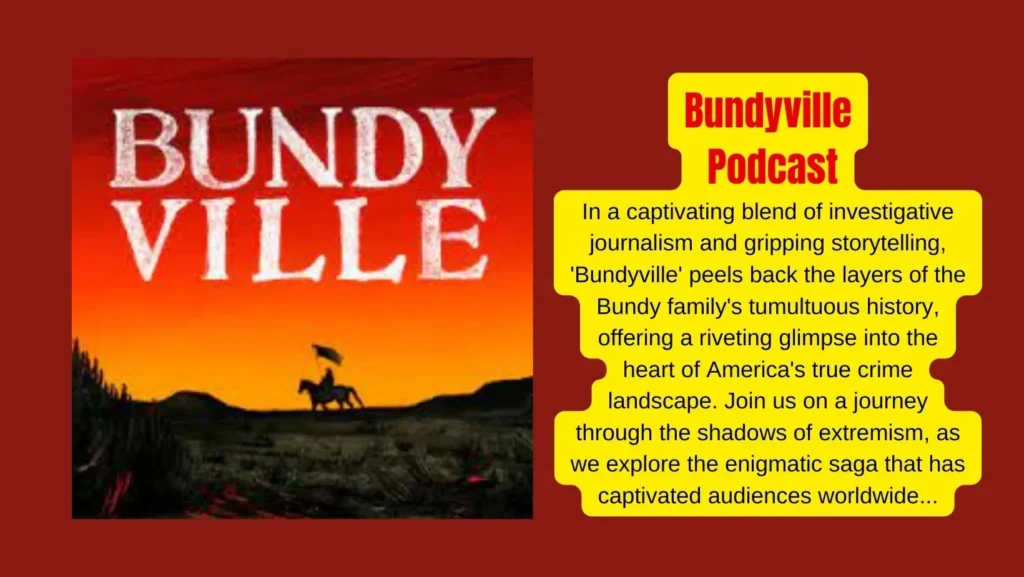
In the shadows of history lie tales untold, waiting to be unearthed by those brave enough to seek them. ‘Bundyville’ isn’t just a podcast; it’s a journey into the heart of America’s darkest corners, where the echoes of the past reverberate with chilling resonance. As we peel back the layers of truth, we confront not only the enigma of the Bundy family but also the complexities of our own society.” – Leah Sottile
“Bundyville.” Created by Leah Sottile, this non-fiction true crime podcast takes its listeners on a riveting journey through the tangled web of the Bundy family’s history and its resonance with contemporary American society. Let’s embark on a comprehensive review of this gripping series, dissecting its structure, themes, and impact.
“Bundyville” emerges as a standout gem, weaving together the intricate tapestry of the Bundy family’s tumultuous history and its profound impact on American society. Created by Leah Sottile and produced in collaboration with Longreads and Oregon Public Broadcasting, this gripping podcast delves deep into the enigmatic world of the Bundy clan, known for their confrontations with the US government. With meticulous research and compelling storytelling, “Bundyville” offers listeners a riveting journey through the tangled web of extremism, white supremacy, and the complex interplay of faith and ideology.
As Leah Sottile guides audiences through the labyrinth of the Bundy saga, each episode unfolds with gripping detail, illuminating the family’s origins, motivations, and the broader implications of their actions. From the Bundy standoff over grazing fees to the occupation of the Malheur National Wildlife Refuge, the podcast navigates the murky waters of anti-government extremism with unflinching clarity. With accolades from critics and a growing legion of avid listeners, “Bundyville” stands as a testament to the power of investigative journalism and the enduring allure of true crime storytelling.
Background of “Bundyville”
“Bundyville” emerges as a collaborative endeavor between Longreads and Oregon Public Broadcasting, helmed by Leah Sottile and produced by Ryan Haas. With meticulous attention to detail, Sottile spent over two years delving into the enigmatic world of the Bundy family, known for their confrontations with the federal government. The podcast eschews flashy audio designs in favor of a focused narrative style, prioritizing in-depth reporting.
Season One: The Cliven Bundy Saga
The inaugural season of “Bundyville” unfolds over seven gripping episodes, centering on Cliven Bundy and his notorious family’s skirmishes with the US government. From the Bundy standoff in 2014 over grazing fees to the 2016 occupation of the Malheur National Wildlife Refuge, Sottile meticulously dissects the family’s ideology, motivations, and impact on American society.
Bundyville’s History: Season One’s Deep Dive
Sottile and Haas embark on a journey to Bundyville, an abandoned town steeped in the family’s history. Through meticulous research and interviews, the podcast sheds light on the Bundy family’s origins, their religious beliefs, and their descent into extremism. With chilling precision, “Bundyville” exposes the family’s white supremacist leanings and the underlying currents of radicalism that fuel their actions.
Season Two: Expanding the Narrative
In its second season, “Bundyville” broadens its scope, delving into the wider landscape of anti-government extremism. From the 2016 bombing in Panaca, Nevada, to the prevalence of extremist rhetoric in political circles, the podcast confronts the unsettling realities of contemporary America. Sottile’s exploration of the patriot movement’s influence on the 2021 Capitol attack adds a timely dimension to the series.
Reception and Recognition
“Bundyville” has garnered widespread acclaim for its tenacity and depth of reporting. With accolades ranging from finalist nods in the National Magazine Awards to praise from critics at Vulture and The Atlantic, the podcast has left an indelible mark on the true crime genre. Its ability to shed light on under-covered aspects of American society while avoiding undue sympathy for its subjects sets it apart in a crowded landscape.
Conclusion
As the curtains draw on “Bundyville,” one thing becomes abundantly clear: it is not merely a podcast about a family’s brushes with the law but a nuanced exploration of the forces shaping contemporary America. Through meticulous research, compelling storytelling, and unflinching analysis, Leah Sottile has crafted a narrative that transcends the boundaries of true crime, offering profound insights into the complexities of extremism and societal unrest.
In the vast expanse of the podcasting universe, “Bundyville” stands as a testament to the power of investigative journalism and the enduring allure of true crime storytelling. As listeners navigate its intricate narratives and grapple with its uncomfortable truths, they are confronted with a stark reminder of the fragility of democracy and the dangers of unchecked extremism. In the end, “Bundyville” serves not only as a captivating podcast but also as a sobering reflection on the state of modern America.
So, tune in, buckle up, and prepare to be enthralled by the riveting saga of “Bundyville.”
“Bundyville” is a non-fiction true crime podcast that delves into the intriguing saga of the Bundy family, known for their confrontations with the US government. Through meticulous reporting and storytelling, the podcast explores the family’s history, ideology, and impact on American society.
Leah Sottile is the creator and host of “Bundyville,” with production handled by Longreads and Oregon Public Broadcasting. The podcast is a collaborative effort, with Ryan Haas contributing to production and Peter Frick-Wright and Robbie Carver assisting in writing. Anna Griffin of OPB and Mike Dang of Longreads provided creative oversight.