WhichPodcast Launches Cross-Platform Podcast Search Engine for Spotify, Apple & YouTube
The podcast industry has exploded over the past decade, but one problem has stubbornly remained unsolved: discovery. While millions of listeners tune into podcasts every day across platforms like Spotify, Apple Podcasts and YouTube, finding the right show often feels fragmented, repetitive and limited by platform algorithms.
Now, a new UK-based platform called WhichPodcast aims to change that by creating a unified podcast discovery experience that searches across multiple major streaming ecosystems at once.
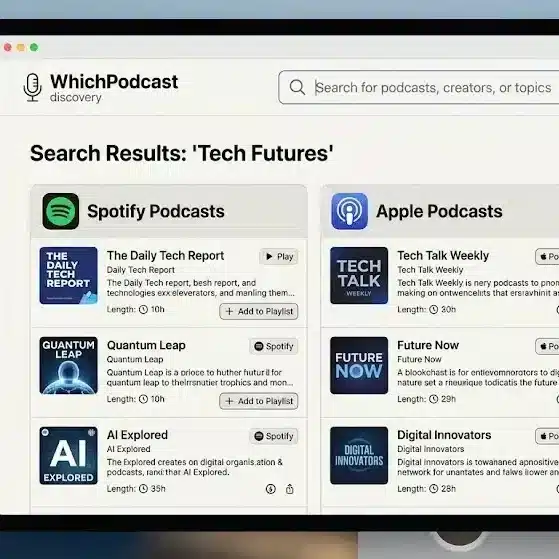
Launched this week, the website is positioning itself as a smarter and simpler way for listeners to find podcasts using natural language search instead of rigid categories or platform-specific recommendations. The platform combines content from YouTube, Spotify and Apple Podcasts into a single searchable hub, giving users access to more than 10,000 podcasts through one interface.
The service arrives at a time when podcast consumption continues to rise globally, while audiences increasingly struggle to navigate overcrowded recommendation systems dominated by platform exclusivity and algorithm-driven promotion.
According to the company, WhichPodcast was built specifically to solve what industry insiders have long called one of podcasting’s biggest structural issues: helping users discover relevant content regardless of where it is hosted.
The platform is now live and accessible through WhichPodcast.
Podcast platforms have traditionally operated within closed ecosystems. Spotify recommends Spotify-hosted content. Apple Podcasts prioritises titles listed within its own environment. YouTube pushes video-first podcast experiences through its own recommendation engine.
For listeners, that means discovering new podcasts can often depend more on platform algorithms than actual relevance or quality.
WhichPodcast attempts to remove those barriers by aggregating podcasts from major services into one searchable database.
Instead of forcing users to search through categories or exact keywords, the platform allows listeners to use conversational prompts. For example, users can type searches such as:
“A 30-minute podcast about behavioural economics”
“Funny business interviews”
“True crime podcasts set in the UK”
“Motivational podcasts for entrepreneurs”
“History podcasts with short episodes”
The system then returns recommendations based on contextual relevance rather than simply matching titles or tags.
This approach reflects the broader shift toward AI-powered conversational search experiences that users have become familiar with through modern search engines and virtual assistants.
Industry observers say this could significantly improve podcast accessibility for casual listeners who may not know specific show names but understand the type of content they want.
Why Podcast Discovery Has Become a Major Industry Problem
Podcasting has evolved from a niche digital format into a mainstream media industry worth billions globally. However, as the number of available podcasts has surged, discoverability has become increasingly difficult.
Most major podcast platforms rely heavily on:
Trending charts
Celebrity-backed content
Existing listening history
Platform-exclusive recommendations
Keyword-based searches
As a result, smaller independent creators often struggle to compete with heavily promoted shows backed by large media companies.
This creates what experts often describe as a “visibility bottleneck,” where quality content can remain hidden simply because it lacks algorithmic momentum.
WhichPodcast says its platform was specifically designed to address that imbalance.
Founder Zaq Qureshi explained that the current ecosystem limits users to siloed discovery systems.
“Discovery has been podcasting’s stubbornly unsolved problem for a decade,” Qureshi said during the launch announcement.
“Apple, Spotify and YouTube each show you their own catalogue and nothing else.”
He added that the company wanted to create a neutral platform where podcasts compete based on relevance rather than platform dominance.
“We built the thing that should have existed years ago: a single place where every podcast competes on its merits,” he said.
Simplicity at the Core of the User Experience
Unlike many modern streaming services overloaded with recommendation feeds, analytics panels and autoplay suggestions, WhichPodcast has intentionally adopted a minimalist interface.
Visitors arriving on the website are greeted with:
A central search box
A podcast recommendation quiz
Search results displayed clearly
Minimal distractions
No crowded dashboards
The company says this design philosophy was intentional.
Instead of overwhelming users with charts, popularity rankings or complicated filtering systems, the platform focuses on fast and intuitive discovery.
The recommendation quiz is one of the platform’s standout features. According to the company, users can answer four quick questions and receive tailored podcast recommendations in under a minute.
The quiz aims to simplify the process for people who may not know how to search for podcasts directly.
This could especially appeal to:
New podcast listeners
Casual audiences
Older users unfamiliar with podcast ecosystems
Users overwhelmed by existing streaming interfaces
The platform’s clean layout also aligns with broader user experience trends prioritising speed, clarity and conversational interaction.
Helping Smaller Podcasts Compete
One of WhichPodcast’s biggest selling points is its commitment to surfacing smaller and lesser-known podcasts alongside major titles.
In today’s streaming environment, recommendation algorithms frequently prioritise:
Audience size
Engagement metrics
Watch time
Subscriber counts
Advertising partnerships
This often disadvantages independent creators even when their content closely matches a listener’s interests.
WhichPodcast says its recommendation engine focuses primarily on relevance.
According to Qureshi, if a smaller podcast provides the best match for a user’s search, it will appear ahead of larger competitors regardless of popularity.
This approach could provide valuable visibility for:
Independent podcasters
Niche creators
Regional podcasts
Emerging voices
UK-based productions
Podcast creators have long argued that discoverability tools unfairly favour already successful shows, creating a cycle where visibility becomes increasingly concentrated among top-ranking podcasts.
By shifting the focus from popularity to contextual relevance, WhichPodcast hopes to create a more balanced ecosystem.
UK Podcast Creators Could Benefit Significantly
Another major aspect of the platform is its strong UK focus.
Most major podcast discovery systems are heavily influenced by US trends, US-based creators and American media networks.
This often makes it difficult for British podcasts to gain visibility internationally or even domestically.
WhichPodcast says its platform is designed to help UK podcasts appear more prominently within search results.
This localisation strategy could be particularly important for:
British news podcasts
UK comedy shows
Local culture podcasts
Regional storytelling formats
Independent UK creators
The UK podcast market has grown rapidly in recent years, with audiences increasingly consuming:
Political podcasts
Investigative journalism
Sports commentary
Entertainment interviews
Business discussions
However, many UK creators still face challenges competing with American productions that dominate platform charts.
A discovery platform tailored toward British audiences may help address that imbalance while supporting local podcast ecosystems.
The Rise of AI-Powered Search in Media Discovery
WhichPodcast’s conversational search functionality reflects a wider transformation happening across digital media.
Users increasingly expect search experiences to understand intent rather than exact keywords.
Traditional search methods often require users to:
Know podcast titles
Search exact phrases
Browse categories manually
Scroll through endless recommendations
Natural-language search changes that dynamic.
Instead of searching for: “Behavioural economics podcast”
Users can type: “I want a short podcast explaining human decision-making.”
The platform then interprets the request contextually.
This mirrors advancements seen in:
AI search engines
Smart assistants
Streaming recommendations
Conversational commerce
Personalised discovery systems
As consumers become more comfortable with AI-driven interfaces, platforms offering intuitive discovery experiences may gain a competitive advantage.
Why Cross-Platform Discovery Matters
The podcast industry has become increasingly fragmented.
Many creators now distribute content differently across:
Spotify
Apple Podcasts
YouTube
Patreon
Audible
Independent websites
Some podcasts even offer:
Video versions on YouTube
Exclusive bonus episodes on Spotify
Premium content behind subscriptions
For listeners, this fragmentation can create friction.
Users often:
Miss shows available elsewhere
Struggle to compare content
Lose track of recommendations
Stay trapped inside one ecosystem
Cross-platform discovery tools like WhichPodcast aim to simplify that process by acting as a neutral search layer above existing services.
Rather than replacing podcast apps, the platform functions as a discovery gateway.
Users can find relevant podcasts first and then choose where they prefer to listen.
This could represent a broader shift toward platform-agnostic content discovery across digital media.
Industry Experts Have Long Highlighted Discovery Challenges
Podcast discoverability has remained one of the industry’s most discussed issues for years.
Unlike platforms such as Netflix or Spotify Music, podcast recommendation systems have often lagged behind in sophistication.
Several factors contribute to this problem:
Millions of available podcasts
Inconsistent metadata
Lack of universal indexing
Fragmented hosting ecosystems
Platform exclusivity
Creators frequently depend on:
Social media promotion
Word-of-mouth marketing
Guest appearances
Paid advertising
Cross-podcast collaborations
Even high-quality podcasts can struggle to gain traction without external marketing support.
As podcast libraries continue expanding globally, the need for better discovery infrastructure has become increasingly urgent.
WhichPodcast enters the market at a moment when both listeners and creators are actively seeking alternatives to traditional recommendation systems.
Competition in the Podcast Discovery Space
While several podcast recommendation tools already exist, most operate within narrower frameworks.
Some focus on:
Podcast reviews
Trending rankings
Curated lists
Genre recommendations
Community suggestions
WhichPodcast differentiates itself through:
Cross-platform indexing
Conversational AI-style search
UK-focused discovery
Simplicity-first design
Neutral recommendation philosophy
The platform’s challenge will likely involve scaling its database while maintaining recommendation quality.
Podcast ecosystems evolve rapidly, with new shows launching daily and existing content constantly updating.
Maintaining accurate indexing across multiple platforms could become a major technical undertaking.
However, if successful, the model could reshape how audiences discover spoken-word content online.
The Growing Importance of Podcasting Globally
Podcasting has become one of the fastest-growing digital media sectors worldwide.
Audiences now consume podcasts for:
News
Education
Entertainment
Business insights
Self-improvement
Mental health discussions
Sports analysis
Storytelling
The format’s flexibility allows listeners to engage while:
Driving
Exercising
Working
Travelling
Studying
This convenience has contributed to sustained audience growth across demographics.
At the same time, creators increasingly view podcasting as:
A media business
A branding tool
A journalism platform
A monetisation channel
A community-building medium
As the industry matures, infrastructure supporting discovery, recommendation and accessibility will likely become more important than ever.
Could WhichPodcast Change Listener Behaviour?
Whether WhichPodcast becomes a mainstream discovery tool remains to be seen, but its launch highlights a growing appetite for platform-independent search experiences.
Consumers increasingly want:
Faster recommendations
Less algorithm manipulation
More personalised suggestions
Access across ecosystems
Simpler interfaces
If the platform succeeds in delivering accurate and useful recommendations, it could influence how users interact with podcast content more broadly.
The service may also encourage listeners to explore podcasts outside dominant recommendation loops, potentially benefiting smaller creators and niche genres.
For podcast creators, improved discovery could lead to:
Higher organic reach
Better audience targeting
Increased engagement
More sustainable growth
Reduced dependence on social media marketing
What Makes WhichPodcast Different?
Key features currently available on the platform include:
Cross-Platform Search
Searches podcasts across:
Spotify
Apple Podcasts
YouTube
Natural Language Queries
Users can search conversationally rather than relying on exact keywords.
Recommendation Quiz
A four-question quiz delivers personalised suggestions quickly.
Minimalist Interface
Simple design focused entirely on discovery.
UK-Focused Recommendations
British podcasts receive stronger visibility compared with global-first discovery systems.
Relevance-Based Ranking
Smaller creators can compete directly with major shows.
Availability and Access
WhichPodcast is now available as a free web platform for users in the UK and internationally.
The company says the goal is to make podcast discovery faster, fairer and less dependent on closed recommendation systems.
Listeners can explore the service directly through WhichPodcast Official Website.
As podcasting continues evolving into a highly competitive global industry, platforms focused on discovery may become essential tools for both creators and audiences alike.
Why This Launch Matters for the Future of Podcasting
The launch of WhichPodcast reflects a larger shift happening across digital media: audiences increasingly want control over discovery instead of relying entirely on platform algorithms.
For years, listeners have navigated fragmented podcast ecosystems that prioritised platform retention over open exploration.
By creating a unified discovery layer across multiple major services, WhichPodcast is attempting to simplify a problem that has frustrated podcast users for over a decade.
Whether the platform becomes a major player or inspires broader industry changes, its arrival signals growing demand for:
Open discovery systems
AI-powered search experiences
Independent recommendation tools
Fairer exposure for creators
More personalised listening journeys
In an era dominated by algorithms, WhichPodcast is betting that relevance—not popularity—should decide what listeners hear next.