StreamGuys Launches AI Ad Tagging Service to Help Podcasters Monetize Audio Archives
The digital audio industry is entering a new phase of monetization as StreamGuys introduces an artificial intelligence-powered ad tagging solution designed to help broadcasters, podcasters, and media companies generate additional revenue from both current and archived audio content.
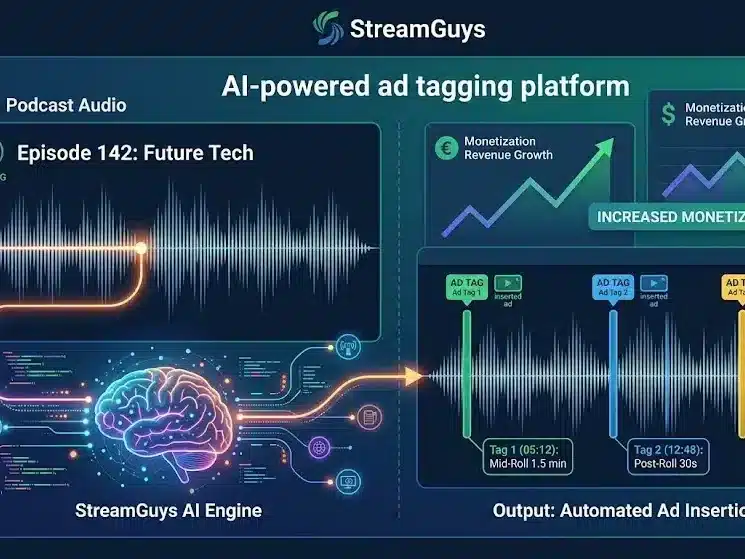
The newly launched service leverages AI technology to automatically identify optimal locations within podcasts and on-demand audio programs where advertisements can be inserted. By eliminating the need for manual ad-marker placement, StreamGuys aims to help content creators streamline production workflows while significantly increasing the amount of available advertising inventory.
As competition intensifies across the podcasting and digital audio landscape, monetization has become one of the industry’s biggest priorities. StreamGuys believes its latest AI innovation can address a longstanding challenge: transforming large libraries of audio content into valuable advertising assets without requiring extensive manual labor.
AI Is Changing the Economics of Digital Audio
The rapid growth of podcasting and on-demand audio has created new opportunities for publishers, but monetization often remains a complex and time-consuming process.
Traditionally, production teams have been responsible for listening through episodes and manually identifying suitable moments for ad insertion. This process can become particularly challenging for organizations managing hundreds or thousands of hours of archived content.
StreamGuys’ new AI-powered system seeks to automate that workflow.
Using advanced machine-learning capabilities, the platform scans audio content and detects natural transition points where advertisements can be inserted without disrupting the listener experience. These strategically identified locations can then be used for mid-roll advertisements, sponsorship messages, promotional content, and other monetization opportunities.
The result is a faster and more efficient process that allows publishers to focus on content creation while simultaneously expanding their revenue potential.
Why Archived Content Represents a Massive Untapped Opportunity
For many podcast publishers and radio broadcasters, years of archived content remain largely unmonetized.
While new episodes are often produced with advertising strategies in mind, older audio libraries frequently lack the necessary ad markers required for modern dynamic advertising systems. As a result, countless hours of valuable content generate little or no advertising revenue.
StreamGuys believes this challenge represents one of the biggest opportunities in digital audio monetization today.
By automatically analyzing and tagging archived content, the company’s AI system enables publishers to unlock advertising opportunities across entire content libraries. Rather than investing substantial resources into manually reviewing old episodes, organizations can quickly prepare years of content for digital ad insertion.
This capability could be particularly attractive for:
Podcast networks with extensive episode archives
Radio broadcasters with years of recorded programming
Media companies managing large audio libraries
Educational content creators
Sports broadcasters
News organizations with historical content collections
The ability to monetize previously dormant assets could significantly increase long-term revenue potential.
StreamGuys Expands Its AI-Powered Product Portfolio
The launch is not StreamGuys’ first investment in artificial intelligence.
The company previously introduced several AI-driven tools designed to simplify podcast production and digital content management. These technologies included automated transcription services, caption generation, content translation, and ad marker tagging.
The latest standalone ad-tagging platform builds upon that foundation while expanding its accessibility and flexibility.
Instead of limiting functionality to a specific ecosystem, StreamGuys has developed a platform that can integrate with a wide range of publishing environments and content management systems.
This strategic move reflects a broader trend within the media technology industry, where interoperability and platform independence are increasingly valued by content creators.
One of the standout features of the new service is its platform-agnostic architecture.
According to StreamGuys, the system can ingest audio content from multiple sources, including:
RSS feeds
FTP uploads
Third-party hosting platforms
Existing content management systems
External publishing workflows
Once the AI analyzes the audio, ad marker data can be exported in formats compatible with various distribution and monetization platforms.
This flexibility removes a significant barrier for publishers who may already rely on established hosting providers and advertising systems.
Rather than requiring organizations to migrate content or adopt new publishing infrastructure, the AI service is designed to fit into existing workflows.
For broadcasters and podcast networks managing multiple platforms simultaneously, such compatibility can offer substantial operational advantages.
Automation Helps Reduce Production Costs
In addition to revenue generation, automation is becoming an increasingly important cost-saving measure across media organizations.
Content teams often face growing pressure to publish more material while maintaining lean operational structures. Manual tasks such as ad-marker placement can consume valuable resources that could otherwise be directed toward content development, audience growth, and marketing initiatives.
By automating ad-tagging processes, StreamGuys aims to reduce workload requirements for production teams.
Potential benefits include:
Faster content publishing
Reduced manual labor
Improved operational efficiency
Consistent ad-marker placement
Enhanced scalability for growing content libraries
For organizations producing content at high volume, these efficiencies could translate into significant long-term savings.
Digital Audio Advertising Continues to Grow
The timing of the launch coincides with continued expansion in digital audio advertising.
Podcast advertising has evolved into a major marketing channel for brands seeking highly engaged audiences. Advertisers increasingly value the intimate nature of audio content and the strong trust relationships many hosts build with their listeners.
Industry analysts have repeatedly highlighted several factors driving growth in the sector:
Rising Podcast Consumption
Global podcast listenership continues to increase across multiple demographics. More consumers are incorporating podcasts into their daily routines, creating larger audiences for advertisers.
Increased Demand for Targeted Advertising
Dynamic ad insertion technology enables publishers to deliver more relevant advertisements based on listener characteristics and behavior.
Expansion of Programmatic Buying
Automated advertising marketplaces are making podcast inventory easier to purchase at scale, attracting more advertisers to the medium.
Growth in Branded Audio Content
Brands are investing heavily in audio storytelling, sponsorships, and native advertising opportunities.
Against this backdrop, creating additional advertising inventory becomes a strategic priority for publishers seeking to capitalize on market growth.
Dynamic Ad Insertion Plays a Central Role
A key component of StreamGuys’ monetization strategy revolves around dynamic ad insertion (DAI).
Unlike traditional baked-in advertisements, dynamic ads can be inserted into content after publication. This allows publishers to update campaigns, rotate advertisers, and target audiences more effectively.
The effectiveness of dynamic ad insertion depends heavily on accurate ad-marker placement.
Without properly identified insertion points, publishers may struggle to maintain a seamless listener experience or maximize inventory utilization.
The company’s AI ad-tagging technology addresses this challenge by identifying suitable insertion opportunities automatically.
As a result, publishers can deploy dynamic advertising across a wider range of content while maintaining consistency and quality.
Building a Complete Audio Revenue Ecosystem
The ad-tagging service is part of a broader effort by StreamGuys to position itself as more than a streaming technology provider.
The company has increasingly focused on helping customers develop sustainable digital revenue strategies through an integrated suite of services.
Its monetization portfolio includes:
Programmatic Advertising
Automated ad sales that connect publishers with digital advertising demand sources.
Dynamic Ad Insertion
Technology that enables targeted and flexible ad delivery.
Inventory Management
Tools designed to maximize available advertising opportunities.
Revenue Optimization Consulting
Strategic guidance for broadcasters and podcast networks seeking to improve monetization performance.
Metadata Management
Systems that improve ad delivery accuracy and campaign effectiveness.
Together, these services create an ecosystem intended to help audio publishers increase earnings while simplifying operational complexity.
Metadata and Audio Quality Remain Critical
Successful digital advertising requires more than simply placing ads into content.
Audio quality, timing synchronization, and metadata accuracy all play important roles in ensuring advertisements are delivered effectively.
StreamGuys notes that its broader technology infrastructure includes capabilities for:
Metadata normalization
Timing alignment
Audio synchronization
Ad insertion workflow management
Playback consistency optimization
These technical components help ensure that dynamically inserted advertisements maintain professional quality standards and do not negatively impact the listener experience.
In an industry where audience retention is critical, preserving content quality remains essential.
What This Means for Podcast Creators
For independent podcasters and large podcast networks alike, the implications could be significant.
Many creators have spent years building extensive content libraries that continue attracting listeners long after publication. However, those archives often generate limited revenue because they were produced before advanced monetization tools became widely available.
AI-powered ad tagging offers a pathway to change that reality.
Benefits for creators may include:
New revenue streams from old episodes
Faster monetization implementation
Reduced production workload
Greater advertising flexibility
Improved inventory utilization
As podcasting becomes increasingly competitive, maximizing the value of existing content assets could become a major differentiator.
Broadcasters Also Stand to Benefit
Traditional radio broadcasters are undergoing rapid digital transformation.
Many stations now distribute programming through podcasts, streaming services, mobile apps, and on-demand platforms. As digital listening grows, broadcasters are seeking ways to replicate and expand advertising revenue opportunities beyond traditional airwaves.
The ability to automatically prepare archived content for digital advertising could help broadcasters accelerate that transition.
Historical interviews, special programming, news features, and long-form content can potentially become monetizable assets within modern advertising ecosystems.
This shift aligns with broader industry efforts to diversify revenue streams and reduce dependence on traditional broadcast advertising models.
The Growing Role of AI in Media Operations
The launch also reflects the broader adoption of artificial intelligence throughout the media industry.
AI is increasingly being used for:
Content transcription
Translation services
Audience analytics
Content recommendations
Advertising optimization
Workflow automation
Rather than replacing creative teams, many media companies are using AI to automate repetitive tasks and improve operational efficiency.
StreamGuys’ ad-tagging solution fits squarely within this trend, demonstrating how artificial intelligence can address practical business challenges while creating measurable revenue opportunities.
Future Outlook
As digital audio consumption continues to rise, publishers will face increasing pressure to monetize content effectively while maintaining operational efficiency.
Solutions that combine automation, scalability, and revenue optimization are likely to attract significant interest across the podcasting and broadcasting sectors.
StreamGuys’ latest AI-powered ad-tagging service represents a strategic move toward addressing those evolving needs.
By enabling automated ad placement across both new and archived audio content, the company is positioning itself at the intersection of artificial intelligence, digital publishing, and audio monetization.
For content creators, broadcasters, and podcast networks seeking to unlock hidden value within their audio libraries, the technology could offer a compelling new path toward revenue growth.
Key Takeaways
StreamGuys has launched a new AI-powered ad-tagging service.
The platform automatically identifies ad insertion points in audio content.
Publishers can monetize both new and archived podcasts.
The service supports RSS feeds, FTP uploads, and third-party platforms.
Dynamic ad insertion capabilities can increase advertising inventory.
Broadcasters and podcasters may generate additional revenue from previously untapped content.
The launch strengthens StreamGuys’ position in digital audio monetization.
AI automation reduces manual production workloads and improves efficiency.