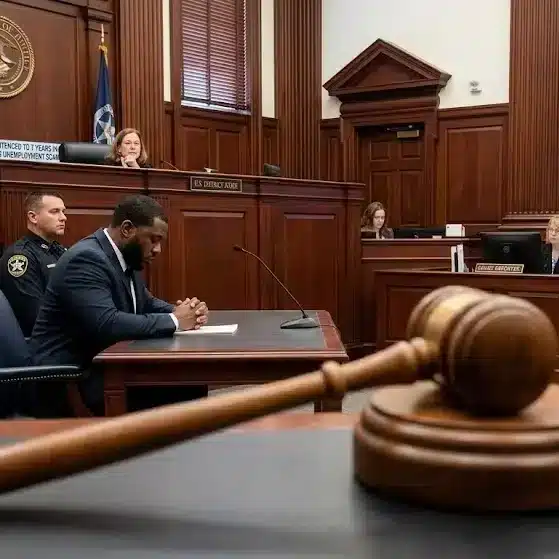
In a case that underscores the widening gap between online personas and real-world actions, social media personality and podcast host Jonathan Dupiton has been sentenced to seven years in federal prison for orchestrating a large-scale fraud scheme during the COVID-19 pandemic.
Dupiton, 36, who built a digital following by promoting financial independence and hustle culture, pleaded guilty to charges including conspiracy to commit mail and wire fraud, as well as aggravated identity theft. Alongside his prison term, he will serve three years of supervised release. Authorities have yet to determine the full amount of restitution he must repay.
The case has drawn widespread attention not only for its financial scale but also for the stark contradiction between Dupiton’s public messaging and his criminal activities behind the scenes.
A Digital Brand Built on Ambition and Wealth
The “Rich & Unemployed” Movement
Dupiton gained visibility through his podcast, “Rich & Unemployed,” where he positioned himself as a voice of motivation for young entrepreneurs and aspiring wealth builders. His content centered around financial freedom, unconventional success paths, and lifestyle aspirations.
At the heart of his messaging was a slogan he frequently promoted: “F.R.A.U.D. is Dope.” According to Dupiton, the acronym stood for “Finally Rich After Unstoppable Determination.” To his audience, it was framed as a bold, edgy mantra encouraging persistence and ambition.
However, federal prosecutors later argued that the slogan carried a far more literal meaning tied to his criminal conduct.
Inside the Fraud Scheme
How Authorities Say the Operation Worked
According to the U.S. Attorney’s Office for the Northern District of Georgia, Dupiton began orchestrating the scheme in mid-2020—ironically while residing in a halfway house and serving time related to a prior fraud conviction.
Key elements of the operation included:
- Identity Theft on a Massive Scale
Dupiton and his associates allegedly obtained stolen personal data from hundreds of individuals. - Fraudulent Unemployment Claims
Using this information, they filed false unemployment insurance claims in California, exploiting expanded pandemic-era benefits. - Use of Technology to Evade Detection
The group relied on virtual private networks (VPNs) to disguise their geographic location while submitting claims online. - Distribution of Fraudulent Funds
Once approved, benefit-loaded debit cards were mailed to addresses in North Georgia, including locations linked directly to Dupiton. - Cash Withdrawals Across Metro Atlanta
The funds were then withdrawn from ATMs across the region, converting digital fraud into tangible cash.
The Scale of the Financial Impact
Millions Stolen During a National Crisis
Investigators estimate that the scheme generated approximately $3.8 million in fraudulent unemployment payments, with more than $2 million successfully withdrawn or spent.
The timing of the fraud has been a critical point in the case. It occurred during the height of the COVID-19 pandemic, when millions of Americans depended on unemployment assistance after sudden job losses and economic disruption.
Federal officials emphasized that such crimes not only defraud government systems but also undermine public trust and delay assistance for legitimate recipients.
A Pattern of Fraudulent Behavior
Not a First Offense
This was not Dupiton’s first encounter with the law. At the time he launched the scheme, he was already serving time for a previous fraud conviction involving the Supplemental Nutrition Assistance Program (SNAP).
Authorities say this pattern demonstrates a repeated willingness to exploit public assistance programs for personal gain.
Dupiton’s case highlights a growing trend where individuals cultivate aspirational online identities while engaging in illegal operations behind the scenes.
Experts note that the rise of influencer culture has created new opportunities for both legitimate entrepreneurship and deceptive practices.
Dupiton’s sentence reflects the severity of the charges and the scale of the fraud: