BBC Sounds Launches ‘Talk History to Me’ Podcast Exploring British Traditions and History
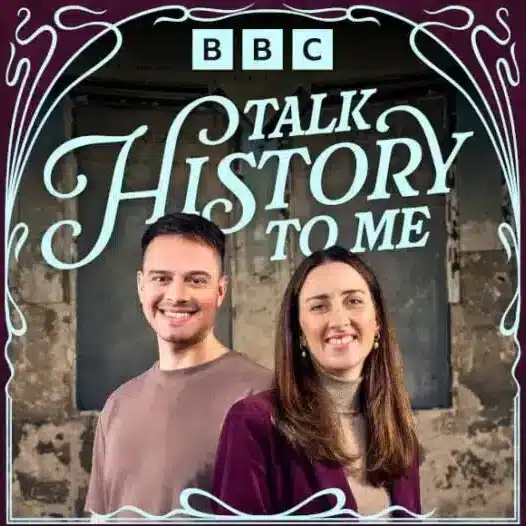
The BBC is set to bring history into everyday conversation with the launch of a brand-new podcast series that promises to uncover the fascinating origins of Britain’s most familiar customs, traditions, and beliefs. Titled Talk History to Me, the upcoming BBC Sounds podcast will be hosted by historian and bestselling author Alice Loxton alongside BBC journalist and historian Ben Henderson.
Scheduled to launch on 18 June, the series aims to bridge the gap between past and present by exploring how ordinary aspects of British life were shaped through centuries of social change, political upheaval, religion, class systems, and cultural evolution.
From the concept of the “stiff upper lip” to Scottish tartans, traditional British food stereotypes, and social etiquette, the podcast intends to unpack the deeper historical roots behind habits many people rarely stop to question.
The project arrives at a time when history-focused podcasts are rapidly growing in popularity across streaming platforms, with audiences increasingly looking for content that combines entertainment, education, and cultural relevance.
A Fresh Take on British History for Modern Audiences
Unlike conventional history documentaries that often focus heavily on wars, monarchs, or political timelines, Talk History to Me takes a more intimate and relatable approach. Instead of revisiting only major historical events, the podcast turns its attention toward the everyday routines, attitudes, and assumptions woven into modern British identity.
According to the creators, each episode will begin with a present-day topic or online debate before tracing its origins through history. The format is designed to answer questions many people casually wonder about but seldom research deeply.
Why are British people associated with emotional restraint? Where did the obsession with tea culture come from? Why does British cuisine carry certain stereotypes internationally? How did tartan become linked so strongly with Scottish identity?
These are the kinds of questions the podcast plans to tackle through storytelling, expert analysis, archival research, and accessible conversation.
The result, according to the BBC, is a series intended not only for history enthusiasts but also for younger audiences discovering history through digital media.
BBC Sounds Expands Its Podcast Strategy
The launch of Talk History to Me also reflects the BBC’s wider investment in podcast-first storytelling. Over recent years, BBC Sounds has expanded its original programming significantly, particularly in factual entertainment, documentary-style audio, and personality-led educational content.
With streaming audiences increasingly consuming podcasts as part of their daily routines, broadcasters are focusing on formats that can compete with independent creators while still maintaining editorial depth and credibility.
The BBC appears to be positioning Talk History to Me as a cross-platform experience rather than a traditional audio-only production.
In addition to the podcast itself, the series will be fully visualised and supported by a dedicated YouTube channel. This strategy is becoming increasingly common in the podcasting industry as platforms seek to reach younger audiences who prefer video content alongside audio experiences.
The visual component is expected to include studio recordings, historical imagery, clips, and supplementary educational content designed for social media sharing and audience engagement.
Alice Loxton Brings Social Media History Appeal
One of the key strengths of the series is likely to be the involvement of Alice Loxton, who has become one of Britain’s most recognisable young historians through her accessible and engaging approach to storytelling.
Loxton has built a substantial following online by presenting historical topics in a way that resonates with modern audiences, particularly younger viewers who consume educational content through social media platforms.
Her ability to transform complex historical subjects into entertaining and digestible narratives has helped redefine how history can be communicated in the digital age.
Speaking about the project, Loxton highlighted how history exists all around modern society, often hidden in plain sight.
She said there is “so much incredible history to be found in our everyday lives,” adding that the podcast would help “bring history alive for a new generation.”
Her involvement suggests the podcast may lean into a more conversational and culturally aware style rather than adopting a strictly academic tone.
Ben Henderson Says Everyday Life Is Full of Unquestioned Traditions
Co-host Ben Henderson believes one of the most interesting aspects of modern life is how many social customs people simply accept without considering their origins.
According to Henderson, stereotypes, social rules, traditions, and behavioural expectations have become so normalised that most people rarely stop to examine how they developed over time.
He noted that many aspects of British identity are treated almost as if they were permanent truths, despite being shaped by centuries of evolving cultural influences.
The podcast aims to challenge that assumption by revealing the historical moments, social reforms, religious movements, and political forces that helped shape modern attitudes.
By combining investigative storytelling with accessible discussion, the hosts hope to create a format that feels relevant to current conversations happening online and in everyday society.
Why History Podcasts Are Booming Worldwide
The arrival of Talk History to Me comes during a global surge in demand for history-focused podcasts and educational audio programming.
Over the last decade, podcasts have evolved from niche digital content into mainstream entertainment, with millions of listeners turning to long-form audio for information, analysis, and storytelling.
History podcasts in particular have experienced enormous growth because they combine narrative drama with educational value.
Several factors are driving this trend:
Audiences want deeper context behind current social issues
Younger generations are consuming education through streaming platforms
Podcasts allow historians to communicate informally and conversationally
Listeners increasingly seek “edutainment” content
Social media has created renewed interest in historical myths and debates
Rather than presenting history as distant or inaccessible, modern podcasts often connect the past directly to contemporary life, politics, and identity.
This is precisely the space Talk History to Me appears designed to occupy.
The Rise of “Everyday History” Content
Another reason the podcast could resonate strongly with audiences is the growing popularity of “everyday history” — a style of historical storytelling focused on ordinary life rather than solely major political events.
In recent years, viewers and listeners have shown increasing interest in learning about:
Historical fashion
Food traditions
Social etiquette
Family life
Working-class culture
Cultural stereotypes
Household customs
Identity and regional traditions
This type of content feels immediately relatable because it connects directly with experiences people recognise from their own lives.
By focusing on the hidden histories behind familiar routines and beliefs, Talk History to Me taps into a curiosity many audiences already have but may not have seen explored in podcast form before.
Exploring the Myth of the “Stiff Upper Lip”
One of the topics reportedly featured in the series is the idea of the British “stiff upper lip” — a phrase commonly associated with emotional restraint, composure, and stoicism.
The stereotype has long been linked with British national identity, especially in depictions of wartime resilience and upper-class behaviour.
However, historians argue that the concept evolved through several historical influences, including:
Victorian social expectations
Imperial ideals of masculinity
Public school traditions
Wartime propaganda
Religious morality
Class structures
By tracing how this stereotype developed, the podcast is expected to reveal how national identities are often constructed gradually through culture, politics, and storytelling.
This approach reflects a broader trend in public history where historians revisit widely accepted narratives and examine how they were shaped.
Scottish Tartans and Cultural Identity
Another subject expected to feature prominently is the history of Scottish clan tartans.
Today, tartans are strongly associated with Scottish heritage and clan identity, but historians have long debated how much of modern tartan culture was influenced by later romantic nationalism and Victorian reinvention.
The podcast reportedly plans to investigate how tartans evolved from regional textile traditions into internationally recognised symbols of Scottish identity.
This topic is especially relevant because it highlights how traditions often change meaning over time.
Many customs people view as ancient and fixed are, in reality, products of reinvention, political symbolism, or cultural revival movements.
Exploring these complexities allows history podcasts to challenge simplified narratives while still remaining entertaining and accessible.
British Food Stereotypes Under the Spotlight
Food culture is another area the series intends to examine.
British cuisine has long been the subject of jokes and stereotypes internationally, yet food historians argue these perceptions overlook the complexity and regional diversity of British culinary history.
The podcast may explore factors such as:
Wartime rationing
Industrialisation
Colonial trade
Agricultural changes
Class divisions
Immigration influences
By connecting food stereotypes to broader historical developments, the show could provide listeners with a richer understanding of how culinary reputations are formed.
Food history has become an increasingly popular topic in digital media because it combines nostalgia, identity, economics, and cultural storytelling.
How Social Media Is Reshaping Historical Storytelling
One major factor influencing projects like Talk History to Me is the transformation of historical communication through social media.
Platforms such as TikTok, Instagram, YouTube, and podcasts have dramatically changed how younger audiences engage with educational content.
Instead of relying solely on textbooks or documentaries, many people now discover history through:
Short-form videos
Interactive explainers
Viral historical debates
Podcast discussions
Digital archives
Creator-led storytelling
Historians who adapt successfully to these formats often reach audiences far larger than traditional academic publishing allows.
Alice Loxton represents this new generation of historians who blend scholarship with digital communication skills.
The BBC’s decision to support a visualised podcast format suggests the broadcaster recognises this changing media landscape.
The BBC’s Push Toward Cross-Platform Content
The inclusion of a dedicated YouTube channel is particularly significant.
Podcasting is increasingly evolving into a multimedia ecosystem where successful shows exist simultaneously across:
Audio streaming platforms
Video-sharing sites
Social media clips
Live events
Online communities
Visual podcasts tend to perform especially well among younger demographics who consume content through mobile devices and algorithm-driven recommendation systems.
For Google Discover visibility, YouTube integration can also increase content reach significantly.
By combining searchable video content with podcast episodes, the BBC may be positioning Talk History to Me for broader digital discoverability beyond traditional radio audiences.
Educational Entertainment Continues to Grow
The success of educational entertainment — often called “edutainment” — has reshaped how broadcasters approach factual programming.
Audiences increasingly prefer learning experiences that feel immersive, emotionally engaging, and conversational rather than purely instructional.
This shift explains the popularity of creators and productions that blend:
Personality-driven storytelling
Research-backed information
Humour
Cultural commentary
Relatable examples
Narrative structure
Talk History to Me appears carefully designed around this model.
Rather than presenting history as distant academic material, the podcast frames historical inquiry as a way of understanding contemporary behaviour and identity.
That framing could prove highly effective in attracting casual listeners who might not normally engage with traditional history programming.
BBC Executive Rhian Roberts Highlights Human Behaviour Themes
Rhian Roberts, Commissioner for Podcasts and Formats at BBC Sounds, said the series would help audiences understand why people behave and think the way they do today.
Her comments suggest the podcast will focus not just on historical facts but also on behavioural and cultural psychology.
This reflects a growing interest in content that explains how historical structures continue to shape modern attitudes, habits, and social norms.
By linking historical developments directly to current debates and everyday experiences, the podcast may appeal to listeners interested in sociology, identity, politics, and culture alongside history itself.
Why Podcasts Continue to Dominate Digital Media
Podcast consumption has exploded globally because the format fits naturally into modern lifestyles.
Listeners can engage with long-form conversations while:
Commuting
Exercising
Cooking
Travelling
Working remotely
Unlike traditional television, podcasts allow audiences to consume educational content passively while multitasking.
The flexibility of the medium has made it particularly attractive for history storytelling, where detailed explanations and narrative pacing matter.
The conversational format of Talk History to Me may therefore help make complex historical discussions feel approachable and intimate.
Can ‘Talk History to Me’ Become a Breakout BBC Hit?
Industry observers believe the podcast has several ingredients that could contribute to mainstream success:
Strong presenter chemistry
Both hosts bring complementary expertise in journalism and public history communication.
Timely cultural relevance
Questions around identity, tradition, and stereotypes remain highly topical online.
Cross-platform visibility
The YouTube integration increases audience reach significantly.
Educational entertainment appeal
The format aligns closely with modern podcast trends.
Younger audience accessibility
The conversational style may attract listeners beyond traditional history audiences.
If the series performs well, it could become part of a wider BBC strategy to modernise factual storytelling for digital-first audiences.
The Growing Public Fascination With Historical Context
One reason projects like this resonate strongly is that modern audiences increasingly seek context for current social and cultural debates.
Questions about identity, nationalism, tradition, and social behaviour often dominate online discourse, and history provides a framework for understanding how these ideas evolved.
Podcasts that successfully connect historical developments with present-day concerns tend to generate stronger audience engagement because they feel immediately relevant.
Rather than treating history as disconnected from modern life, Talk History to Me positions the past as something still actively shaping contemporary society.
That approach may prove especially attractive to younger audiences navigating cultural conversations online.
Launch Date and Availability
Talk History to Me launches on 18 June via BBC Sounds and will also feature visual content through its accompanying YouTube channel.
The podcast is expected to release episodes exploring a wide range of British customs, cultural stereotypes, and historical traditions.
With public appetite for accessible history content continuing to rise, the series could become one of BBC Sounds’ most talked-about factual entertainment launches of the year.