Acast Launches Video Podcast Ads on Apple Podcasts With State Farm and T-Mobile
Podcast advertising is entering a new phase as global podcast company Acast unveils its first integrated video ad campaigns on Apple Podcasts. The launch marks a notable turning point for advertisers looking to combine the power of audio storytelling with the growing influence of video podcast consumption.
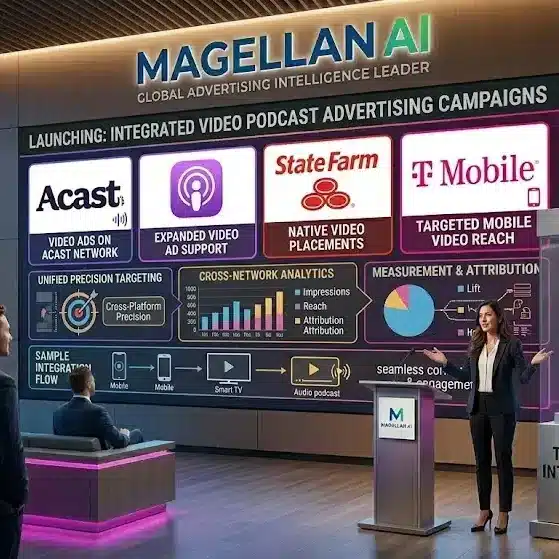
The move allows brands to run synchronized audio and video podcast campaigns through a unified advertising ecosystem instead of splitting budgets and reporting across separate media channels. Early adopters State Farm and T-Mobile are among the first companies testing the new environment, giving advertisers a clearer view of how podcast audiences engage with multimedia content.
Industry analysts see the rollout as another sign that podcasting is no longer an audio-only space. Audiences are increasingly watching podcasts in addition to listening to them, pushing publishers, creators, and advertisers to rethink how content is produced, distributed, and monetized.
With podcast consumption habits rapidly evolving, Acast’s latest initiative could redefine how brands invest in digital audio and creator-led media over the next several years.
For years, podcasting was largely associated with commuters wearing headphones, listeners streaming episodes during workouts, or audiences consuming long-form conversations while multitasking. That image is changing quickly.
Video podcasts have become one of the fastest-growing segments in digital media. Platforms such as YouTube, Spotify, TikTok, and now Apple Podcasts are pushing creators toward visual-first experiences that blend traditional podcast storytelling with on-screen engagement.
The rise of video podcasting has transformed audience expectations. Modern listeners often want flexibility — the option to listen while driving and later watch clips, interviews, or full episodes on their phones, televisions, or laptops.
Acast’s latest campaign strategy reflects this transformation.
Instead of treating video and audio as separate advertising products, the company is combining them into one measurable campaign structure. The approach simplifies media buying for advertisers while expanding audience reach across multiple formats.
According to the company, advertisers can now execute campaigns that seamlessly integrate video and audio placements within Apple Podcasts through Acast’s infrastructure.
This eliminates the traditional fragmentation that often exists between podcast advertising formats.
Why This Launch Matters for the Advertising Industry
The significance of Acast’s rollout extends beyond podcasting itself.
Digital advertising has increasingly moved toward cross-platform integration. Brands no longer want isolated campaign reporting from separate ecosystems. Instead, marketers are demanding unified analytics, broader targeting, and campaigns that follow audiences across devices and content formats.
Podcasting has historically lagged behind platforms like YouTube or connected television in offering integrated multimedia ad buying.
Acast’s partnership with Apple Podcasts aims to close that gap.
The new setup allows brands to:
Deliver synchronized video and audio podcast campaigns
Reach audiences across multiple consumption behaviors
Access unified measurement tools
Reduce fragmented media buying processes
Improve campaign scalability
Expand visual storytelling opportunities
Increase advertiser reach through multimedia engagement
This development may prove especially important as advertisers continue shifting budgets toward creator-led ecosystems.
Podcast hosts often maintain highly loyal audiences, making podcasts one of the most trusted forms of digital media. Adding video expands the opportunities for visual branding, product placement, demonstrations, and emotional storytelling.
For marketers, that combination could significantly improve engagement metrics.
State Farm and T-Mobile Become Early Adopters
Insurance giant State Farm and telecommunications company T-Mobile are among the first major brands participating in Acast’s integrated Apple Podcasts video campaigns.
Their involvement signals growing confidence among large advertisers that podcasting is evolving into a premium multimedia advertising channel.
Both companies have invested heavily in digital-first marketing strategies in recent years, particularly campaigns targeting younger consumers and mobile-first audiences.
Podcast audiences are highly attractive to advertisers because they tend to be:
Digitally engaged
Loyal to creators
Influenced by host recommendations
Active across multiple devices
Highly attentive compared to traditional display advertising audiences
By entering the new integrated environment early, State Farm and T-Mobile gain access to a rapidly expanding advertising format before competition intensifies.
Marketing experts say the move could encourage additional global brands to experiment with video podcast advertising.
Once major consumer-facing brands begin allocating significant budgets toward a format, broader industry adoption often follows.
Apple Podcasts Expands Its Competitive Position
The launch also represents an important strategic development for Apple Podcasts.
For years, Apple played a foundational role in the podcasting ecosystem but gradually faced increasing competition from Spotify, YouTube, Amazon Music, and other digital audio platforms.
Spotify aggressively expanded into video podcasting and exclusive creator deals, while YouTube became a dominant destination for visual podcast consumption.
Apple’s collaboration with Acast may indicate a stronger push into the multimedia podcast economy.
The integration uses Apple HLS technology, helping publishers distribute video-enabled podcast experiences more efficiently.
HLS, or HTTP Live Streaming, is Apple’s streaming protocol that supports adaptive video delivery across devices. By incorporating this infrastructure into podcast distribution and monetization, Apple Podcasts can better support creators producing both audio and video content.
This creates a smoother viewing and listening experience for audiences while opening more monetization opportunities for advertisers.
Industry insiders believe Apple’s renewed focus on podcast innovation could strengthen its standing in the increasingly competitive creator economy.
Acast Reports Rapid Expansion in Video Podcast Activity
Acast revealed that 117 podcast shows have already enabled its Apple HLS video integration.
The company says more than 1,000 episodes have now been distributed using the technology across several major markets, including:
United States
United Kingdom
France
Canada
Australia
The expansion demonstrates that creators are actively embracing video podcast distribution.
The number of integrated episodes is expected to rise sharply as more podcasters experiment with visual content strategies.
Video podcasts often generate stronger social media visibility because clips can be repurposed for short-form platforms like Instagram Reels, TikTok, and YouTube Shorts.
That added discoverability has become increasingly valuable for creators trying to grow audiences in an overcrowded digital landscape.
Acast also reported that 60% of daily growth from HLS activity appears to be additive.
In simple terms, the company believes much of the growth is coming from entirely new audience engagement rather than existing listeners simply shifting from audio to video.
That distinction is critical.
If video podcasting merely redirected current listeners, advertisers would see limited incremental value. However, attracting new audiences creates stronger revenue opportunities and broader campaign reach.
The Rise of Hybrid Podcast Consumption
One of the biggest drivers behind Acast’s strategy is the growing popularity of hybrid consumption.
Modern audiences increasingly move between listening and watching depending on their environment.
Someone may start a podcast episode while commuting through audio-only playback and later continue watching the same episode at home.
This flexible behavior is reshaping content strategies across the industry.
According to Acast’s 2025 Podcast Pulse report, four in five global podcast consumers now both watch and listen to their favorite podcast content.
That statistic highlights how dramatically podcasting has evolved.
The line between podcasts, streaming video, creator content, and digital entertainment is becoming increasingly blurred.
Consumers are no longer defining content by platform category.
Instead, they simply want engaging experiences available across multiple formats.
For creators, this shift presents both opportunities and challenges.
Producing video podcasts typically requires:
Higher production budgets
Studio upgrades
Improved lighting and camera setups
Additional editing resources
Visual branding considerations
Platform-specific distribution strategies
However, the potential rewards can be substantial.
Video content often unlocks:
Increased discoverability
Higher advertising rates
Expanded sponsorship opportunities
Social media growth
Stronger audience retention
Broader international reach
As audience habits continue changing, multimedia podcasting may soon become the industry standard rather than an optional add-on.
Video Advertising Could Significantly Boost Reach
Acast claims that adding a visual layer to podcast advertising can increase total campaign reach by up to 39%.
That figure could become highly attractive for marketers searching for alternatives to traditional digital advertising channels.
Many advertisers have faced growing challenges across social media platforms due to:
Rising ad costs
Privacy restrictions
Audience fragmentation
Lower engagement rates
Ad fatigue
Declining organic visibility
Podcasting offers a different type of consumer relationship.
Podcast audiences often spend extended periods with creators, leading to stronger emotional connections and higher trust levels.
When video elements are added, advertisers gain additional tools for storytelling.
Brands can now:
Showcase products visually
Include branded graphics
Feature demonstrations
Add immersive creative elements
Build stronger visual recall
Combine host-read authenticity with visual messaging
The combination of audio intimacy and visual engagement may help podcast advertising compete more directly with platforms like YouTube and streaming television.
Laura Hagen Says the Industry Is Entering a Commercial Evolution
Laura Hagen, Senior Vice President for the Americas at Acast, described the launch as more than just a product update.
According to Hagen, the initiative represents a broader transformation in how podcast advertising is bought, sold, and measured.
She emphasized that Acast has spent years building infrastructure for the global podcast economy and is now applying that experience to the growing convergence between audio and video.
Her comments reflect a wider industry belief that podcast monetization is entering a new era.
Historically, podcast advertising relied heavily on:
Host-read sponsorships
Dynamic audio insertion
Branded integrations
Direct response campaigns
While those formats remain effective, advertisers increasingly want advanced multimedia capabilities similar to those available on major digital video platforms.
Acast’s strategy appears designed to bridge that gap.
By offering integrated campaign management across audio and video podcast environments, the company hopes to create a more scalable and advertiser-friendly ecosystem.
The Creator Economy Continues to Expand
The growth of video podcasting is closely connected to the broader creator economy boom.
Independent creators are becoming powerful media brands capable of attracting massive global audiences.
Podcasters who once operated niche audio shows now command communities rivaling traditional entertainment outlets.
Many creators have evolved into multi-platform personalities with audiences spanning:
Podcasts
YouTube channels
TikTok accounts
Live events
Newsletters
Subscription communities
Streaming platforms
Advertisers increasingly view these creators as highly effective marketing partners.
Unlike traditional celebrity endorsements, creator-driven campaigns often feel more authentic and conversational.
That authenticity is one reason podcast advertising consistently performs well in audience trust studies.
As video podcasting expands, creators may gain access to even larger sponsorship opportunities traditionally reserved for mainstream entertainment personalities.
This could significantly reshape digital media economics over the next decade.
Why Google Discover Could Favor Multimedia Podcast Stories
The growing interest in video podcasting also aligns with broader trends in search and content discovery.
Google Discover increasingly prioritizes engaging, visually rich, audience-focused stories that generate high click-through rates and sustained user interest.
Topics involving:
Digital media innovation
Creator economy trends
Technology partnerships
Advertising industry disruption
Streaming platforms
AI-powered media strategies
often perform strongly when combined with compelling visuals and clear storytelling.
Stories about major brands entering emerging media formats can attract substantial engagement from readers interested in business, marketing, technology, and entertainment.
The Acast and Apple Podcasts collaboration checks many of those boxes.
It combines recognizable global brands, evolving audience behavior, platform competition, and advertising innovation into one rapidly growing narrative.
Publishers covering creator economy developments may increasingly focus on these hybrid media transformations as podcasting becomes more integrated with mainstream digital entertainment.
Competition in Podcast Video Is Intensifying
The race to dominate video podcasting is accelerating across the industry.
Several major platforms are aggressively competing for creators, audiences, and advertising revenue.
Spotify
Spotify has invested heavily in video podcast support and creator partnerships.
The company previously signed exclusive deals with high-profile personalities and expanded its podcast monetization tools.
Spotify’s broader strategy aims to position the platform as a full-scale audio and video ecosystem.
YouTube
YouTube remains one of the largest destinations for podcast discovery globally.
Many podcast creators upload full episodes and clips to YouTube because of its search visibility and recommendation algorithms.
The platform’s massive video infrastructure gives it a strong advantage in audience reach.
Apple Podcasts
Apple Podcasts historically dominated podcast distribution but faced pressure as competitors introduced more advanced creator tools.
The partnership with Acast suggests Apple is adapting to the market’s multimedia direction.
Amazon and Other Platforms
Amazon Music and other streaming services continue experimenting with podcast integrations, live content, and creator monetization.
As competition intensifies, creators are likely to prioritize platforms offering:
Better monetization
Audience growth tools
Advanced analytics
Flexible distribution
Multimedia capabilities
Strong advertising demand
The next phase of podcasting may ultimately resemble the streaming wars seen in video entertainment.
Advertisers Want Better Measurement and Attribution
One major challenge in podcast advertising has been campaign measurement.
Unlike traditional digital ads, podcasts historically offered limited visibility into listener behavior.
Advertisers often relied on promo codes, surveys, or indirect attribution methods.
Integrated multimedia campaigns could improve measurement capabilities.
By combining video and audio engagement data, platforms can potentially provide:
More detailed analytics
Cross-format attribution
Viewer engagement metrics
Audience retention insights
Completion rates
Improved campaign optimization
These capabilities are especially important for enterprise advertisers managing large marketing budgets.
Brands increasingly demand measurable returns on investment before expanding spending in emerging media categories.
If Acast’s integrated environment delivers reliable performance data, it could attract larger advertising commitments from global companies.
Podcast Advertising Spending Continues to Grow
The broader podcast advertising market has experienced strong growth over the past decade.
As traditional media consumption habits change, brands are shifting more resources toward creator-led digital content.
Podcast advertising has become especially appealing because of:
High audience loyalty
Niche targeting opportunities
Strong engagement rates
Authentic host relationships
Long-form attention spans
Industry forecasts suggest podcast advertising revenue will continue expanding as platforms improve monetization infrastructure.
Video integration could accelerate that growth further.
Advertisers that once viewed podcasting as a niche channel may begin treating it as a mainstream multimedia advertising environment.
That transition could significantly increase competition for premium podcast inventory.
Creators with large, highly engaged audiences may command substantially higher advertising rates in the years ahead.
The Future of Podcast Content Creation
The rise of integrated video podcast campaigns may also influence how creators design their shows.
Many podcasters previously optimized content primarily for audio listening.
Now, creators may increasingly produce episodes with visual engagement in mind.
This could lead to:
Enhanced studio production
Visual storytelling techniques
On-screen graphics
Guest reaction shots
Interactive audience experiences
Branded visual segments
Expanded social video strategies
Some industry observers believe podcasting could gradually evolve into a format blending:
Talk shows
Streaming entertainment
digital radio
influencer marketing
community media
The convergence of these formats may reshape audience expectations entirely.
Future podcast audiences may assume every major show includes both audio and video components.
Global Markets Are Becoming Increasingly Important
Acast’s rollout across multiple international regions highlights another key trend in podcasting: globalization.
Podcast consumption is expanding rapidly outside the United States.
Markets such as:
France
United Kingdom
Canada
Australia
India
Latin America
Southeast Asia
are seeing growing creator ecosystems and increasing advertiser interest.
Global distribution technology allows podcast networks to scale faster than many traditional media businesses.
Video integration may further accelerate international growth by making podcast content easier to share across visual social platforms.
Brands seeking international audience reach could view multimedia podcasts as an efficient global advertising channel.
This may become particularly important for multinational companies targeting younger digital-native consumers.
Why Brands Are Betting on Creator-Led Advertising
The shift toward podcast advertising reflects a larger transformation in consumer trust.
Traditional advertising channels have become increasingly crowded and less effective for many brands.
Consumers often skip, ignore, or block conventional digital ads.
In contrast, creator-led advertising feels more personal.
Podcast hosts typically build strong long-term relationships with listeners.
When hosts endorse products or integrate brands naturally into conversations, audiences may perceive those messages as more trustworthy.
Video podcasting enhances this dynamic by adding facial expressions, body language, visual storytelling, and product demonstrations.
That combination creates a more immersive advertising experience.
Brands are increasingly prioritizing environments where consumers are actively engaged rather than passively exposed to ads.
Podcasting aligns well with that objective.
Industry Experts Expect More Multimedia Partnerships
The collaboration between Acast and Apple Podcasts may represent the beginning of a broader industry trend.
As podcasting becomes more visually oriented, additional partnerships are likely between:
Streaming platforms
Podcast networks
Advertising technology companies
Creator agencies
Data analytics providers
Video distribution services
The market is still evolving rapidly.
Companies capable of simplifying cross-format advertising and delivering measurable performance data may gain a significant competitive advantage.
Meanwhile, creators who successfully adapt to multimedia production could benefit from expanded monetization opportunities.
The industry’s next growth phase may depend heavily on how effectively platforms integrate audio, video, data, and advertising into seamless consumer experiences.
Challenges Still Remain
Despite the excitement surrounding video podcast growth, challenges remain for both creators and advertisers.
Production Costs
Video podcasting often requires more expensive equipment, editing, staffing, and production workflows.
Smaller creators may struggle to compete with professionally produced shows.
Platform Fragmentation
Audiences consume podcasts across multiple apps and platforms, creating distribution complexity.
Measurement Standards
The industry still lacks fully standardized measurement systems across all podcast platforms.
Discoverability
As more creators enter the market, standing out becomes increasingly difficult.
Monetization Balance
Creators must balance advertising opportunities with audience experience.
Excessive ad integration could reduce listener trust.
Even so, the direction of the industry appears increasingly clear.
Podcasting is moving toward a multimedia future.
What This Means for the Future of Digital Media
Acast’s integrated Apple Podcasts video campaigns represent more than a technical update.
They signal a broader transformation in how audiences consume content and how brands connect with consumers.
The distinction between podcasts, streaming content, creator media, and digital entertainment is fading.
Consumers now expect:
Cross-platform accessibility
Flexible viewing and listening options
High-quality multimedia experiences
Personalized creator relationships
Advertisers are adapting quickly.
Brands no longer want isolated media channels.
They want integrated ecosystems capable of delivering measurable engagement across multiple formats.
Podcasting’s evolution into a hybrid audio-video environment may unlock substantial new revenue streams for creators, publishers, and platforms.
As audience habits continue shifting, the companies that adapt fastest could shape the next generation of digital media.
For now, Acast’s partnership with Apple Podcasts offers a strong glimpse into where the industry is heading.
And if current trends continue, video podcast advertising could soon become a central pillar of the global creator economy.
Key Takeaways
Acast has launched integrated video and audio ad campaigns on Apple Podcasts.
State Farm and T-Mobile are among the first advertisers using the system.
The initiative uses Apple HLS technology to support multimedia podcast experiences.
More than 117 shows and 1,000 episodes already support the integration.
Acast says four in five podcast listeners now both watch and listen to podcasts.
The company claims video podcast advertising can increase total reach by up to 39%.
The move reflects broader growth in hybrid content consumption and creator-led advertising.
Competition between Apple, Spotify, YouTube, and other platforms is intensifying.
Multimedia podcasting may reshape the future of digital advertising and creator monetization.