Independent Podcasters Turn to Video, AI and Social Media for Growth in 2026
The podcasting industry is undergoing a major transformation as independent creators push beyond traditional audio formats in search of audience growth and long-term sustainability. A newly released survey from podcast hosting platform RSS.com reveals that podcasters are rapidly embracing video content, artificial intelligence tools and cross-platform distribution strategies to remain competitive in an overcrowded digital media environment.
The report, based on responses from 195 independent podcasters, offers a revealing look into how creators are adapting their workflows, investing in new technologies and experimenting with fresh promotional tactics while still facing one persistent challenge — getting discovered.
As podcasting continues to evolve from a niche medium into a mainstream content ecosystem, the survey highlights an industry increasingly driven by visibility, discoverability and audience engagement rather than audio production alone.
Podcast Creators Are Publishing More Frequently Than Ever
Consistency appears to be one of the defining characteristics of today’s independent podcasters. According to the survey, nearly two-thirds of respondents said they publish episodes at least once per week, underscoring the growing pressure creators feel to maintain a regular content schedule.
In the digital content economy, consistency is often viewed as essential for audience retention and algorithmic visibility. Many podcasters now operate with a mindset similar to YouTubers, newsletter writers and social media creators who understand that staying visible online requires a constant publishing rhythm.
For independent podcasters without large marketing budgets or media networks behind them, regular uploads are becoming one of the few reliable strategies to remain relevant in crowded podcast directories and social feeds.
However, maintaining a frequent publishing schedule comes with significant demands.
Creators must manage recording, editing, publishing, promotion, guest outreach, scripting, social media clipping and analytics — often while balancing full-time jobs or freelance work. The survey suggests many independent podcasters are willing to absorb those pressures because they see audience growth as the key to unlocking future monetization opportunities.
Audience Growth Remains the Biggest Struggle for Podcasters
Despite their commitment to consistent publishing, most independent podcasters still struggle to expand their listener base.
The survey found that 46% of respondents identified audience growth as their primary objective, making it the top priority among creators surveyed. At the same time, nearly seven in ten podcasters admitted that attracting new listeners remains one of their biggest ongoing challenges.
This disconnect reflects a broader issue within the podcast industry — discoverability.
Unlike platforms such as TikTok, YouTube or Instagram, podcast platforms have historically lacked powerful recommendation systems that consistently help smaller creators break through. As a result, many podcasters rely heavily on external platforms to drive awareness and attract new listeners.
For creators, audience growth is about far more than vanity metrics or download counts.
A larger audience can lead to:
Increased sponsorship opportunities
Better advertising revenue
Stronger brand partnerships
Higher-quality guest bookings
Expanded community engagement
Greater creator motivation and retention
Without audience growth, many podcasters struggle to justify the time and financial investment required to sustain production over the long term.
The RSS.com survey reinforces the reality that podcasting has become increasingly competitive as more creators enter the space every year.
Social Media Is Becoming More Important Than Podcast Apps
One of the most notable findings from the survey is the growing importance of social media in podcast discovery.
While traditional podcast apps still remain a major source of new listeners, creators increasingly believe future growth will come from platforms outside the podcast ecosystem itself.
According to the report:
31% of podcasters said podcast apps remain their largest source of listener discovery
35% identified social media as the most important platform for future growth
15% pointed to YouTube as their primary growth channel
These numbers reveal how fragmented podcast discovery has become.
In previous years, podcast growth depended heavily on rankings within Apple Podcasts or Spotify charts. Today, creators are diversifying their strategies by using short-form content, viral clips and social engagement to drive traffic back to full-length episodes.
Platforms such as:
TikTok
Instagram Reels
YouTube Shorts
LinkedIn
X (formerly Twitter)
Facebook Groups
have become increasingly important tools for podcast promotion.
Short-form video clips, quote graphics and behind-the-scenes content are now central to podcast marketing strategies. Independent creators are essentially functioning as full-scale media brands rather than simply audio hosts.
Industry experts say this shift is happening because audiences now discover content differently than they did just a few years ago.
Consumers spend more time scrolling visual feeds than browsing podcast directories. As a result, creators must capture attention where audiences already spend their time.
Video Podcasting Is No Longer Optional
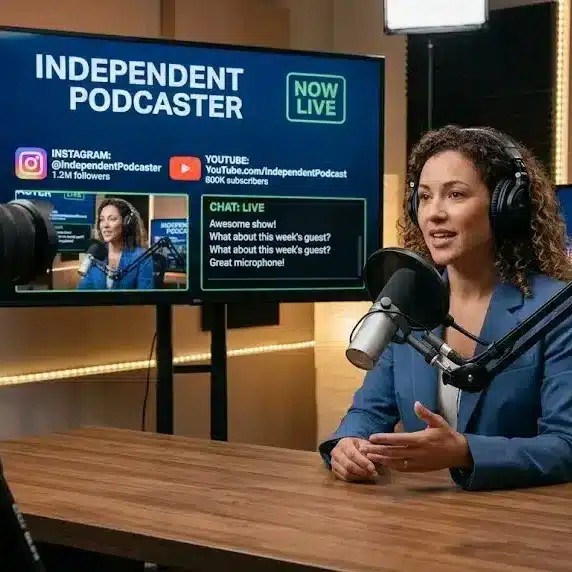
The survey also highlights the rapid growth of video podcasting among independent creators.
According to RSS.com, 51% of respondents now record video in some capacity, signaling a major shift in production strategies across the podcast industry.
For years, podcasting was viewed primarily as an audio-first medium. However, platforms like YouTube and Spotify have increasingly pushed video content as a way to improve engagement and discovery.
Among podcasters who publish video versions of their shows:
63% said video helped grow their audience either somewhat or significantly
This finding suggests that video is no longer merely an optional add-on for creators hoping to expand their reach.
Instead, video has become a central discovery tool.
Creators are now recording studio sessions, publishing full video episodes, clipping short-form highlights and repurposing interviews across multiple platforms.
YouTube emerged as the dominant destination for podcast video content, followed by social media platforms and Spotify.
This trend mirrors broader shifts occurring across the digital creator economy.
Audiences increasingly expect visual engagement, even for traditionally audio-based formats. Many listeners now consume podcasts while watching hosts interact on-screen, reading captions or engaging with visual storytelling elements.
For independent creators, adding video creates additional production costs and workflow complexity. Yet many appear willing to embrace those challenges because of the discoverability advantages video provides.
YouTube Is Becoming a Major Podcast Discovery Engine
The rise of video podcasting has also strengthened YouTube’s position within the podcast ecosystem.
While Spotify and Apple Podcasts remain major audio distribution platforms, YouTube is increasingly becoming one of the internet’s most powerful podcast discovery engines.
Creators are leveraging YouTube for:
Search visibility
Algorithmic recommendations
Long-form engagement
Subscriber growth
Cross-platform monetization
Community interaction
Unlike traditional podcast apps, YouTube’s recommendation engine can expose creators to entirely new audiences through suggested videos and homepage feeds.
This creates an opportunity for independent podcasters to grow organically without relying solely on chart rankings or paid promotion.
Additionally, YouTube content can continue generating traffic months or even years after publication thanks to search indexing and evergreen recommendations.
Many creators now structure podcasts with visual production in mind, incorporating multiple camera angles, studio aesthetics and audience-friendly video formatting.
The survey findings suggest that YouTube’s role within podcasting will likely continue expanding in the coming years.
Artificial Intelligence Is Transforming Podcast Production
Another major takeaway from the RSS.com survey is the growing integration of artificial intelligence tools into podcast workflows.
The report found that 56% of podcasters are either actively using AI tools or experimenting with them.
Rather than replacing creativity, AI appears to be functioning primarily as a productivity enhancer for creators juggling multiple responsibilities.
Podcasters reported using AI for tasks such as:
Episode transcripts
Show note generation
Brainstorming topics
Editing assistance
Social media captions
Clip generation
SEO optimization
Content repurposing
For independent creators operating without dedicated production teams, AI tools can dramatically reduce repetitive administrative work.
This allows podcasters to spend more time focusing on creative direction, interviews and audience engagement.
The growing use of AI also reflects broader shifts across digital publishing and content creation industries.
From journalism to video editing, creators increasingly rely on automation tools to accelerate workflows and remain competitive in fast-moving content environments.
However, the survey suggests podcasters are still using AI cautiously.
Most creators appear interested in using technology to support production efficiency rather than fully automate creative storytelling.
Independent Podcasters Are Investing Despite Limited Budgets
Even with monetization challenges, many independent podcasters continue investing money into their shows.
According to the survey:
More than half spend under $50 per month on podcast-related expenses
Nearly three-quarters pay for at least one podcast service or tool
The most common paid expenses include:
Podcast hosting services (48%)
Website costs (41%)
Editing and production software (31%)
AI tools (27%)
Marketing and promotion (19%)
Interestingly, creators are spending more on AI tools than marketing efforts.
This may indicate that podcasters currently prioritize improving workflow efficiency over direct audience acquisition spending.
It also reflects the affordability and accessibility of modern AI tools compared to traditional advertising campaigns.
Despite relatively modest budgets, many independent podcasters appear highly committed to growing their brands and improving production quality.
Monetization Remains Difficult for Smaller Podcasts
Although podcasting is often associated with sponsorship deals and creator income, the survey reveals that monetization remains out of reach for many independent podcasters.
Only 39% of respondents said they currently monetize their podcasts.
Among creators who are not earning revenue, nearly half said their audiences are still too small to generate meaningful income opportunities.
This highlights one of the biggest realities within podcasting today:
Most independent shows do not immediately become profitable.
Successful monetization often depends on building highly engaged niche audiences over time rather than chasing mass-market download numbers alone.
Among creators already generating income, programmatic advertising emerged as the leading revenue source.
Other monetization methods include:
Sponsorships
Affiliate marketing
Listener donations
Membership subscriptions
Premium content
Merchandise sales
Coaching or consulting services
However, many podcasters still view audience growth as the prerequisite for all future revenue opportunities.
Without scale or engagement, monetization options remain limited.
The Podcast Industry Is Becoming a Multi-Platform Media Ecosystem
The RSS.com survey paints a clear picture of where podcasting is heading.
Independent creators are no longer thinking of podcasts as standalone audio products. Instead, they are building multi-platform media ecosystems that combine:
Audio episodes
Video content
Social media clips
AI-assisted workflows
Community engagement
Search optimization
Cross-platform branding
This evolution reflects broader trends across digital media where creators must constantly adapt to changing algorithms, audience behavior and platform expectations.
Podcasting itself is becoming increasingly hybrid.
Audio remains the core format, but growth now depends heavily on visibility across visual and searchable platforms.
For many creators, success may ultimately depend less on producing excellent audio alone and more on mastering distribution, discoverability and audience engagement strategies.
The Future of Podcasting Could Be Defined by Discoverability
The survey findings reinforce one central truth about the modern podcast landscape:
Discovery is now the defining challenge.
As millions of podcasts compete for attention globally, creators must navigate fragmented audiences and evolving platform ecosystems.
The rise of video, AI and social distribution suggests podcasting is entering a new phase where creators must operate more like digital publishers than traditional broadcasters.
Those who successfully combine compelling storytelling with strategic distribution may be best positioned to thrive in the next era of podcasting.
At the same time, independent creators continue proving that podcasting remains one of the most accessible forms of media entrepreneurship available today.
Even with limited budgets, creators are experimenting, adapting and investing in new technologies to build communities around their voices and ideas.
And while audience growth remains difficult, the industry’s continued evolution suggests new opportunities are still emerging for creators willing to innovate.
Key Takeaways From the RSS.com Podcast Survey
Independent podcasters are increasingly adopting video content
Social media is becoming more important for podcast discovery
AI tools are widely used for editing, transcripts and promotion
Audience growth remains the industry’s biggest challenge
Most creators still struggle with monetization
YouTube is emerging as a major podcast discovery platform