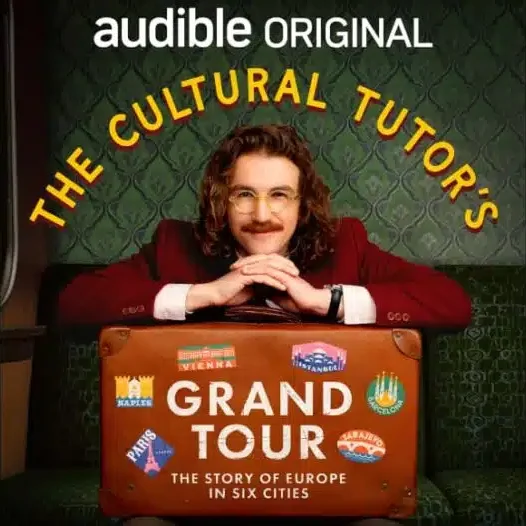
Audible Launches The Cultural Tutor’s Grand Tour Podcast Exploring Europe’s Cultural History
The global audio entertainment platform Audible has officially launched a brand-new original podcast titled “The Cultural Tutor’s Grand Tour.” Hosted by writer and educator Sheehan Quirke, the series takes listeners on an immersive audio journey through Europe’s cultural and historical landscape.
Released on 12 March 2026, the podcast series reimagines the centuries-old tradition of the Grand Tour, once undertaken by aristocratic travelers seeking cultural knowledge across the continent. Instead of physically traveling across borders, listeners can now explore iconic European cities through carefully crafted storytelling delivered in audio format.
Through six richly produced episodes, the podcast explores how everyday objects, forgotten historical events, and cultural traditions reveal powerful insights about Europe’s past. The show combines storytelling, history, art, and cultural commentary—creating a listening experience designed for curious audiences around the world.
The Concept Behind The Cultural Tutor’s Grand Tour
The concept behind the podcast draws inspiration from the historic Grand Tour tradition that flourished during the 17th and 18th centuries.
During that era, young European aristocrats traveled across cultural capitals like Paris, Rome, and Vienna to study:
Art and architecture
Literature and philosophy
Classical history
Music and theatre
These journeys were considered a vital part of a young person’s education and cultural development.
However, the new podcast adapts this tradition for the digital age.
Instead of traveling physically, listeners are guided through stories that reveal how culture evolves through time. Each episode focuses on a specific European city, exploring historical moments, cultural symbols, and intriguing stories that shaped the region.
According to the creators, the goal is to transform ordinary historical facts into captivating narratives that highlight the deep connections between culture, politics, art, and everyday life.
Who Is Sheehan Quirke, The Voice Behind the Podcast?
The host of the podcast, Sheehan Quirke, has become widely known online under the brand “The Cultural Tutor.”
He launched the educational project in 2022, focusing on making complex cultural ideas accessible to the public.
Through engaging posts on social media, Quirke built a large audience interested in:
Art history
Architecture
Literature and poetry
Philosophy
Historical storytelling
Within a few years, his platform grew dramatically, attracting more than 1.8 million followers across social media channels.
His posts often break down complex cultural ideas into simple, visually engaging threads—something that helped his work gain traction among students, academics, and casual readers alike.
His newsletter also gained popularity among readers from diverse professional fields, including:
Media professionals
University academics
Policy makers
Cultural commentators
With the launch of this new podcast, Quirke expands his educational storytelling into the rapidly growing audio content industry.
Why Audio Storytelling Is the Perfect Medium for Cultural Exploration
The launch of The Cultural Tutor’s Grand Tour also highlights a larger trend in digital media: the rise of long-form audio storytelling.
Platforms like Audible have invested heavily in podcasts and audio originals, responding to the growing demand for immersive listening experiences.
Audio storytelling offers several advantages when discussing cultural history:
1. Narrative immersion
Listeners can imagine historical scenes, cities, and characters through vivid storytelling.
2. Accessible learning
Podcasts allow audiences to learn while commuting, exercising, or relaxing.
3. Emotional connection
Voice narration adds tone, rhythm, and emotion that written text cannot always convey.
4. Global reach
A single podcast episode can reach listeners worldwide instantly.
For educational creators like Quirke, the format provides an opportunity to transform historical knowledge into engaging narratives.
A Six-City Journey Through European Culture
The podcast series is structured around six major European cities, each with a unique cultural identity and historical story.
These cities include:
Paris
Barcelona
Naples
Vienna
Sarajevo
Istanbul
Each episode focuses on one destination, revealing how cultural traditions, political events, and artistic movements shaped the city.
The storytelling approach is designed to reveal hidden historical connections behind everyday elements.
For example, something as ordinary as a city square, a piece of art, or a popular food can lead to fascinating historical discoveries.
Episode 1: Paris – Viking Raids, Royal Intrigue and an Ancient King
The series begins in the cultural capital of France, Paris.
Paris has long been a symbol of European art, philosophy, and political change. However, the podcast explores lesser-known stories from the city’s long history.
Among the fascinating narratives featured in the first episode:
Viking raids on medieval Paris
Centuries before Paris became a world cultural hub, Viking forces attacked the city during early medieval times.
These invasions shaped the development of defensive structures and political alliances across the region.
Royal intrigue and dramatic court politics
The episode also examines the complicated power struggles that defined France’s royal history.
These political dramas influenced the rise and fall of kings and reshaped the nation’s future.
One of the earliest recorded car chases
Surprisingly, the episode includes a story about what historians believe to be one of the earliest recorded car chases, showing how technology and urban life evolved.
Discovery of an ancient king
Another intriguing moment involves the discovery of a historical royal figure linked to artifacts found in the River Seine.
Through these stories, the podcast highlights how Paris’s history is woven from unexpected moments and forgotten events.
Episode 2: Barcelona – Reinvention and Artistic Revolution
4
The second episode travels to Barcelona, a city known for its dynamic identity and artistic influence.
Barcelona has undergone numerous transformations throughout its history—from a Roman settlement to a modern cultural powerhouse.
Key themes explored in the episode include:
The origins of Cubism
The episode examines how early artistic movements influenced the development of Cubism, one of the most revolutionary art styles of the 20th century.
The city’s tradition of reinvention
Barcelona has repeatedly reshaped itself following political upheavals and economic changes.
From industrial expansion to modern tourism, the city’s history is defined by adaptability.
The story behind FC Barcelona’s colours
One of the most fascinating segments explores the origins of the iconic colors worn by FC Barcelona.
The team’s red-and-blue stripes have become globally recognizable symbols of Catalan identity and pride.
Through these stories, listeners gain insight into how sports, art, and politics intertwine in shaping cultural identity.
Episode 3: Naples – Pizza, Music and Mount Vesuvius
4
The journey continues south to Naples, one of Europe’s oldest continuously inhabited cities.
Naples offers a rich blend of history, cuisine, and artistic heritage.
This episode highlights several fascinating topics:
The distant origins of pizza
The story of pizza—now one of the world’s most popular foods—begins in Naples.
The podcast traces its humble beginnings among working-class communities before it became a global culinary icon.
The city’s influence on art and music
Naples has played a major role in shaping classical music, opera, and artistic traditions across Europe.
The eruption of Mount Vesuvius
One of the most dramatic events in the region’s history was the eruption of Mount Vesuvius.
The disaster famously destroyed ancient cities such as Pompeii and Herculaneum, leaving behind preserved ruins that still fascinate historians today.
Episode 4: Vienna – Culture, Classical Music and Global Politics
4
Next, the series explores the imperial city of Vienna.
For centuries, Vienna served as the political and cultural heart of Central Europe.
The episode highlights:
The rise of classical music traditions
Cultural exchanges across empires
Political decisions that influenced global history
Vienna’s legacy includes some of the greatest composers in history, including figures like Wolfgang Amadeus Mozart and Ludwig van Beethoven.
Through music, philosophy, and diplomacy, Vienna became a center of intellectual life in Europe.
Episode 5: Sarajevo – Languages, Poetry and Scientific Discovery
4
The fifth episode focuses on Sarajevo, a city often described as a meeting point between East and West.
Sarajevo’s layered history reflects centuries of cultural interaction between empires, religions, and languages.
The episode explores:
Ancient linguistic traditions
Poetic heritage
Scientific discoveries linked to the region
Sarajevo’s diverse cultural background makes it one of the most historically complex cities in Europe.
Episode 6: Istanbul – Empires, Music and Ancient Love Poetry
4
The final episode takes listeners to Istanbul, a city that bridges Europe and Asia.
For centuries, Istanbul served as the capital of powerful empires, including the Ottoman Empire.
The episode explores:
Cultural innovations during the Ottoman period
Early musical inventions
One of the world’s oldest surviving love poems
Istanbul’s unique geographical position helped it become one of history’s most important crossroads of culture, trade, and religion.
The Growing Influence of Educational Creators
The success of creators like Quirke reflects a broader shift in how audiences consume educational content.
Instead of relying solely on textbooks or academic lectures, many people now turn to:
Podcasts
Social media threads
Online newsletters
Documentary storytelling
This approach makes learning more accessible and engaging for modern audiences.
Creators who combine academic depth with storytelling techniques are attracting large audiences worldwide.
Audible’s Strategy in the Podcast Industry
The release of The Cultural Tutor’s Grand Tour also highlights the strategic expansion of Audible into the podcast industry.
Originally known for audiobooks, Audible has increasingly invested in:
Original podcasts
Celebrity-hosted series
Documentary audio storytelling
Educational audio content
These investments aim to position the platform as a major destination for premium audio entertainment.
Why Cultural Podcasts Are Becoming Popular
Cultural history podcasts have seen a major surge in popularity in recent years.
Some key reasons include:
Curiosity about history
People are increasingly interested in understanding how historical events shape modern society.
Travel inspiration
Podcasts often inspire listeners to explore new destinations.
Intellectual entertainment
Educational podcasts offer knowledge while still being entertaining.
Global accessibility
Listeners anywhere in the world can explore different cultures without leaving home.
Where to Listen
The Cultural Tutor’s Grand Tour is now available as an Audible Original.
Listeners can access the podcast through the Audible app or website, where all six episodes are available to stream.
The series is expected to attract audiences interested in:
History and culture
European travel
Art and architecture
Educational storytelling
Final Thoughts
The launch of The Cultural Tutor’s Grand Tour marks an exciting addition to the growing world of cultural podcasts.
By combining historical storytelling with immersive audio production, the series transforms Europe’s rich heritage into engaging narratives for modern audiences.
For listeners curious about the deeper stories behind famous cities, the podcast offers a unique opportunity to explore centuries of culture—one episode at a time.