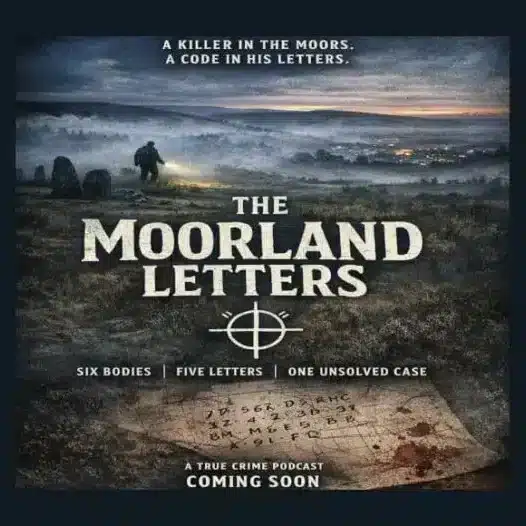
The Moorland Letters Podcast 2026: Fictional True Crime Series Explores Derbyshire Moor Murders
“The Moorland Letters” a ten-part series uses documentary-style storytelling to explore a string of mysterious deaths on the windswept Derbyshire moors — all tied together by a chilling anonymous letter signed only as “The Surveyor.”
Though fictional, the production adopts the tone, structure and pacing of modern investigative journalism, tapping into the global appetite for long-form true crime podcasts. Set between 1978 and 1983, the series follows six unexplained deaths that were initially dismissed as tragic accidents — until a local newspaper receives a typed confession claiming responsibility.
With coded coordinates, cryptic symbols and unsettling clues scattered across the landscape, the story unfolds as an audio investigation that questions memory, myth, media influence and the ethics of storytelling itself.
Here’s everything we know about one of 2026’s most talked-about new podcast releases.
A Serialised Rural Mystery Designed Like Real True Crime
Unlike conventional fiction dramas, The Moorland Letters mirrors the structure of documentary reporting. Across ten 45-minute episodes, listeners are guided through reconstructed interviews, archival-style recordings, narrated investigation and expert commentary.
The storytelling technique draws clear inspiration from landmark investigative audio series such as Serial and S-Town, which popularised immersive, episodic journalism in the podcast era.
Key Elements of the Series:
Ten episodes, approximately 45 minutes each
Set between 1978 and 1983
Six unexplained rural deaths
A mysterious confession letter
Coded symbols and geographic coordinates
Exploration of folklore and landscape mythology
Documentary-style production with dramatic reconstruction
By adopting this hybrid format, the creators aim to create something that feels disturbingly plausible — even though the case itself is entirely fictional.
The Derbyshire Moors: A Landscape Turned Character
4
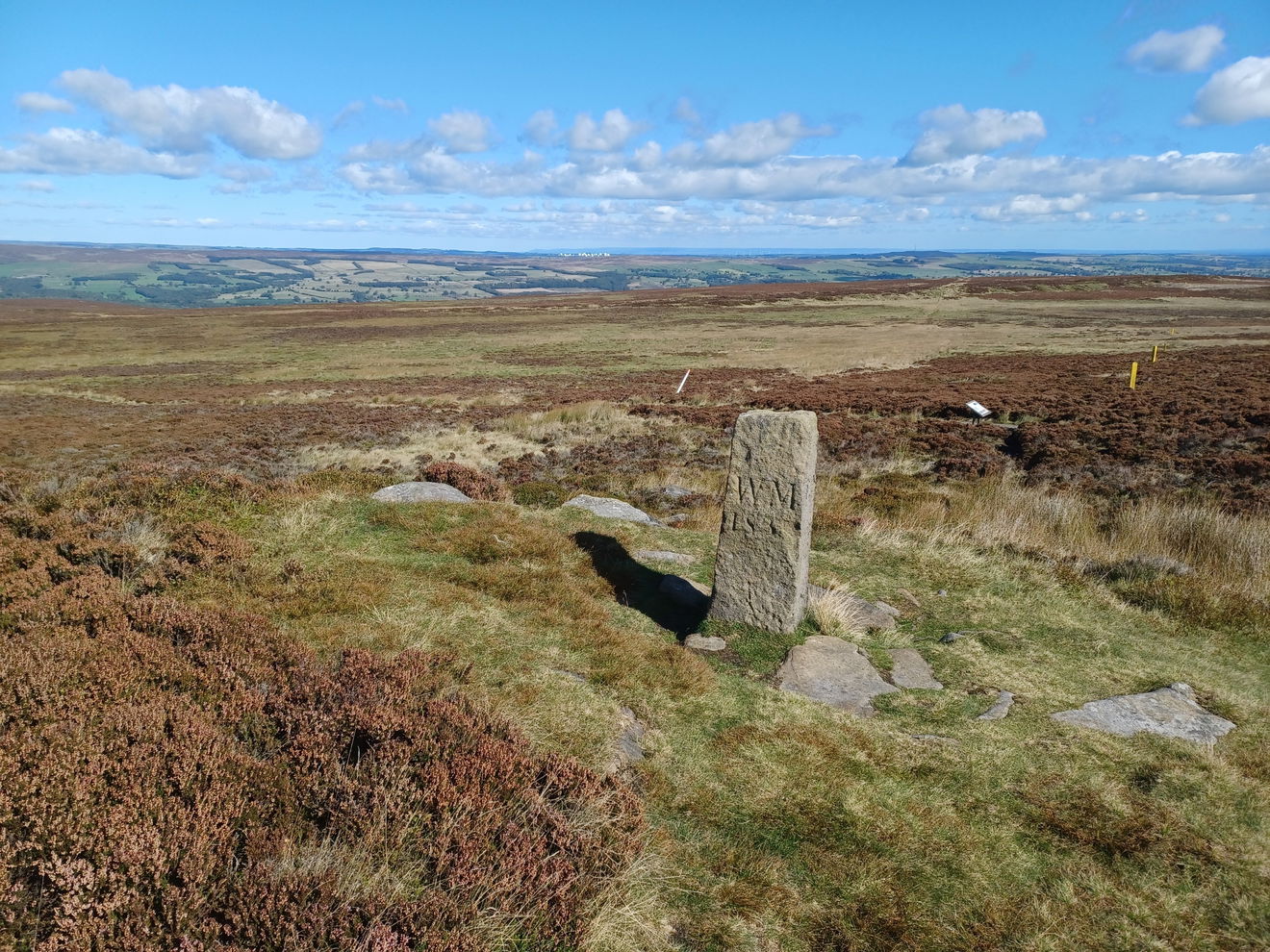
The setting is central to the narrative. The vast, often desolate moorland of Derbyshire provides more than atmospheric backdrop — it becomes an active presence in the story.
The fictional investigation unfolds across the isolated stretches of countryside near the Peak District, where shifting weather, sparse habitation and rugged terrain amplify a sense of vulnerability.
According to creator Stuart Wheeldon, the landscape is not merely a setting but a narrative force.
“A story about landscape, memory, and the danger of turning violence into narrative. The moor becomes both setting and character — a place where boundaries matter, and where the act of mapping can become something darker.”
This thematic emphasis on mapping, borders and geography plays directly into the identity of the anonymous correspondent — “The Surveyor.”
Who Is “The Surveyor”? The Anonymous Letter That Changes Everything
Midway through the unfolding timeline, a local newspaper receives a typed letter claiming responsibility for the six deaths. The message includes:
Survey coordinates marked across rural land
Unexplained symbols
References to landscape measurements
Hints at a larger pattern
Signed only as “The Surveyor,” the letter challenges both police and journalists to identify a geographical logic linking the deaths.
The series explores how media outlets handle such communications, raising ethical questions about amplification and notoriety. Should newspapers publish excerpts? Does reporting on anonymous claims risk giving criminals a platform?
These themes resonate strongly in a digital age where viral attention can elevate criminal infamy.
Blending Folklore with Investigative Journalism
One of the distinctive features of The Moorland Letters is its integration of rural folklore into the investigative narrative.
The moors have long been associated with myths, cautionary tales and ghost stories. By weaving folklore motifs into a contemporary crime framework, the podcast creates layers of ambiguity:
Are the symbols rooted in local legend?
Do the coordinates correspond to historical sites?
Is the killer exploiting existing mythology?
The result is a psychological landscape where documentation and myth collide.
Documentary Realism: Fiction That Feels Uncomfortably Real
Although the case is imaginary, the production team deliberately avoids sensationalism. Instead, it adopts restrained narration, measured pacing and journalistic discipline.
Production Techniques Include:
Archival-style tape recordings
Reconstructed interviews with fictional witnesses
Forensic-style commentary
Newsroom discussions
Period-accurate audio textures
The aim is authenticity — making listeners question what is real and what is dramatized.
This approach reflects a broader trend in audio storytelling where fiction increasingly borrows documentary grammar to heighten immersion.
Exploring the Fragility of Records and Memory
Beyond its crime narrative, the series interrogates how stories are recorded — and how some vanish.
The investigation delves into:
Lost case files
Degraded audio tapes
Newspaper archives
Misfiled documents
Human memory distortions
By highlighting gaps in archival evidence, the podcast underscores how easily narratives can fragment over time.
It also examines how journalists shape the historical record, deciding which voices are preserved and which fade.
Media Ethics and the Amplification of Criminal Voices
As the story develops, the fictional newsroom must decide how to report on “The Surveyor.”
This dilemma echoes real-world debates surrounding high-profile criminal cases:
Does coverage fuel notoriety?
Should anonymous confessions be published?
Can investigative reporting unintentionally glorify violence?
The podcast presents these tensions without easy answers, encouraging listeners to question the ethics of true crime consumption itself.
Why “The Moorland Letters” Could Become 2026’s Breakout Podcast
True crime remains one of the most downloaded genres globally, and audiences continue to gravitate toward long-form investigative narratives.
Several factors position this series for breakout success:
1. Hybrid Format
Blends documentary realism with fictional storytelling.
2. Rural Gothic Atmosphere
The moorland setting provides distinctive mood and isolation.
3. Ethical Depth
Moves beyond simple whodunnit mechanics.
4. Serialised Structure
Encourages binge listening across ten episodes.
5. Folklore + Crime Fusion
Adds cultural texture rarely explored in mainstream podcasts.
When and Where to Listen
The Moorland Letters is scheduled for release later in 2026 and will be available across all major podcast platforms, including:
Spotify
Apple Podcasts
Amazon Music
Google Podcasts
Listeners can expect weekly episode drops, maintaining suspense across the full ten-part run.
The Bigger Picture: The Evolution of Fictional True Crime
In recent years, the boundaries between documentary and drama have blurred significantly. Fictional investigative formats are becoming increasingly sophisticated, adopting journalistic structure while maintaining narrative control.
The Moorland Letters represents a continuation of this evolution — a project that reflects on the mechanics of storytelling while simultaneously delivering suspense.
It asks a provocative question: When does documentation become mythology?
Final Thoughts
Set against the haunting beauty of Derbyshire’s moors, The Moorland Letters promises more than mystery. It offers a meditation on memory, media responsibility and the uneasy fascination society holds for unsolved crimes.
With its layered narrative, atmospheric setting and ethical depth, the series could redefine what fictional true crime sounds like in 2026.
For listeners drawn to immersive storytelling that feels unsettlingly real, this ten-part drama may be essential listening.