Why Audio Advertising Is the Best Way to Reach Ad-Free Streaming Audiences in 2025
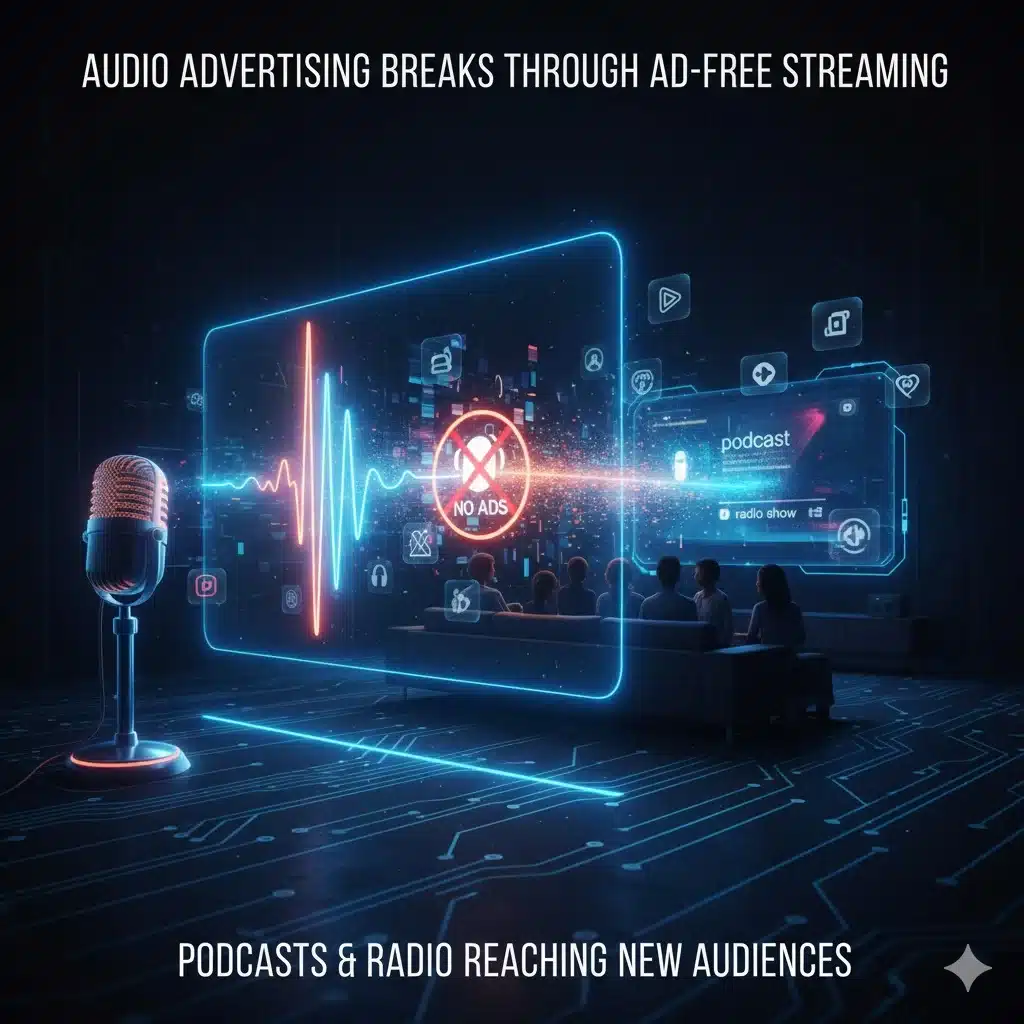
As ad-free video streaming platforms continue to attract millions of subscribers worldwide, advertisers face a growing challenge: how do you reach audiences who pay specifically to avoid ads?
New industry research reveals a compelling answer — audio advertising.
Fresh data from multiple research firms suggests that audio platforms such as podcasts and AM/FM radio are now one of the most effective channels to reach ad-free streaming subscribers, opening new opportunities for brands, advertisers, and streaming platforms alike.
This shift highlights a broader transformation in consumer media habits — and signals a strategic pivot in how advertisers should plan campaigns in the streaming era.
The Growing Challenge: Reaching Ad-Free Streaming Subscribers
Subscription video-on-demand (SVOD) platforms like Netflix, Amazon Prime Video, Disney+, and others continue to expand their ad-free subscriber bases.
However, advertisers increasingly struggle to connect with these premium viewers, since traditional TV advertising does not reach them effectively.
The Key Question:
If ad-free viewers can’t be reached through video ads, where can advertisers find them?
The data now points to audio.
Audio and Streaming Audiences Are More Similar Than Advertisers Expected
According to a quarterly national survey of over 2,000 respondents by Screen Engine/ASI, the demographic profile of streaming subscribers closely mirrors that of heavy podcast listeners and AM/FM radio audiences — not traditional television viewers.
Key Shared Demographics Between Streaming Subscribers and Audio Listeners:
Similar age groups (working-age adults)
Comparable employment levels
Higher likelihood of having children at home
More likely to live in busy, multitasking households
More digitally engaged than traditional TV viewers
Expert Insight:
Lauren Vetrano, VP of Advertiser Measurement & Insights at Cumulus Media/Westwood One Audio Active Group, explains:
“The age profile, presence of children, and employment levels of video streaming subscribers and viewers closely match heavy podcast and AM/FM radio listeners. Traditional linear TV audiences tend to be older and less likely to be working or raising children.”
This finding reshapes assumptions about where advertisers should invest media budgets.
Podcast Consumers Are Heavy Users of Ad-Free Video Streaming
A separate study by Signal Hill Insights and Quantilope, conducted among more than 600 weekly podcast listeners, found a powerful overlap between podcast consumers and ad-free streaming users.
Key Findings from the Study:
94% of weekly podcast listeners used a video streaming service in the past month
86% reported using an ad-free video streaming platform
On average, podcast listeners spend 41% of their video viewing time on ad-free streaming services
35% do not subscribe to any traditional pay-TV provider
What This Means:
Podcast audiences are not only digitally active, but also increasingly disconnected from traditional television, making them difficult to reach via legacy media channels.
Netflix and Amazon Prime Lead Among Ad-Free Streaming Choices
Among weekly podcast consumers:
Netflix ranks as the most preferred ad-free streaming service
Amazon Prime Video follows closely behind
Viewers show a strong preference for premium, uninterrupted content experiences
This further reinforces that audio-first consumers and premium streaming subscribers overlap at scale — a valuable insight for brands targeting high-spending, tech-savvy users.
Podcast Ads: The Hidden Channel to Reach Ad-Free Viewers
While video streaming viewers may avoid traditional ads, they remain highly reachable through podcast advertising.
Why Podcast Ads Work:
Podcasts are consumed during commutes, workouts, work hours, and multitasking
Listeners often form strong emotional trust with podcast hosts
Podcast ads are typically host-read and conversational, making them feel less intrusive
High engagement and recall rates compared to display or video ads
Lauren Vetrano highlights:
“While these consumers are streaming ad-free video content, they can still be effectively reached through podcast advertising.”
This makes podcasts one of the most strategic ad placements in the modern media mix.
Heavy Podcast Listeners Are Also Heavy Ad-Free Streamers
Another compelling insight from the research shows that the more time someone spends listening to podcasts, the more time they also spend streaming ad-free TV content.
Notable Data Points:
Heavy podcast listeners (6+ hours per week) are 17% more likely to be heavy ad-free streaming users
Heavy podcast consumers average 6.5 hours per week on ad-free streaming platforms
This represents 12% more streaming time than casual podcast listeners
Why This Matters:
This segment represents a premium, hard-to-reach audience — people who actively avoid traditional TV ads but remain accessible through audio platforms.
Advertisers Are Missing an Opportunity in Audio
Despite these insights, most streaming services and advertisers still invest heavily in traditional TV advertising, underutilizing audio channels.
MediaRadar & Magellan 2025 Ad Spend Data:
Platform
Advertising Spend
Linear Television
$1.1 Billion
Podcasts
$83 Million
AM/FM Radio
$42 Million
Industry Interpretation:
This spending gap signals a major untapped opportunity.
“The historically high spend on television and relatively low spend on podcasts and radio creates a major opportunity for streaming platforms to build stronger share-of-voice in audio,” says Vetrano.
Why Streaming Platforms Should Invest More in Audio Ads
Streaming companies are now encouraged to use audio platforms not only to promote subscriptions but also to strengthen brand presence.
Strategic Benefits of Audio Advertising for Streaming Brands:
Lower cost per acquisition (CPA) compared to TV ads
Ability to reach cord-cutters and ad-avoidant consumers
Less competition compared to TV ad clutter
The Psychological Advantage of Audio Advertising
Unlike video ads, audio ads feel personal and immersive.
Why Audio Is Effective:
Listeners consume audio in private, focused environments
Human voice creates trust and authenticity
No visual distractions = higher message retention
Host-read ads feel like recommendations rather than commercials
This gives brands a more organic and credible path to influence high-value consumers.
Audio Advertising Fits Modern Multitasking Habits
Modern consumers increasingly multitask across devices — streaming TV while browsing social media, listening to podcasts while working, or commuting while consuming audio content.
Audio Ads Reach Consumers When:
Driving
Exercising
Working remotely
Doing household tasks
Browsing mobile devices
Relaxing with headphones
This makes audio always-on, always-accessible marketing.
The Future of Advertising: Audio + Streaming Convergence
As ad-free streaming continues to grow, advertisers must diversify beyond video ads.
The Emerging Strategy:
Use audio ads to reach premium streaming audiences
Combine podcast, radio, and music streaming campaigns
Focus on host-read ads, branded content, and sponsorships
Leverage cross-platform storytelling
Audio is no longer a secondary channel — it is becoming a primary gateway to high-value streaming viewers.
What This Means for Brands, Marketers, and Media Buyers
Brands Should:
Shift more budget into podcasts and audio platforms
Target premium streaming audiences indirectly via audio
Invest in brand storytelling through voice
Streaming Platforms Should:
Increase audio ad investment
Build partnerships with podcast networks
Promote content using host endorsements
Media Buyers Should:
Re-evaluate TV-heavy ad plans
Explore audio-first campaigns
Optimize for cross-device attribution tracking
Conclusion: Audio Advertising Is No Longer Optional — It’s Essential
The evidence is clear: Ad-free streaming audiences are not unreachable — they’re just listening instead of watching ads.
As podcast consumption rises and traditional TV viewership declines, audio is emerging as the most efficient bridge between advertisers and premium streaming subscribers.
Brands that act early on this shift stand to gain:
Higher ROI
Stronger brand loyalty
Access to premium, high-spending consumers
Competitive advantage in a crowded media ecosystem
In 2025 and beyond, audio advertising is not just a workaround — it’s a frontline strategy.