YouTube Expands Auto Dubbing for All Creators as Podcast Views and Ad Revenue Surge
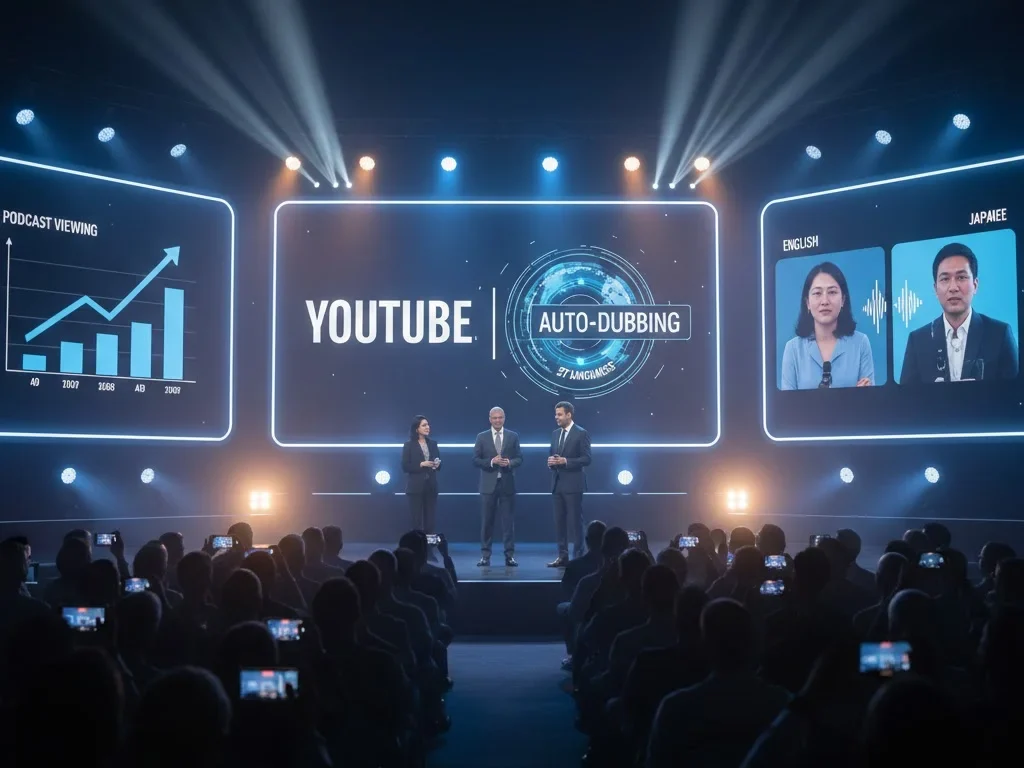
YouTube is making a major move to accelerate global content discovery in 2026. The platform has officially announced that it is expanding its auto dubbing feature to all creators, a development that could dramatically reshape how podcasts, long-form videos, and creator-led shows reach audiences worldwide.
The update comes at a time when YouTube is experiencing explosive growth in both podcast consumption on TV screens and advertising revenue, with Google confirming YouTube’s total revenue crossed a historic milestone in 2025.
The message is clear: YouTube wants to become the world’s most dominant video podcast and creator commerce platform, and auto dubbing is now one of its most powerful weapons.
Auto dubbing is expanding to all creators on YouTube
YouTube is increasing translations to 27 languages
“Expressive dubbing” is being introduced in 8 major languages
A Lip Sync pilot program is in testing to match dubbed audio with mouth movement
YouTube recorded 6 million daily viewers watching auto-dubbed content in December
YouTube’s annual revenue crossed $60 billion in 2025
YouTube ad revenue jumped 9% in Q4 2025, hitting $11.4 billion
Podcast watch time on living room devices hit 700 million hours in October 2025
YouTube Shorts now averages 200 billion daily views globally
This isn’t just a feature rollout—it’s a major shift in how YouTube wants creators to scale globally.
YouTube Auto Dubbing Is Now Going Global
YouTube’s auto dubbing tool is no longer limited to a selected group of creators. The company confirmed that it is opening up the feature to all creators, giving millions of channels access to automated translations that can generate dubbed audio tracks in multiple languages.
For years, creators have relied on subtitles or manual voiceovers to localize content. But that process is expensive, time-consuming, and often out of reach for smaller podcasters and independent creators.
Now YouTube is trying to eliminate that barrier entirely.
Auto dubbing is expected to help creators:
Expand audiences internationally
Increase watch time from non-English markets
Improve content discoverability in foreign-language searches
Monetize viewers in global ad markets
Strengthen subscriber growth outside their home region
In a creator economy where global reach is everything, YouTube’s new move may become a game changer.
Auto Dubbing Expands to 27 Languages
One of the biggest announcements is that YouTube is scaling its translation capability to 27 languages.
That means creators can now have their videos automatically dubbed into more languages than ever before—opening doors to massive markets across Asia, Europe, Africa, and Latin America.
This upgrade could be especially impactful for:
News creators
Educational channels
Business podcasts
Finance influencers
Documentary storytellers
Health and wellness creators
Motivation and self-help podcasts
As YouTube becomes increasingly multilingual, the platform is positioning itself to become the “Netflix of creator-led content.”
What Is “Expressive Language” and Why It Matters?
YouTube isn’t just focusing on translating words—it is now trying to translate emotion.
The company says it is introducing a new feature called expressive language dubbing, which attempts to preserve the original speaker’s tone, energy, and emotional delivery.
This expressive dubbing will be available for content in eight languages:
English
French
German
Hindi
Indonesian
Italian
Portuguese
Spanish
According to YouTube, this upgrade is designed to capture the creator’s original “emotion and energy,” making dubbed content feel less robotic and more human.
For podcasters, this could be the difference between:
A dubbed episode that feels unnatural vs
A dubbed episode that sounds authentic and engaging
This is critical because podcast audiences rely heavily on voice personality. Tone matters as much as content.
YouTube Tests Lip Sync to Make Dubs Look Real
YouTube is also experimenting with a new Lip Sync pilot program, aimed at solving one of the biggest weaknesses of dubbed content: the mismatch between audio and mouth movement.
In traditional dubbing, viewers often notice that the speaker’s lips do not align with the translated speech. This can break immersion and reduce engagement.
To address this, YouTube is testing a system that subtly adjusts lip movement to match the dubbed audio track.
If successful, viewers could experience dubbed content that feels almost identical to the original.
That means watching a podcast episode in Spanish could visually appear as natural as the English version.
This is a major leap forward, and it suggests YouTube is preparing for a future where language is no longer a barrier to viral growth.
YouTube Will Automatically Detect When a Video Shouldn’t Be Dubbed
In an effort to keep content authentic, YouTube is also improving how the system decides what should be dubbed.
Product Manager Chandralekha Motati revealed that YouTube is adding automatic smart filtering, which will recognize videos that are not ideal for dubbing.
Examples include:
Music videos
Silent vlogs
Content heavily based on sound effects
Videos where dubbing would distort the creative intent
This ensures that creators do not accidentally publish awkward or misleading dubbed versions.
YouTube wants auto dubbing to enhance content—not damage its originality.
YouTube Says Auto Dubs Won’t Hurt Discoverability
One of the biggest concerns creators have is whether dubbing could confuse YouTube’s algorithm or reduce the reach of their original-language video.
But YouTube insists that is not the case.
Motati said creators do not need to worry, stating:
“Auto dubs are all gain and no pain.”
She explained that auto dubbing does not negatively impact the discovery algorithm for the original upload. Instead, it may increase discoverability across additional languages.
This means creators could potentially rank in:
Spanish search results
French recommendations
Hindi trending categories
Portuguese suggested videos
…without uploading multiple versions of the same content.
For SEO and discoverability, this is huge.
Auto-Dubbed Content Viewership Is Exploding
YouTube also revealed impressive numbers that show users are embracing dubbed content at scale.
In December 2025, YouTube averaged:
More than 6 million daily viewers
who watched at least 10 minutes of auto-dubbed content.
That is not a small experiment—it’s a major behavioral shift.
It also signals that global audiences are willing to watch translated creator content if the experience feels smooth.
And with expressive dubbing and lip sync enhancements, YouTube is clearly trying to make dubbed content mainstream.
Video Podcasts Are Growing Faster Than Ever on YouTube
Auto dubbing expansion comes at the perfect time, because YouTube has become a major hub for podcasts.
Unlike Spotify and Apple Podcasts, YouTube offers creators something unique:
Video + audio podcast consumption
A recommendation engine built for virality
Monetization through ads, memberships, and commerce
Global accessibility through translations
This has fueled a new era of “video-first podcasts,” where creators post full episodes with visuals, clips, and Shorts for promotion.
The result? Massive growth in living room podcast consumption.
YouTube Podcasts Are Taking Over the Living Room
Google CEO Sundar Pichai shared a major statistic highlighting YouTube’s dominance in home entertainment.
He said that in October 2025:
Viewers watched over 700 million hours of podcasts
on living room devices.
That figure represents a staggering:
75% growth year-over-year
This confirms what many creators already suspected: YouTube is no longer just a mobile platform.
It has become a living room entertainment giant, with YouTube podcasts now competing directly with streaming services.
Smart TVs are now a primary battleground for creator content.
Why YouTube’s Living Room Growth Matters
The living room shift is more important than it seems.
When users watch YouTube on TV devices:
Sessions are longer
Engagement is higher
Ads are more valuable
Family viewing increases exposure
Podcast-style long content performs better
That means creators producing hour-long interviews, business podcasts, true crime discussions, or motivational talk shows are positioned to benefit more than ever.
And now with auto dubbing, those same podcasts can be watched globally.
YouTube Announces New YouTube TV Plans
Alongside its growth numbers, Pichai also hinted at upcoming expansion in YouTube TV services.
He said YouTube plans to introduce:
More choice for subscribers
More flexible plan options
Additional growth features for home viewers
This suggests YouTube is doubling down on premium subscription revenue, while simultaneously expanding its ad business.
YouTube Revenue Crosses $60 Billion in 2025
Google’s earnings update delivered one of the biggest headlines in digital media:
YouTube revenue topped $60 billion in 2025
That is a massive milestone and further confirms YouTube’s position as one of the most profitable media platforms in the world.
For podcasters and creators, this is a bullish sign.
More revenue means more investment in creator tools, AI features, discovery improvements, and monetization opportunities.
YouTube Ad Revenue Jumps to $11.4 Billion in Q4
The most relevant figure for podcasters is YouTube’s advertising surge.
Google reported that YouTube ad revenue grew:
9% year-over-year
reaching:
$11.4 billion in Q4 2025
That growth signals strong advertiser confidence and increasing ad demand across the platform.
Google also noted that the strongest momentum came from:
Direct response ads
These are performance-based ads focused on driving purchases, signups, or app installs.
In other words: YouTube is becoming a performance marketing machine.
Why Direct Response Ads Are a Big Win for Creators
Direct response ads are a major win because they typically come with:
Higher advertiser budgets
Stronger CPM rates
More demand for creator partnerships
Increased interest in influencer sponsorships
This aligns perfectly with YouTube’s push to become a shopping and commerce-driven platform.
And creators are at the center of that strategy.
YouTube Wants to Become the Premier Shopping Destination
Google Chief Business Officer Philip Schindler made it clear that YouTube is aggressively building its shopping ecosystem.
He said that YouTube viewers trust product recommendations from creators, and the company is focused on making YouTube a premier shopping destination.
Schindler explained that Google is working to:
Connect creators and brands more effectively
Scale sponsorship opportunities
Enable advertisers to showcase products during high visibility moments
This indicates that YouTube is not just a content platform anymore—it’s evolving into a creator-powered e-commerce engine.
Sponsorship Growth Could Explode in 2026
This shift could dramatically reshape podcast monetization.
Traditionally, podcasters earn through:
Brand sponsorships
Affiliate marketing
Podcast network deals
Subscription platforms
But YouTube is now building tools that allow:
Integrated product placements
Direct shopping links
Sponsored Shorts campaigns
Live shopping experiences
For creators, this could mean more diversified income streams and better long-term revenue stability.
Subscription Revenue Is Growing Rapidly Too
Advertising is not the only growth engine.
Google also reported that revenue from subscriptions, platforms, and devices rose:
17% year-over-year
That includes:
YouTube Premium
YouTube Music
YouTube TV
Channel memberships
Paid content models
This matters because subscription growth usually signals stronger platform stability and improved creator payouts over time.
YouTube Shorts Hits 200 Billion Daily Views
Short-form content remains one of YouTube’s strongest growth drivers.
Google confirmed that YouTube Shorts now averages:
200 billion daily views
That is an unbelievable number and puts Shorts in direct competition with TikTok and Instagram Reels.
Even more important is what Google said next:
In several markets, Shorts now generates more revenue per watch hour than traditional in-stream video ads, including in the United States.
This is a huge development, because Shorts monetization has been a major concern for creators.
Now YouTube is proving it can turn short-form attention into real revenue.
Why Shorts Monetization Matters for Podcast Creators
Podcast creators increasingly rely on Shorts as promotional fuel.
Short clips help podcasters:
Drive traffic to full episodes
Build a global audience quickly
Create viral moments from long interviews
Convert casual viewers into subscribers
With Shorts generating higher revenue per watch hour in key markets, podcasters now have even more reason to invest in clip strategies.
The combination of:
Shorts for discovery and
Long-form podcasts for watch time
…creates a powerful growth loop.
How Auto Dubbing Could Transform the Podcast Industry
The real headline is not just “auto dubbing is expanding.”
The real headline is what it means for podcasting as a global business.
Auto dubbing could allow podcasters to:
Build international fanbases without hiring translators
Monetize global markets with minimal effort
Expand brand sponsorship reach beyond local audiences
Compete with major media companies globally
For example:
A U.S.-based business podcast could suddenly gain traction in Brazil. A Hindi podcast could find a massive audience in Europe. A Spanish comedy show could go viral in Southeast Asia.
This kind of global cross-pollination has never been possible at scale for independent creators.
A New Era: “One Podcast, Many Languages”
YouTube’s direction suggests the future of podcasting will look like this:
A creator records once
YouTube automatically translates into 20+ languages
The platform distributes the dubbed versions worldwide
Ads and recommendations scale across regions
This creates a “record once, publish everywhere” model.
It’s similar to how Netflix distributes shows globally—but now creators can do it instantly.
That is disruptive not just for podcasting, but for traditional media.
What Creators Should Expect Next
Based on YouTube’s current trajectory, creators should prepare for:
1. Increased Competition in Global Content
Once dubbing becomes mainstream, international content will flood local feeds.
Creators will need stronger branding and storytelling to stand out.
2. More Emphasis on Voice Identity
Expressive dubbing is meant to preserve emotional delivery, which means voice style and tone will become a key competitive advantage.
3. Better Cross-Border Monetization
Advertisers will target international audiences more aggressively, increasing opportunities for creators who appeal globally.
4. A Boom in Multi-Language Channels
Creators may begin building communities across multiple regions without creating separate channels.
What This Means for YouTube’s Algorithm
YouTube’s recommendation system is one of the most powerful in the world.
By expanding auto dubbing, YouTube is essentially feeding its algorithm with:
More accessible content
More watch time opportunities
More engagement across languages
More retention in international markets
That strengthens the platform’s entire ecosystem.
It also means creators who adopt dubbing early may gain an algorithmic advantage, especially in less saturated markets.
YouTube’s AI Push Is Changing Content Creation
Auto dubbing is another major step in YouTube’s AI expansion strategy.
Over the last few years, YouTube has introduced AI-driven tools such as:
Automatic captions
Translation tools
Content moderation automation
AI music and remixing features
Enhanced recommendations
Shorts editing tools
Now dubbing is becoming one of the most impactful AI creator tools ever introduced.
This signals a future where creators can scale globally without needing production teams.
Will Auto Dubbing Replace Human Voiceovers?
Not entirely—at least not yet.
Professional dubbing still offers advantages such as:
Perfect cultural adaptation
Better comedic timing
Natural slang usage
Higher emotional accuracy
But YouTube’s move will likely reduce the need for human voiceovers for most creators, especially those who cannot afford localization teams.
The goal is not perfection—it’s accessibility and scale.
And YouTube is clearly betting that “good enough dubbing” will outperform “no translation at all.”
Why YouTube Is Winning the Podcast Wars
The podcast market is becoming highly competitive.
Platforms like:
Spotify
Apple Podcasts
Amazon Music
Audible
…have invested heavily in exclusive podcast deals.
But YouTube is winning for one simple reason:
YouTube offers video, virality, and monetization in one place.
Unlike audio-first platforms, YouTube makes it easier for podcasts to become cultural moments through:
Clips
Shorts
Community posts
Live streams
Comment engagement
Recommendation engine boosts
Now with auto dubbing, YouTube can offer something even bigger:
Instant global distribution.
That is a serious advantage.
The Bigger Picture: YouTube’s 2026 Strategy Is Clear
When you combine all these developments—auto dubbing, expressive language, lip sync, Shorts monetization, TV growth, ad revenue growth—the strategy becomes obvious.
YouTube is building a platform where:
Creators publish once
Content spreads globally
Ads and shopping drive revenue
Viewers consume long content on TV screens
Shorts fuel viral discovery
AI removes language and production barriers
This is not just a tech update.
It is YouTube’s blueprint for dominating digital media in 2026 and beyond.
What Podcasters Should Do Right Now (Actionable Tips)
If you are a podcaster or creator, here’s how to take advantage of this shift:
Start Optimizing Content for International Reach
Even if you speak one language, focus on universal topics like:
Self-improvement
Entrepreneurship
Finance
Relationships
Health
Productivity
Entertainment
Global news analysis
Use Simple and Clear Speech Patterns
Auto dubbing performs better when speech is clear and structured.
Avoid heavy background noise and overlapping conversations.
Create Shorts Clips for Every Episode
Short clips are the fastest way to attract international viewers.
Watch Analytics for Foreign Markets
Once dubbing is enabled, check which countries start growing and tailor content accordingly.
Prepare for Sponsorship Growth
Brands will increasingly want creators who have multi-country audiences.
Frequently Asked Questions (FAQs)
Is YouTube auto dubbing available for all creators now?
YouTube says it is expanding the tool to all creators, signaling broad availability across the platform.
How many languages does YouTube auto dubbing support?
YouTube is expanding translation to 27 languages.
What is expressive dubbing?
Expressive dubbing is a feature designed to preserve a creator’s emotion, tone, and energy in translated versions.
Is YouTube using lip sync for dubbed content?
YouTube is testing a Lip Sync pilot that subtly matches mouth movement with dubbed audio.
Does auto dubbing affect YouTube SEO or discovery?
YouTube says auto dubs do not negatively impact the original video’s discoverability and may improve reach in other languages.
How big is YouTube’s podcast audience?
YouTube reported 700 million hours of podcast viewing on living room devices in October 2025, up 75% year-over-year.
How much money did YouTube make in 2025?
Google reported YouTube revenue topped $60 billion in 2025.
Final Thoughts: YouTube’s Auto Dubbing Could Change Creator Growth Forever
YouTube’s decision to expand auto dubbing to all creators is not a small update—it’s a major evolution in the global creator economy.
The platform is clearly building toward a future where:
Language barriers vanish
Creators become global media brands overnight
Podcasts dominate smart TV viewing
Advertising and shopping fuel massive monetization growth
For podcasters and video creators, the opportunity is enormous.
In 2026, it may no longer matter where a creator is based or what language they speak.
What will matter is storytelling, authenticity, and consistency—because YouTube is now giving creators the tools to reach the entire world.