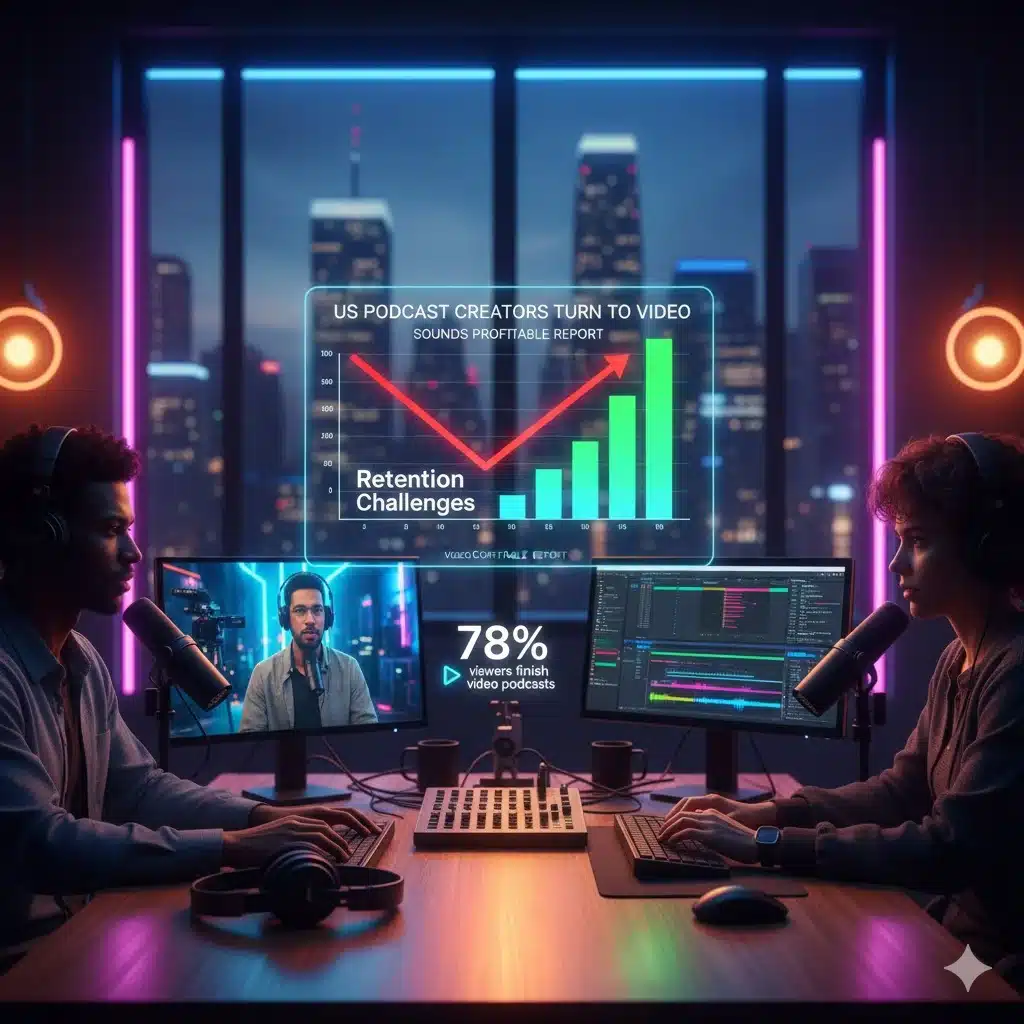
US Podcast Creators Turn to Video as Retention Challenges Rise — Sounds Profitable Report 2025
The podcast industry in the United States is undergoing its most significant transformation in years, according to The Creators 2025, a new report published by Sounds Profitable. The study reveals that while podcasting continues to attract new voices at an unprecedented pace, the industry is grappling with a serious retention challenge — and video is emerging as the most influential factor shaping creator success.
Based on a comprehensive survey of 5,035 US adults aged 18+, the report is Sounds Profitable’s second major exploration into creator behaviour following its landmark 2022 study. Its findings paint a picture of a podcasting ecosystem that is no longer audio-first — but multi-format, multi-platform, and increasingly driven by video.
Key Findings at a Glance
71% of active creators now produce video content
35% create video-only podcasts
36% operate in both audio and video formats
29% remain audio-only
Multicultural communities are leading growth in creator participation
Creator churn is rising, with a significant drop-off between new and active creators
The report suggests that today’s creator environment is more diverse, more experimental, and more demanding than ever — forcing podcasters to rethink how they produce content and engage audiences.
Video Takes the Lead as Platforms Shift Strategies
From YouTube to Spotify to Apple Podcasts, major platforms are leaning heavily into video-first podcasting. Sounds Profitable argues that creators are being influenced not only by audience expectations but by their own consumption habits.
“The data shows creators are choosing different paths: some video, some audio, many doing both,” said Tom Webster, Partner at Sounds Profitable. “What matters most isn’t which format they choose, but whether they’re creating in formats they consume themselves. That alignment is what separates creators who stick with it from those who burn out.”
Why Video Is Becoming Essential
YouTube is now the top platform for podcast discovery
Creators who make video content show the highest retention rates
Younger listeners expect podcasts to offer visual components, clips, or livestreams
Video broadens monetisation opportunities across YouTube Shorts, TikTok, and reels
The report highlights that 43% of active video creators use YouTube as their main podcast platform, a number far higher than audio-only creators.
A Surge in Multicultural Creator Participation
One of the most notable trends is the rise of creators from Hispanic, Black, and Asian communities. According to the data:
18% of Hispanic podcast consumers create podcasts
16% of Black consumers create podcasts
12% of Asian consumers create podcasts
Only 9% of white consumers create podcasts
These groups are also more likely to adopt multi-format strategies, producing both audio and video versions of their shows. This shift is contributing to greater representation across genres and helping reshape the U.S. podcast landscape.
The Growing Problem: Creator Retention
Despite rapid growth, podcasting is facing a significant sustainability issue. For every three people who start a podcast, one stops.
The Numbers Behind the Drop-Off
17% of Americans have attempted podcasting
Only 12% are still active creators
6% are now considered lapsed creators
This indicates an industry with high enthusiasm but even higher burnout — especially among certain demographic groups.
Communities With the Highest Churn
40% churn among LGBT+ creators
40% churn among creators aged 55+
Webster says this is a wake-up call:
“We celebrate new creators every year but rarely stop to question why so many stop. Six per cent of the podcast universe knows how to create podcasts but have stopped. That’s a retention issue we need to address.”
Gender Gaps Reveal Structural Barriers
The report also uncovers ongoing disparities between men and women in the creator economy.
Creator Engagement Rates
Men: 15%
Women: 8%
However, the retention story flips the narrative:
Women retention: 69%
Men retention: 67%
Women who enter the space are more likely to stay — but they enter at half the rate of men.
Webster adds:
“Women aren’t quitting podcasting more than men — they’re just not starting. That’s an entry problem, not a commitment problem.”
This finding suggests that the industry needs to focus on reducing barriers, whether technological, financial, or cultural, that discourage women from launching their own shows.
Consumption vs. Creation: Why Some Podcasters Burn Out
Perhaps the most striking revelation from The Creators 2025 is the disconnect between how creators consume content and what they try to produce.
For Active Video Creators
43% use YouTube as their primary platform
Their consumption habits match their creation habits
For Audio-Only Creators
They use YouTube mostly for background listening
They watch video 69% of the time on YouTube but rarely create it
For Lapsed Creators
They watch only 49% video content on YouTube
They use YouTube as an audio service 53% of the time
Sounds Profitable argues that creators who attempt to make content in formats they don’t personally enjoy are more likely to quit.
“If you mainly listen to podcasts as audio-only but try to create video content, you’re setting yourself up to quit,” Webster said. “The most sustainable creators make the content they love to consume.”
Industry Outlook: 2025 and Beyond
The Creators 2025 report paints a picture of an industry at a crossroads. Innovation is thriving, diversity is rising, and platforms are evolving — but creator burnout threatens long-term stability.
What the Industry Needs Next
Better training and mentorship for new creators
Clearer pathways for monetisation
Lower barriers for women and older creators
Support systems for LGBT+ and multicultural creators
Tools that help creators match production with consumption habits
As the gap between video and audio continues to widen, creators who adapt — and stay aligned with their preferred formats — are poised to succeed.