SiriusXM and Deaf Advocates Ask Court to Extend Stay as Podcast Transcript Settlement Talks Continue
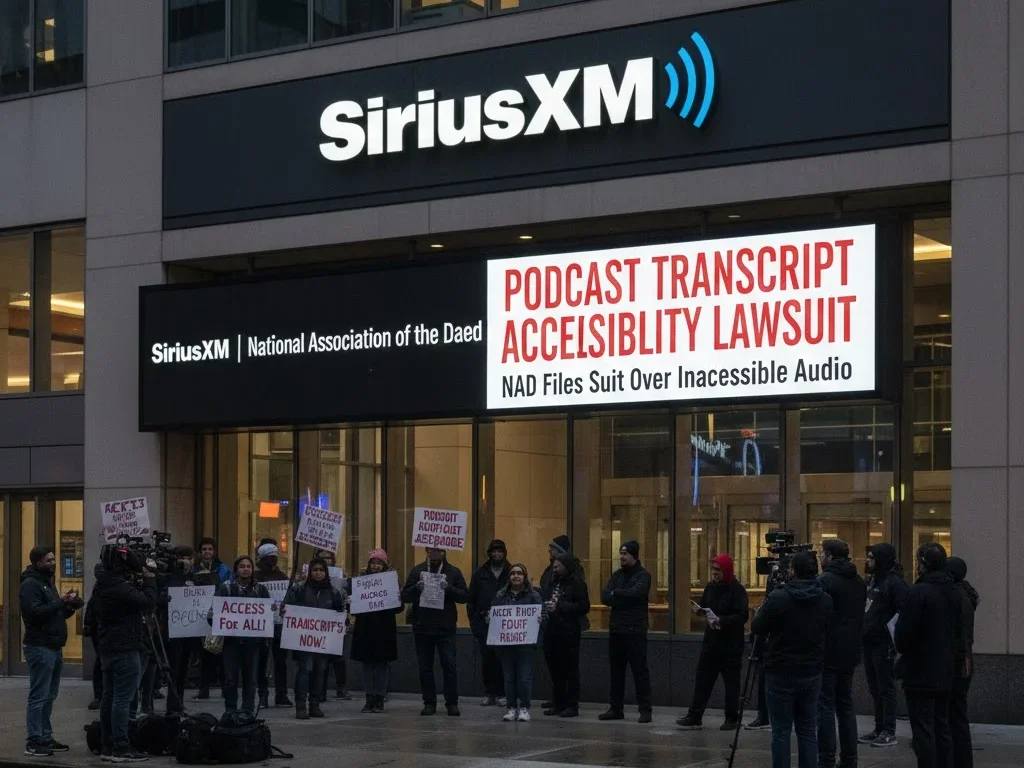
SiriusXM and major disability rights groups are once again asking a federal court to freeze litigation deadlines as they continue negotiations in a high-profile lawsuit centered on podcast transcription accessibility—a case that has been closely watched across the media, streaming, and disability rights communities.
In a newly filed joint status update, SiriusXM and the National Association of the Deaf (NAD) requested that a federal judge extend an existing stay in the case, allowing both sides additional time to continue mediation and potentially reach a settlement without incurring further legal costs.
The legal battle—originally filed in 2021—focuses on whether SiriusXM must provide podcast transcripts across its platforms, including Pandora and the SiriusXM app, to comply with accessibility laws designed to protect deaf and hard-of-hearing Americans.
SiriusXM and NAD Seek More Time to Avoid Costly Courtroom Fight
According to the joint filing submitted Friday, attorneys for both SiriusXM and the deaf advocacy organizations asked U.S. District Judge Jeannette Vargas to maintain the pause on all litigation deadlines.
The reason: settlement discussions are ongoing and both parties believe negotiations are moving in a direction that could prevent the need for prolonged litigation.
In the filing, both sides argued that extending the stay would help them continue pursuing a resolution “without further litigation and the associated expenses.”
This request signals that talks between the two sides may be progressing more seriously than in previous years, after multiple failed attempts to reach a compromise.
Mediation Sessions Continue Under Retired Federal Magistrate
The filing also revealed that the parties have already completed a second mediation session on January 26, held under retired U.S. Magistrate Judge Steven Gold, who has been overseeing the mediation process.
Now, they want additional time to:
Continue settlement negotiations privately
Exchange proposals and counterproposals
Schedule another mediation session
Potentially draft settlement language
The parties reportedly plan to meet again with Judge Gold in early April.
Proposed Next Mediation Date: April 7
The next session is tentatively scheduled for April 7, giving both sides several weeks to prepare and refine settlement terms before returning to mediation.
Proposed Deadline Freeze Would Last Through April 21
Under the schedule proposed in the joint filing, the stay on litigation deadlines would remain active until April 21.
That means:
Discovery obligations remain paused
Court filing deadlines are delayed
Depositions and evidence production remain on hold
The case is effectively frozen until mediation progresses
This type of stay is typically granted when both sides show they are negotiating in good faith and believe a resolution is realistic.
A Long Chain of Court Stays Has Already Delayed the Case
The current request is not the first pause in this lawsuit.
The filing notes that this latest request builds upon multiple earlier court-approved stays, which began after SiriusXM sought to dismiss the case.
Timeline of Key Litigation Delays
Here’s how the legal pause unfolded:
2021 – NAD and Disability Rights Advocates file lawsuit
Discovery phase begins – SiriusXM turns over documents
May 2025 – First major joint request for litigation stay
Subsequent months – Court extends the stay multiple times
January 26, 2026 – Second mediation session held
April 2026 – Third mediation session planned
April 21, 2026 – Proposed end date of extended stay
The repeated extensions suggest the case is no longer moving in a typical litigation pattern, but rather being shaped by behind-the-scenes negotiations.
What the Lawsuit Is About: Podcast Transcripts and Accessibility
The lawsuit was originally filed by:
National Association of the Deaf (NAD)
Disability Rights Advocates
Several individual plaintiffs
The core demand: SiriusXM must provide accessible podcast transcripts across its platforms.
The plaintiffs argued that SiriusXM failed to provide sufficient commitments that transcripts would be available for all podcasts streamed through:
SiriusXM
Pandora
Related streaming apps and platforms
The complaint claims this lack of accessibility violates both:
Federal disability protections
State-level accessibility laws
Deaf Advocates Say Millions of Americans Are Affected
The lawsuit emphasizes the scale of the issue, stating that the U.S. has over 48 million deaf and hard-of-hearing Americans.
Advocates argue that without transcripts, podcasts become inaccessible to millions, cutting them off from:
News
Education
Entertainment
Politics
Emergency information
Health and wellness content
They maintain that podcasting has become a mainstream media format, and accessibility should not be optional.
SiriusXM Has Produced More Than 1,000 Documents in Discovery
Although litigation has now slowed due to mediation, the case has already progressed through a substantial discovery process.
According to previous filings referenced in the report, SiriusXM has turned over more than 1,000 documents to the plaintiffs during evidence collection.
This suggests the dispute has already involved extensive legal work and internal corporate disclosures, which can include:
product strategy documents
accessibility roadmaps
internal communications
technical feasibility assessments
transcripts and platform capabilities
user data and podcast content details
Such disclosures often become leverage points in settlement negotiations.
Why This Case Matters Beyond SiriusXM
This lawsuit is not just about one company.
Legal experts and accessibility advocates have pointed out that the case could influence broader industry expectations for:
Spotify
Apple Podcasts
YouTube podcasts
Audible
Amazon Music
iHeartMedia
Podcast hosting networks
Independent podcast creators
If a settlement or court ruling requires transcripts across major platforms, it could establish a de facto standard across the podcast industry.
Technology Has Evolved Since the Lawsuit Began
When the case was filed in 2021, transcription tools were not as advanced or widely adopted.
But in the years since, major technological improvements—especially in AI speech recognition—have changed the landscape dramatically.
Modern Podcast Apps Now Offer Text-Based Features
Today, several platforms provide tools that allow users to read along with audio content.
This includes features like:
live captions
searchable transcripts
auto-generated subtitles
episode summaries
AI-generated highlights
These developments may reduce the cost and technical burden that once made transcripts difficult to scale.
SiriusXM Claims It Now Transcribes All English Podcasts on Its App
One of the most significant developments is SiriusXM’s statement to the court that it now provides transcription for all English-language podcasts on the SiriusXM app.
That could become a central issue in settlement talks.
If SiriusXM already has transcripts in place for English content, the remaining debate may focus on:
transcript accuracy standards
transcript availability across Pandora
transcript formatting and usability
non-English podcast support
rollout timelines
user interface and accessibility compliance
Pandora Transcription Feature Expected This Year
SiriusXM has also indicated that a similar transcription feature is expected to be added to Pandora during the current year.
If true, this could strengthen the company’s argument that it is already taking meaningful steps toward accessibility.
The ADA Legal Question: Does It Apply to Streaming Apps?
Perhaps the most controversial part of the lawsuit is not the technology—it’s the law.
SiriusXM has argued that the Americans with Disabilities Act (ADA) does not apply to streaming services.
The company’s legal position is based on the interpretation that the ADA covers only physical places of public accommodation.
SiriusXM’s Core Legal Argument
SiriusXM has argued that:
The ADA applies to “places of public accommodation”
These must be physical locations
Apps and websites do not qualify as “places”
Pandora and SiriusXM are digital services, not physical storefronts
In other words, SiriusXM is saying the law may not legally require them to provide transcripts under the ADA—regardless of what may be ethically or socially expected.
SiriusXM Cites Multiple Federal Appeals Court Precedents
In its argument, SiriusXM referenced legal precedent supporting its position.
The company claims courts have repeatedly ruled that “places of public accommodation” must be physical.
It cited decisions from multiple U.S. Court of Appeals circuits, including:
Third Circuit
Fifth Circuit
Sixth Circuit
Ninth Circuit
Eleventh Circuit
SiriusXM also argued that courts in New York have reached similar conclusions in related cases.
These citations could be a major reason why both parties are pursuing settlement—because the outcome in court is uncertain for both sides.
Why Deaf Advocates Say the Law Must Adapt to Modern Media
Disability advocates have repeatedly argued that modern life has moved online—and accessibility laws must evolve with it.
They believe that:
streaming services function like public venues
podcasts are the modern equivalent of radio programming
excluding deaf users is a form of digital discrimination
ADA protections should extend to apps, websites, and online platforms
From their perspective, limiting ADA protections only to physical locations would create a dangerous legal loophole, allowing companies to avoid accessibility simply by operating online.
Settlement Could Avoid a Landmark Ruling With Industry-Wide Impact
If this case reaches a final ruling, it could become a landmark decision for the future of accessibility in podcasting.
That is likely one reason both sides are strongly exploring settlement.
A court ruling could:
expand ADA interpretations to digital services
establish new compliance standards
trigger additional lawsuits against other streaming platforms
create industry-wide obligations for transcription
A settlement, however, could allow both sides to reach a compromise without creating binding legal precedent.
What a Settlement Could Include
While the exact negotiation details are confidential, legal analysts say accessibility settlements often include a combination of technical requirements and compliance monitoring.
A settlement between SiriusXM and deaf advocates could potentially include:
Possible Settlement Terms
Mandatory podcast transcript availability across SiriusXM and Pandora
Timeline-based rollout requirements
Accuracy benchmarks for auto-generated transcripts
Dedicated accessibility team oversight
User reporting tools for transcript errors
Third-party accessibility audits
Regular compliance reporting to NAD or court-appointed monitors
Financial compensation or legal fee reimbursement
Such terms would allow the plaintiffs to claim meaningful progress while giving SiriusXM flexibility in implementation.
Why Google, Apple, Spotify, and the Podcast Industry Are Watching Closely
The lawsuit may directly involve SiriusXM and Pandora, but the implications extend much further.
If a settlement forces full-scale transcription, competitors may face pressure to match the standard—even if not legally required.
This is especially relevant in the era of:
AI-generated search summaries
voice-based content indexing
SEO-focused podcast discovery
content repurposing for video and text
Transcripts also benefit search engines by making audio content crawlable, which can increase visibility and engagement.
Podcast Transcripts Are No Longer Just Accessibility Tools—They’re SEO Assets
Ironically, what started as an accessibility battle has become a major business advantage for digital media platforms.
Transcripts are now widely used to:
improve podcast SEO rankings
generate blog content automatically
boost discoverability on Google
create searchable archives
improve user retention
support multilingual translations
For streaming companies, transcripts can serve both:
legal compliance goals
monetization and growth goals
The Financial Stakes: Podcasting Is a Major Revenue Driver
Podcasting has evolved into a multi-billion-dollar industry.
For SiriusXM—owner of Pandora and other digital audio properties—podcasts are an important part of growth strategy, subscription retention, and advertising revenue.
A court ruling requiring universal transcription could mean:
increased operational costs
licensing and content management challenges
infrastructure investment
large-scale AI transcription deployment
increased moderation and compliance requirements
But at the same time, improved accessibility could open content to millions of additional listeners and strengthen SiriusXM’s brand image.
What Happens Next in Court?
If the judge approves the extension request, the case will remain paused until at least April 21.
During this time, the parties will likely:
continue negotiations privately
exchange settlement drafts
prepare for mediation on April 7
attempt to finalize a resolution
If mediation fails, litigation could restart quickly, potentially leading to:
renewed discovery disputes
depositions
motion hearings
potential trial preparation
Judge Jeannette Vargas Will Decide Whether to Extend the Stay
The decision now rests with Judge Jeannette Vargas, who has previously granted multiple stays in this case.
Given that both parties are jointly requesting the extension—and the court generally encourages settlements—it is widely expected the judge may approve the request unless there is a procedural concern.
Why This Case Reflects a Bigger Cultural Shift
Beyond the courtroom, the lawsuit reflects a major shift in how society views accessibility.
Deaf advocates argue that accessibility is not a “bonus feature,” but a fundamental right—especially as media consumption shifts away from traditional television captions and toward digital audio platforms.
Meanwhile, companies like SiriusXM are navigating:
evolving legal standards
consumer expectations
competitive innovation
cost vs. compliance pressure
The result is a growing wave of litigation and settlement negotiations shaping how digital media is built.
Key Takeaways
Here are the major developments in simple terms:
SiriusXM and deaf advocates asked a judge to extend the pause in litigation
The stay would last until April 21
A new mediation session is expected April 7
The lawsuit began in 2021 and focuses on podcast transcripts
SiriusXM says it now transcribes English podcasts on its SiriusXM app
Pandora is expected to add similar transcription features
The key legal issue is whether the ADA applies to streaming services
The case could impact the entire podcast industry if it reaches a ruling
What This Means for Listeners and the Deaf Community
For everyday listeners, transcripts may seem like a convenience.
For deaf and hard-of-hearing Americans, transcripts can mean full access to:
political discussions
breaking news podcasts
true crime series
sports analysis
financial and business shows
educational and self-help content
If the case ends in a strong settlement, it could set a new accessibility benchmark for podcasting in the U.S.
Industry Outlook: Accessibility May Become the Standard
Whether through lawsuits, settlements, or consumer pressure, podcast transcription appears to be moving toward becoming a universal expectation.
In the same way that closed captions became standard for television, transcripts may become the default for:
podcast platforms
live audio streaming
digital radio programming
talk shows and interviews
AI-powered content libraries
This case may not create a final court precedent—but it could still influence how companies operate going forward.
FAQs
Why are SiriusXM and deaf advocates in court?
They are in court over whether SiriusXM must provide podcast transcripts to ensure accessibility for deaf and hard-of-hearing users.
What is the National Association of the Deaf (NAD)?
The NAD is a major advocacy organization that fights for civil rights and accessibility for deaf Americans.
What is the status of the lawsuit?
The case is currently paused while both sides participate in mediation and settlement talks.
When will the next mediation session happen?
The next mediation session is expected to occur on April 7.
Does SiriusXM currently provide transcripts?
SiriusXM has stated it now transcribes all English-language podcasts on its SiriusXM app, and plans to add similar transcription tools to Pandora.
What is SiriusXM’s main defense?
SiriusXM argues that the ADA applies only to physical places, not streaming apps or websites.
Final Thoughts: A Settlement Could Shape the Future of Podcast Accessibility
The SiriusXM vs. NAD lawsuit highlights an important and unresolved legal question: Should digital streaming platforms be treated like public accommodations under the ADA?
While courts have often leaned toward requiring physical locations, the modern world increasingly lives online—where media, commerce, education, and entertainment now exist primarily through apps.
If the parties reach a settlement, it could help expand accessibility without triggering a potentially disruptive court ruling.
But if negotiations fail, the lawsuit could return to full litigation—possibly creating a legal precedent that affects the entire podcast and streaming ecosystem.
For now, the next major date to watch is April 7, when the parties are expected to return to mediation.