Podcasting 2026: The Rise of Liquid Content and the Future of Podcasts
The debate that has shaped podcasting for nearly a decade is finally losing relevance. What is a podcast? Is it audio-only? Does video disqualify it? Must it live inside an RSS feed?
According to industry leaders, the question itself is now outdated.
As podcasting moves into 2026, the medium is entering a transformative phase — one that prioritizes audience behavior over format definitions. Media strategist Steve Goldstein, CEO of Amplifi Media and adjunct professor at New York University, believes the industry has crossed a threshold. Podcasting, he says, has entered its fourth and most audience-driven era: the Era of Liquid Content.
For years, podcasting has wrestled with its own definition. Industry conferences, trade publications, and social media debates have circled the same question repeatedly: Does video still count as podcasting?
While professionals argued, audiences moved on.
Listeners — and increasingly viewers — began consuming podcast content across YouTube, TikTok, Instagram, newsletters, livestreams, and live events, often without caring how the industry labeled it. The result was a widening gap between how creators defined podcasting and how audiences actually used it.
By 2025, that gap became impossible to ignore.
Goldstein argues that this moment marked a turning point — the year the podcast industry finally aligned itself with real-world consumption behavior, rather than clinging to legacy definitions rooted in technology.
Introducing the ‘Liquid Content’ Era
The Liquid Content era represents a fundamental shift in how podcasts are created, distributed, and valued.
In this phase:
Content is not fixed to one format
Stories flow seamlessly across platforms and screens
A single podcast episode can exist in multiple forms simultaneously
The show itself becomes a content engine, not the final destination
Instead of asking “Where does this podcast live?”, creators now ask: “Where does my audience need this content right now?”
Podcasting’s Four Evolutionary Phases
To understand why Liquid Content matters, it helps to look at how podcasting arrived here.
1. The MeUndies Era: Intimate, Experimental, and Trust-Based
Podcasting’s earliest phase was small, intimate, and deeply personal.
Goldstein refers to this period as the “MeUndies Era”, named after the direct-to-consumer advertisers that helped early shows survive.
Key characteristics included:
Audio-only formats
Host-read ads built on trust
Public radio-style storytelling
A niche but loyal listener base
Annual industry revenue under $1 million
Podcasting during this time was driven by connection, not scale. Creators experimented freely, and listeners felt like insiders.
2. The Spaghetti-Against-the-Wall Era: Expansion and Experimentation
As podcasting proved its potential, major players moved in fast.
This second phase saw:
Massive investments from Spotify, Amazon, SiriusXM, Sony, and others
Aggressive acquisitions of podcast networks
An explosion of new formats and genres
Rapid professionalization of production and monetization
Creativity surged — but so did risk. Many projects failed. Others thrived. What mattered was that podcasting matured into a serious media business, capable of competing with traditional radio and digital publishing.
3. The “What Is a Podcast?” Era: An Industry-Wide Identity Crisis
Growth brought confusion.
As video podcasts gained popularity — especially on YouTube — the industry began questioning its own boundaries. Was podcasting still podcasting if it included visuals? If it premiered on YouTube instead of an RSS feed?
During this period:
Conferences debated definitions
Trade media dissected formats
Platforms introduced hybrid audio-video tools
Meanwhile, audiences showed little concern for the debate. Research conducted by Amplifi Media and Coleman Insights revealed a simple truth:
Podcast audiences already consider video a natural extension of podcasting.
To listeners, podcasting was no longer audio or video. It was both.
Why Liquid Content Is Different
Unlike previous eras shaped by technology or business models, the Liquid Content era is driven almost entirely by audience behavior.
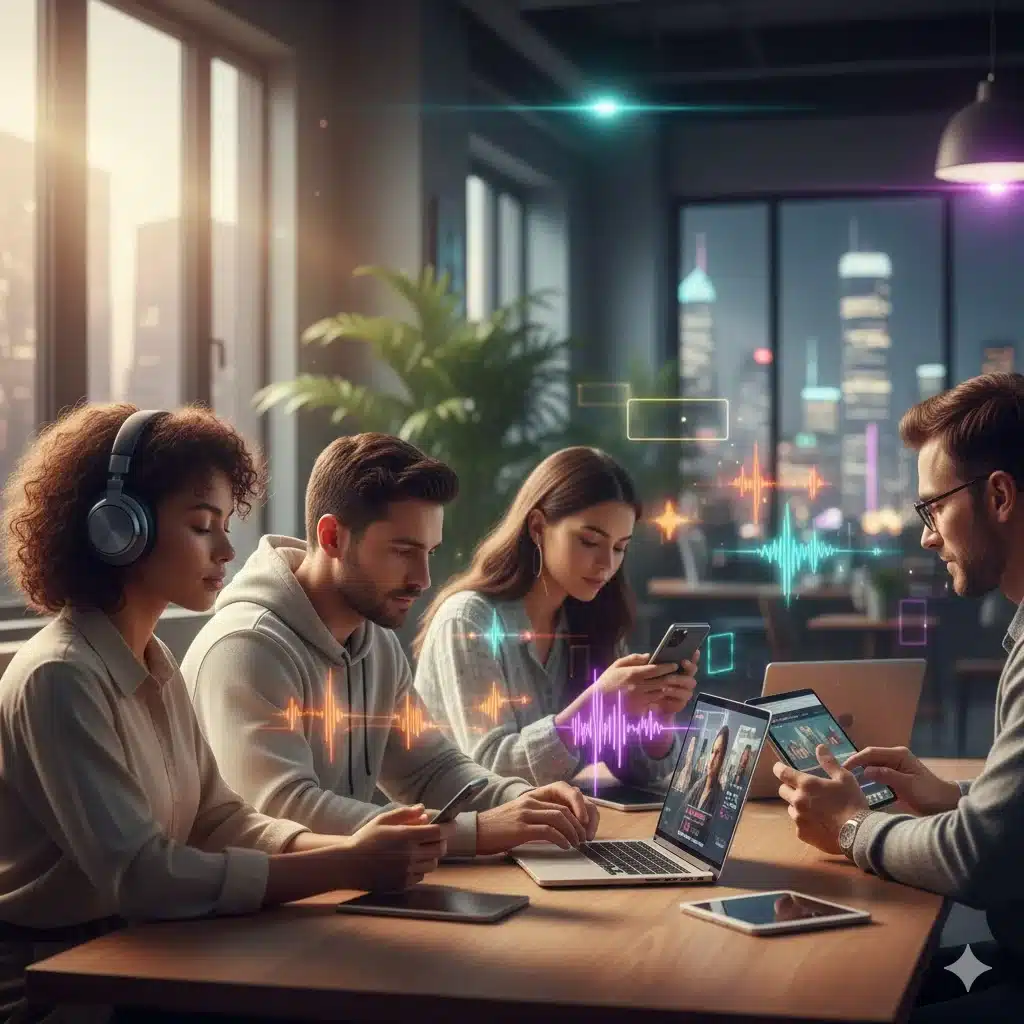
Listeners no longer consume content in one sitting or on one device. They move fluidly throughout the day:
Watching clips on their phones
Listening during commutes
Reading newsletters at work
Catching livestreams in the evening
Liquid Content adapts to these moments.
From Podcast Episode to Content Ecosystem
In the Liquid Content era, a single episode might generate:
A full-length audio podcast
A video version on YouTube
Short vertical clips for TikTok and Reels
Quote cards for social media
A newsletter summary
A livestream Q&A
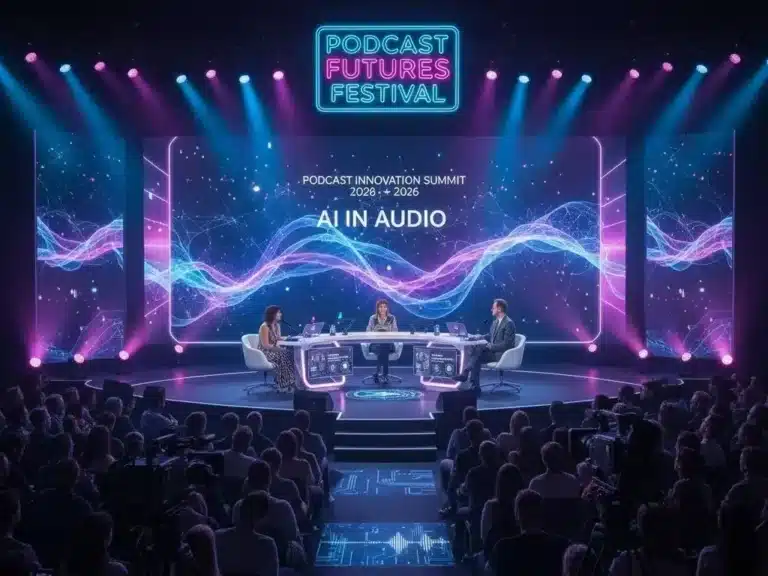
A live stage event
As podcasting executive Rob Greenlee has noted, “The show is no longer the product — it’s the engine.”
The value lies not in the file, but in the story’s ability to travel.
Audience First, Format Second
One of the defining principles of Liquid Content is a complete inversion of priorities.
Previously, creators asked:
What platform should I publish on?
What format defines podcasting?
Now, the central question is:
How does my audience want to engage with this content in this moment?
In this model:
The audience sits at the center, not the platform
Feeds and formats are tools, not rules
Flexibility becomes a competitive advantage
Is Liquid Content Mandatory for All Podcasters?
Goldstein is careful to emphasize that Liquid Content is not a requirement.
Many podcasts will continue to succeed by:
Staying audio-only
Serving niche, loyal audiences
Publishing on a limited number of platforms
However, as attention becomes more fragmented and competition intensifies, creators who embrace flexibility will be better positioned to grow.
Liquid Content isn’t about doing everything. It’s about doing what makes sense for your audience.
What This Means for Creators in 2026
As podcasting moves forward, creators will need to think beyond episodes and feeds.
The winners of the next era won’t be those who cling to old definitions — but those who design stories that move naturally wherever audiences are already paying attention.
The Future of Podcasting Is Already Here
Podcasting doesn’t need to be redefined.
It needs to be accepted as it is now: flexible, visual, audio-driven, platform-agnostic, and deeply shaped by audience behavior.
The Liquid Content era isn’t about abandoning podcasting’s roots. It’s about allowing those roots to grow across new surfaces.
As 2026 approaches, one thing is clear: Podcasting is no longer a format. It’s a flow.