Pew Research: YouTube and Facebook Still Dominate U.S. Social Media in 2025
Despite growing debates around digital censorship, misinformation, political polarization, and the mental health impact of social platforms, YouTube and Facebook remain firmly at the center of American online life.
According to a new Pew Research Center survey, these two platforms continue to dominate social media usage in the United States, outperforming both legacy networks and emerging challengers — and doing so across nearly every demographic group.
The findings underscore a critical reality in 2025: while the social media ecosystem is expanding and fragmenting, user attention is still heavily concentrated on a few major platforms.
The latest findings are based on a nationally representative survey of 5,022 U.S. adults, conducted between February 5 and June 18, 2025.
To better understand engagement patterns, Pew also conducted a separate follow-up survey of 5,123 adults between February 24 and March 2, 2025, focusing on frequency of platform use.
Together, the surveys offer one of the most comprehensive snapshots of how Americans use social media today.
YouTube and Facebook Lead by a Wide Margin
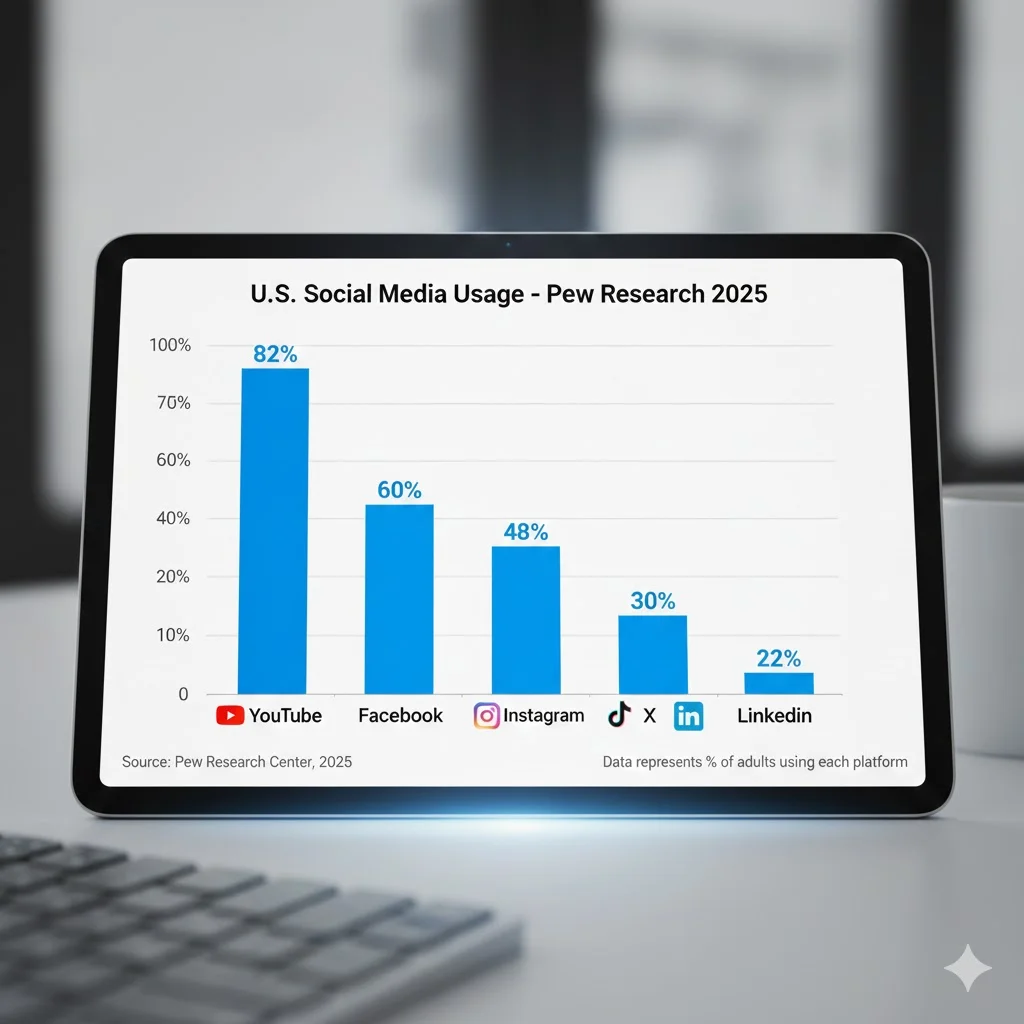
The data shows that YouTube and Facebook are still the most widely used social media platforms in the United States, far ahead of competitors.
Top Social Media Platforms by Usage (2025)
YouTube: Used by 84% of U.S. adults
Facebook: Used by 71%
Instagram: Used by 50%
TikTok: Used by 37%
WhatsApp: Used by 32%
Reddit: Below 30%
Snapchat: Below 30%
X (formerly Twitter): Below 30%
Three newer platforms — Threads, Bluesky, and Truth Social — currently attract about one-in-ten adults or fewer, highlighting the difficulty new networks face in scaling to mass adoption.
Instagram Holds Strong as the Only Other Majority Platform
Instagram remains the only platform besides YouTube and Facebook to reach at least half of the U.S. adult population.
Its continued relevance reflects:
Strong adoption among younger adults
Integration with Meta’s broader ecosystem
Heavy use of video formats like Reels
However, Pew’s data suggests that Instagram’s growth has stabilized rather than surged, unlike TikTok and Reddit, which continue to expand steadily.
YouTube’s Dominance Extends to U.S. Teens
One of the most striking findings is YouTube’s cross-generational dominance.
YouTube is the most widely used platform among U.S. teens
Its popularity among teens mirrors its reach among adults
It functions as both:
A social platform
A primary entertainment and learning hub
This positions YouTube uniquely — not just as a social network, but as a digital utility embedded in daily life.
Long-Term Trends: Platforms Still Growing
Pew’s long-term tracking reveals continued growth for several platforms, even as overall social media adoption plateaus:
Platforms Showing Sustained Growth
TikTok
Instagram
WhatsApp
Reddit
These platforms are expanding their reach within specific demographic segments, even if they trail YouTube and Facebook in overall usage.
Age Gaps Define Social Media Habits in America
Age remains one of the strongest predictors of social media use.
Young Adults (Ages 18–29)
Adults under 30 are significantly more likely to use:
Instagram
Snapchat
TikTok
Reddit
Eight-in-ten adults ages 18 to 29 use Instagram, compared with just 19% of those ages 65 and older.
TikTok usage is especially concentrated among younger Americans, reinforcing concerns and conversations about youth well-being and digital consumption.
Older Adults (Ages 65 and Up)
Older Americans remain more selective:
Lower adoption of TikTok and Snapchat
Continued reliance on Facebook and YouTube
Less experimentation with newer platforms
Despite this, YouTube and Facebook are the only platforms used by a majority of Americans in every age group.
Middle-Aged Adults Drive Facebook Usage
Facebook usage peaks among:
Adults ages 30 to 49, with 80% reporting use
Adults ages 50 to 64 follow closely behind
This group also shows the highest daily engagement levels, making Facebook a powerful platform for advertisers, news outlets, and political messaging.
Daily Usage: Where Americans Spend Their Time
While usage alone matters, frequency of use reveals true influence.
Platforms Used Daily by Americans
Facebook: About 50% visit daily
37% check it several times a day
YouTube: About 50% visit daily
33% visit multiple times per day
TikTok: 24% use it daily
X (Twitter): 10% use it daily
Daily usage reinforces the idea that YouTube and Facebook are deeply embedded in Americans’ routines, not just occasional destinations.
Age Differences in Daily Social Media Engagement
Younger Adults
Roughly 50% of adults ages 18–29 visit TikTok daily
Younger users also dominate daily YouTube consumption
Older Adults
Only 5% of adults ages 65 and older use TikTok daily
Facebook daily use remains strong among adults over 30
For Facebook:
58% of adults ages 30–49 use it daily
54% of adults ages 50–64 do the same
Gender Differences in Platform Preferences
The survey reveals clear gender-based patterns:
Women Are More Likely to Use
Facebook
Instagram
TikTok
For example:
55% of women use Instagram
Compared with 44% of men
Men Are More Likely to Use
X (formerly Twitter)
Reddit
These differences shape how content spreads, how influencers grow, and how political narratives gain traction online.
Race and Ethnicity Shape Social Media Use
Race and ethnicity also influence platform adoption:
White adults are generally less likely to use:
Instagram
TikTok
WhatsApp
Black, Hispanic, and Asian adults show higher engagement on these platforms
Instagram Usage by Race
White adults: 45%
Hispanic adults: 62%
Asian adults: 58%
Black adults: 54%
These disparities highlight how cultural communities adopt platforms differently, often shaping trends, music, activism, and viral content.
Education Level and Social Media Habits
Education also correlates strongly with platform choice.
College-Educated Adults Are More Likely to Use
Reddit
WhatsApp
Instagram
For Reddit:
40% of college graduates use the platform
Compared with:
28% with some college
15% with a high school diploma or less
TikTok Skews Toward Less Formal Education
Adults without college degrees are more likely to use TikTok
College graduates show lower adoption rates
Political Affiliation Influences Platform Choice
The survey highlights growing political segmentation across social media platforms.
Democrats and Democratic-Leaning Independents
More likely to use:
WhatsApp
Reddit
TikTok
Bluesky
Threads
Republicans and Republican Leaners
More likely to use:
X (formerly Twitter)
Truth Social
Notably:
24% of Republicans now report using X
Compared with 19% of Democrats
This marks a reversal from two years ago, when Democrats were more likely to use the platform.
Why This Data Matters in 2025
As policymakers, educators, and tech companies grapple with:
Online censorship
Political polarization
Youth mental health
Platform accountability
Pew’s findings provide a reality check:
A small number of platforms continue to dominate attention, influence, and daily digital behavior in America.
Understanding where Americans actually spend their time online is critical for:
Journalism
Advertising
Civic engagement
Public policy
Digital safety initiatives
Conclusion: Dominance Amid Debate
Despite constant headlines predicting the decline of legacy platforms, YouTube and Facebook remain unrivaled in reach and daily influence.
New platforms may shape niche conversations, but when it comes to mass audiences in 2025, the digital public square is still largely controlled by a familiar few.