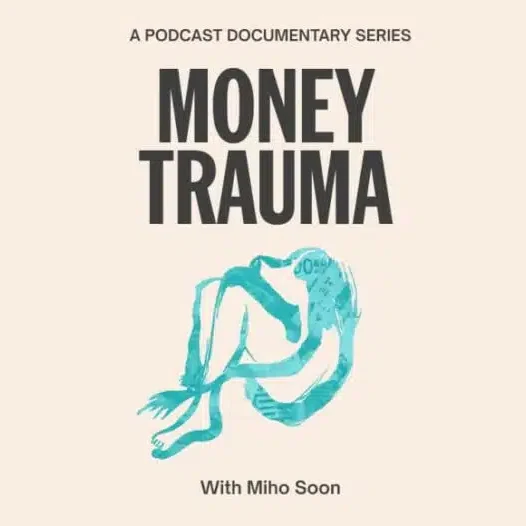
Money Trauma Podcast Explores Emotional Roots of Financial Behaviour | New Documentary Series Released
In an era where conversations around mental health are becoming more open and socially accepted, discussions about money and emotional wellbeing are still often avoided. A newly released documentary-style podcast titled Money Trauma aims to challenge that silence by exploring how financial experiences shape human emotions, behaviours, and life choices.
Released on 6 March 2026, the podcast introduces a compelling narrative that moves beyond typical personal finance advice. Instead of focusing on budgeting tricks or investment strategies, Money Trauma dives deep into the psychological and emotional foundations of financial behaviour.
Created by Miho Soon, Phoebe McIndoe, and Marta Medvesek, the limited-series podcast seeks to uncover how past financial experiences — including stress, debt, gambling, or sudden wealth — can leave lasting emotional imprints that influence how people deal with money throughout their lives.
With a storytelling format that blends personal experiences, expert insights, and social analysis, the series positions itself as more than just a financial podcast. It is a reflection on how money, trauma, and societal narratives intersect in shaping everyday decisions.
At its core, Money Trauma is a six-episode documentary podcast series that examines the emotional consequences of financial experiences.
Rather than discussing money strictly through economics or financial planning, the show investigates the deep psychological relationship people have with money.
Key themes explored in the podcast include:
Financial stress and its mental health impact
The psychology behind gambling behaviour
Emotional triggers linked to spending and saving
The influence of wealth accumulation on identity
Impulsive spending patterns and emotional coping
Societal narratives surrounding financial success
Through interviews with psychologists, economists, behavioural experts, and individuals who have lived through financial challenges, the podcast presents a trauma-informed perspective on financial behaviour.
This approach recognises that financial decisions are rarely made in isolation from emotions or life experiences.
Why Financial Behaviour Is Often Emotional, Not Rational
One of the central ideas explored in the podcast is the claim that most financial decisions are driven by emotions rather than pure logic.
Research referenced in the series suggests that as much as 90% of financial behaviour may be emotionally influenced.
This insight challenges traditional personal finance advice that assumes people make decisions based solely on rational calculations.
Emotional factors that often influence financial decisions include:
Childhood experiences with money
Family financial instability
Social pressure to appear successful
Anxiety related to debt or scarcity
Trauma linked to financial loss
Cultural expectations about wealth and status
According to the podcast’s creators, ignoring these emotional layers makes it difficult to understand why people struggle with spending habits, saving discipline, or financial planning.
The Creators Behind Money Trauma
The project was developed by Miho Soon, Phoebe McIndoe, and Marta Medvesek, who wanted to explore money through a lens rarely used in mainstream financial discussions.
The team designed the podcast as a documentary storytelling series that combines investigative journalism with personal narratives.
Their goal with the podcast:
Encourage open conversations about money
Highlight the emotional realities behind financial behaviour
Challenge popular myths surrounding wealth and success
Provide context for how financial systems shape individual experiences
Lead host Miho Soon conducts interviews with experts from around the world to unpack how economic systems, social expectations, and personal histories shape people’s relationship with money.
A Trauma-Informed Approach to Financial Conversations
One of the defining elements of Money Trauma is its trauma-informed framework.
This perspective recognises that many people’s financial decisions are influenced by past experiences that may involve stress, fear, or insecurity.
Rather than framing financial mistakes as poor decision-making, the podcast explores how they might be connected to deeper psychological patterns.
Examples of financial trauma discussed in the series:
Growing up in poverty or financial instability
Experiencing sudden economic loss
Surviving debt crises or bankruptcy
Living through family conflict related to money
Experiencing social shame linked to financial status
By exploring these themes, the podcast attempts to move away from judgment-based financial advice toward a more compassionate understanding of financial behaviour.
Challenging the Popular Narratives Around Money
A major focus of the series is questioning the dominant cultural narratives about money.
Society often promotes simple ideas such as:
Hard work always leads to wealth
Financial success equals personal discipline
Poor financial outcomes reflect poor decisions
However, the podcast argues that these narratives do not always reflect people’s lived experiences.
The podcast examines questions like:
Who benefits from the idea that financial success is purely individual?
How do economic systems influence personal financial outcomes?
Why do some financial struggles remain invisible in public conversations?
Through expert interviews and personal stories, the series highlights how structural inequalities, social expectations, and emotional experiences all contribute to financial behaviour.
Social Pressure and the Psychology of Spending
Another major theme explored in the podcast is how social pressure shapes spending habits.
In many societies, money is closely tied to identity, status, and social belonging.
This can lead people to make financial decisions based not on necessity but on the desire to fit in or avoid judgment.
Common social pressures that affect spending include:
Maintaining a certain lifestyle
Keeping up with peers or social media trends
Cultural expectations around generosity
Celebrations and social events tied to financial spending
The stigma associated with financial struggles
These pressures can lead to impulsive spending, debt accumulation, or financial anxiety, even among individuals who earn a stable income.
The Link Between Gambling and Financial Trauma
The podcast also addresses gambling behaviour and how it connects to emotional and psychological patterns.
Rather than portraying gambling simply as a risky financial activity, the series explores its deeper psychological motivations.
Experts interviewed in the show discuss how gambling can sometimes be linked to:
Coping mechanisms for stress or trauma
The desire for sudden financial transformation
Emotional escape from financial hardship
Social environments that normalise risk-taking
By examining these factors, the podcast highlights how gambling behaviour is often connected to emotional experiences rather than purely financial calculations.
Why People Avoid Talking About Money
Despite money being central to daily life, many people still find it difficult to discuss openly.
The podcast explores how social taboos around money prevent honest conversations about financial stress or insecurity.
Reasons money conversations remain taboo:
Fear of social judgment
Cultural beliefs about privacy and wealth
Shame related to debt or financial struggles
The association of money with personal success or failure
Because of these taboos, individuals often deal with financial anxiety alone, which can intensify emotional stress.
The creators of Money Trauma hope the podcast will encourage more open discussions about these experiences.
Expert Voices Featured in the Podcast
Throughout the series, host Miho Soon interviews experts from various disciplines to provide insight into the emotional and social aspects of financial behaviour.
Experts featured in the podcast include:
Psychologists specialising in trauma
Behavioural economists
Financial therapists
Social researchers studying economic inequality
Personal finance experts
Their perspectives help explain why financial advice based solely on logic may not always work for individuals dealing with emotional stress or trauma.
Early Reviews Highlight the Podcast’s Storytelling
Even before the full series has been released, early reactions from journalists and industry commentators have been largely positive.
Independent journalist James Jackson praised the show’s narrative approach, noting that it tackles an often overlooked topic through compelling storytelling and thoughtful analysis.
The podcast’s combination of personal stories, expert insights, and immersive sound design has also been highlighted as one of its strengths.
A Different Kind of Personal Finance Conversation
Author and financial commentator Aya Jaff also commented on the podcast’s approach, noting that it moves beyond traditional personal finance discussions.
Instead of focusing on budgeting strategies or spending discipline, the series examines the psychological foundations of financial behaviour.
According to Jaff, the podcast shifts attention from superficial financial advice to the deeper emotional mechanisms that influence how people earn, save, spend, and value money.
Why the Podcast Arrives at the Right Time
The release of Money Trauma comes at a time when conversations about mental health, financial stress, and economic insecurity are becoming increasingly relevant.
Several global trends have contributed to this growing interest:
Rising cost of living in many countries
Increasing levels of personal debt
Greater awareness of mental health challenges
Growing attention to economic inequality
These factors have led many people to rethink their relationship with money and seek a deeper understanding of their financial behaviours.
The Role of Economic Systems in Financial Behaviour
Another topic explored in the podcast is how economic systems and structural factors influence individual financial outcomes.
While personal choices play a role in financial success or struggle, broader economic conditions also shape opportunities and constraints.
Structural influences discussed in the series include:
Wage inequality
Housing affordability crises
Economic policy decisions
Employment instability
Social safety nets
By examining these systemic factors, the podcast encourages listeners to consider how financial behaviour is shaped by both individual experiences and larger economic environments.
Breaking the Silence Around Financial Anxiety
Financial anxiety is one of the most common sources of stress worldwide, yet it often remains under-discussed.
The podcast aims to help listeners recognise that financial stress is not always the result of personal failure but may reflect complex emotional and social dynamics.
By sharing real-life stories and expert insights, Money Trauma seeks to create space for more compassionate conversations about money.
How Money Trauma Could Influence Future Finance Discussions
If the podcast gains significant attention, it could help reshape how people think about financial advice and economic wellbeing.
Traditional finance discussions tend to focus on:
budgeting
saving
investing
debt reduction
While these topics remain important, the podcast suggests that addressing the emotional foundations of financial behaviour may be equally essential.
Experts in behavioural finance increasingly recognise that financial decision-making is deeply intertwined with psychology and life experiences.
The Growing Field of Financial Therapy
The themes explored in Money Trauma also connect to the emerging field of financial therapy.
Financial therapy combines principles from psychology and financial planning to help individuals understand the emotional aspects of money.
Goals of financial therapy include:
Identifying emotional triggers around spending
Addressing financial anxiety
Building healthier relationships with money
Improving long-term financial wellbeing
As awareness of this field grows, podcasts like Money Trauma may play an important role in introducing these ideas to wider audiences.
Why the Podcast Matters in Today’s Economic Climate
In recent years, global economic uncertainty has increased financial pressure on individuals and families.
Factors such as inflation, housing costs, and job insecurity have intensified financial stress for many people.
Against this backdrop, discussions about the emotional side of money are becoming increasingly relevant.
The podcast’s exploration of financial trauma highlights how economic challenges can affect mental health, relationships, and personal identity.
Opening the Door for Honest Conversations
Ultimately, the creators of Money Trauma hope the podcast will encourage listeners to rethink how they approach money conversations.
By acknowledging the emotional complexity behind financial behaviour, the series invites audiences to move beyond judgment and toward understanding.
The podcast encourages listeners to:
Reflect on their personal financial history
Recognise emotional triggers related to money
Engage in open conversations about financial stress
Question societal narratives around wealth and success
If successful, the podcast could help reshape how society talks about money — not just as a financial tool, but as a powerful influence on emotional wellbeing.
The Bottom Line
Money Trauma arrives as a thought-provoking addition to the growing landscape of podcasts addressing mental health and social issues.
By exploring the intersection of money, psychology, and lived experience, the series offers a fresh perspective on financial behaviour.
With its documentary storytelling style and expert insights, the podcast invites listeners to reconsider a fundamental question:
What role do our emotions and past experiences play in shaping the way we handle money?
As new episodes are released weekly, the series is expected to spark ongoing conversations about the deeper relationship between money, trauma, and personal wellbeing.