Meta Tests Podcast Discovery on Threads to Boost User Engagement
Meta is quietly making a strategic play in the fast-growing podcast economy—but not in the way many expected. Rather than launching a dedicated podcast streaming platform, the tech giant is experimenting with podcast discovery features on Threads, its Twitter/X-style social media app.
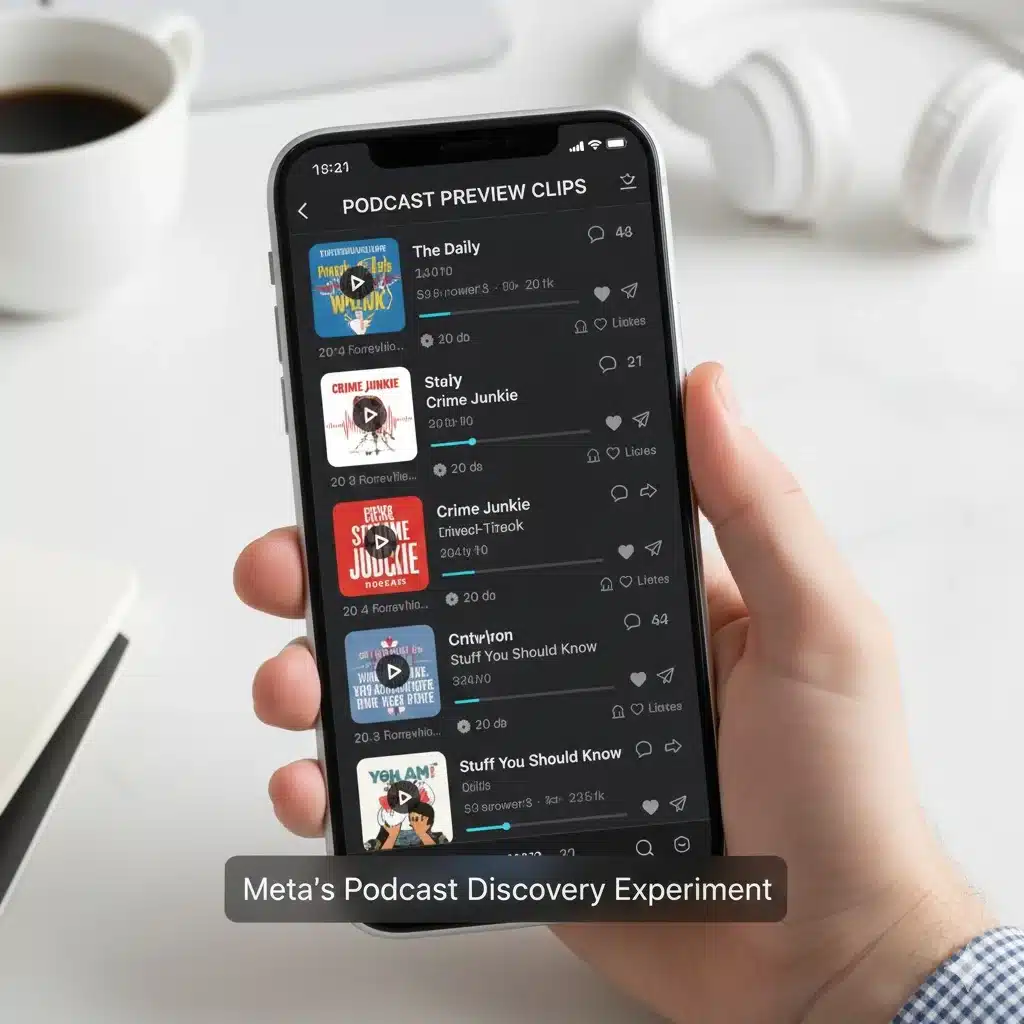
According to reports, Meta is preparing to roll out podcast preview clips on Threads, a move designed to increase time spent on the platform and deepen creator-led conversations. While Meta has previously explored podcast hosting, this latest initiative signals a shift toward social-first podcast discovery rather than direct distribution.
Meta’s Podcast Strategy: Promotion Over Distribution
Meta’s renewed interest in podcasting is not about competing with Spotify, Apple Podcasts, or Amazon Music. Instead, the company is positioning Threads as a conversation hub where podcasts are discussed, shared, and amplified—without hosting full episodes.
Sources cited by Bloomberg indicate that Meta’s primary objective is to:
Increase user engagement time on Threads
Encourage real-time discussion around podcast content
Strengthen Threads’ appeal to creators and media personalities
By introducing short podcast preview clips, Meta hopes to replicate the viral discovery mechanics that made video and text posts successful on its platforms.
Why Threads Is Central to Meta’s Podcast Push
Threads, which launched just over two years ago, has emerged as Meta’s fastest-growing standalone social app. In August, Meta confirmed that Threads surpassed 400 million monthly active users, a significant milestone—though still trailing behind X (formerly Twitter), which claims around 600 million users.
Despite the gap, Threads has shown strong momentum, particularly among:
Journalists
Thought leaders
Pop culture commentators
Podcast hosts and media creators
Meta believes podcast creators naturally align with Threads’ text-driven, conversation-heavy format, making it fertile ground for audio-based storytelling to gain traction through discussion.
Podcast Previews: How the Feature Is Expected to Work
While Meta has not officially detailed the full rollout, early reports suggest the podcast discovery feature will include:
Short preview clips embedded directly in Threads posts
Clickable podcast links directing users to external listening platforms
Creator profiles that prominently feature podcast episodes
Engagement analytics shared with podcast hosts
This builds on a feature Meta introduced last month, allowing creators to add podcast links directly to their Threads profiles, making episode promotion seamless.
Learning From Past Failures: Meta’s Podcast History
This is not Meta’s first attempt to break into podcasting.
What Went Wrong Before
In 2021, Facebook introduced podcast listening features
It later partnered with Spotify to embed podcast content
By 2022, Meta shut down both initiatives
The earlier efforts failed largely because:
Users preferred dedicated podcast apps
Facebook lacked organic podcast discovery
Audio-first experiences didn’t align with Facebook’s core behavior patterns
This time, Meta appears to have learned from those missteps.
Meta’s New Approach: Social Conversations First
A Meta spokesperson told TechCrunch that the company has no intention of becoming a podcast hosting platform. Instead, the focus is on:
Social engagement around podcast topics
Highlighting creator-led conversations
Measuring how podcast content resonates culturally
Importantly, Meta plans to offer data and insights to podcast creators, showing how Threads users are interacting with podcast-related discussions—an analytics angle that could attract professional creators and media companies.
What Meta Leadership Is Saying
Connor Hayes, Head of Threads at Meta, emphasized podcasting’s strong alignment with the platform’s creator ecosystem.
“Podcasts have been extremely correlated with the creators that will have success on Threads,” Hayes told Bloomberg.
His statement underlines Meta’s belief that audio storytelling fuels text-based discussion, a dynamic Threads is uniquely positioned to support.
Why Podcast Discovery Matters in 2025
Podcasting has evolved into a $30+ billion global industry, with millions of shows competing for listener attention. Discovery—not production—is now the biggest challenge.
Threads’ potential advantage lies in:
Real-time conversation loops
Viral amplification through reposts
Creator-to-audience interaction
Cultural relevance driven by trending topics
If successful, Meta could become a major traffic driver for podcast platforms, even without hosting audio files itself.
What This Means for Podcast Creators
For podcasters, Meta’s experiment could unlock new growth opportunities.
Potential Benefits
Increased visibility through Threads feeds
Better discovery beyond podcast apps
Social proof via public discussion
Access to engagement analytics
Strategic Takeaway
Podcasters who already maintain a presence on Threads may gain an early-mover advantage as Meta tests and expands these features.
Threads vs X: The Battle for Audio Conversations
While X has integrated Spaces and long supported podcast-style discussions, Meta is betting that Threads’ cleaner interface and creator-friendly tools will attract a different segment of the audio community.
Key differences:
Feature
Threads
X
Podcast hosting
❌ No
❌ No
Podcast discovery
🧪 Testing
⚠️ Limited
Creator analytics
✅ Planned
⚠️ Inconsistent
User growth
📈 Rapid
📉 Stagnating
The Bigger Picture: Meta’s Attention Economy Play
Ultimately, Meta’s podcast discovery test is about one thing: keeping users inside its ecosystem longer.
By embedding podcasts into social discussions—rather than pulling users away—Meta strengthens Threads as a destination app, not just a feed.
If the experiment succeeds, it could pave the way for:
News previews
Audiobook snippets
Creator audio essays
Branded storytelling formats
What Happens Next
Meta has not announced a full rollout timeline, but industry watchers expect limited testing to expand in early 2026 if engagement metrics are positive.
For now, Threads users may soon find their feeds populated with: