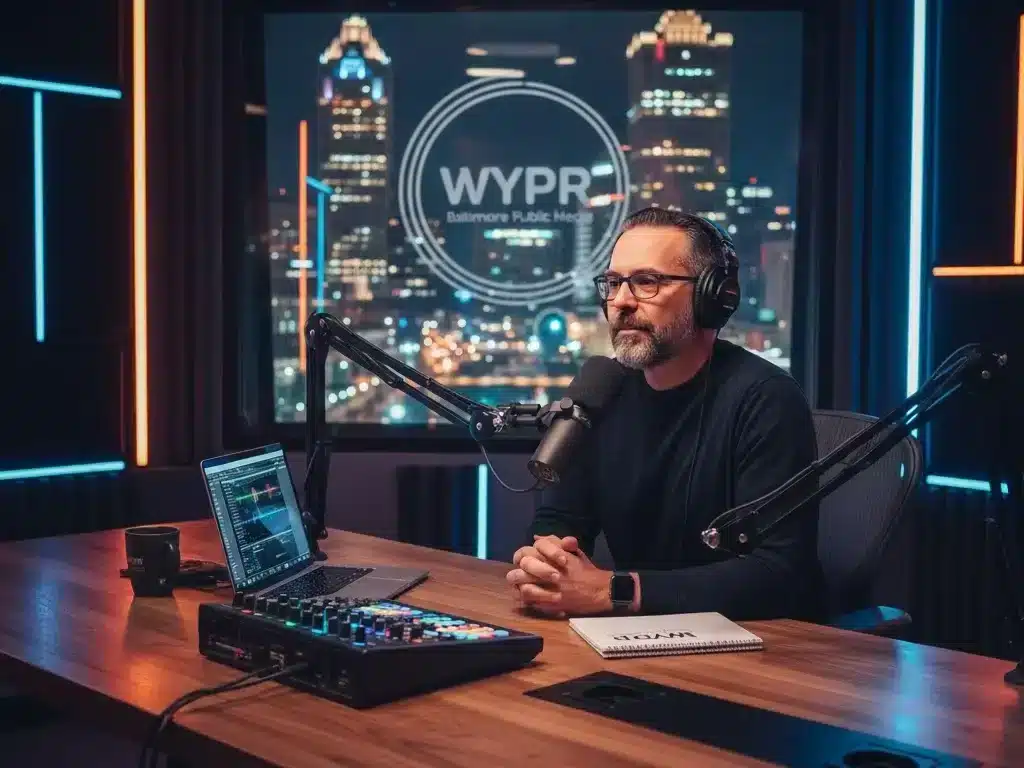
How WYPR Built Its Fastest-Growing Podcast by Making Tech Local
In an era where podcasts flood every imaginable niche, breaking through the noise has become one of the biggest challenges for public radio stations. Yet one Baltimore-based broadcaster has cracked the code by doing something deceptively simple: making global technology trends deeply local and human.
Baltimore Public Media and WYPR (88.1 FM), the city’s NPR-affiliated news station, have found remarkable success with their technology-focused podcast “Thoughts on Tech & Things.” In just weeks, the show has emerged as the fastest-growing podcast in WYPR’s history, offering a compelling blueprint for how local media can thrive in the competitive podcast ecosystem.
When “Thoughts on Tech & Things” launched its first full episode, expectations were measured. Technology podcasts are abundant, often dominated by Silicon Valley voices or global futurists. But within 30 days, the numbers told a different story.
Key Performance Highlights:
16,000+ downloads in the first month
6,000+ listeners for the pilot episode alone
Became WYPR’s fastest-growing podcast ever
Strong cross-platform engagement across radio, podcast, and newsletter formats
For a regional public radio station, these metrics signal more than a viral moment—they indicate a sustainable audience appetite for thoughtful, locally grounded tech journalism.
Why “Thoughts on Tech & Things” Is Resonating
At the heart of the podcast’s success is its host, Jason Michael Perry, a technologist, author, and founder of Perry Labs, where he serves as Chief AI Officer. Unlike many tech commentators, Perry does not approach technology as hype or doom—but as a force shaping everyday life.
The biweekly podcast focuses on one core idea:
Technology only matters when you understand how it affects your life, your job, and your community.
That framing has proven powerful.
Bridging the Gap Between Innovation and Everyday Life
Technology moves fast—often too fast for the public to process. Artificial intelligence, quantum computing, data infrastructure, and digital platforms evolve rapidly, leaving many people confused or anxious.
“Thoughts on Tech & Things” positions itself as an antidote to that overload.
What Makes the Podcast Different:
Explains complex tech in plain language
Focuses on real-world consequences, not hype
Centers Baltimore and Maryland as case studies
Asks ethical, economic, and social questions
Balances optimism with skepticism
According to Perry, the show’s mission is not to predict the future, but to slow the conversation down.
“Technology is moving faster than most people can keep up with,” Perry explains. “That gap creates fear and confusion. This show is about asking better questions and helping people see what’s actually changing—and what isn’t.”
Episode Topics That Connect Global Tech to Local Impact
Since its debut in September 2025, the podcast has tackled a wide range of timely and consequential subjects, always through a lens that connects national or global trends to local realities.
Notable Episode Themes Include:
The Data Center Boom in Maryland
How massive server farms are reshaping land use, power grids, and local economies
Google’s Changing Search Ecosystem
What AI-driven search means for publishers, businesses, and users
AI in Baltimore City Public Schools
How educators are preparing students for an AI-powered workforce
The Future of Smartphones
Will smart glasses or wearables replace phones?
The Emerging Space Economy
From satellite infrastructure to private space ventures
Quantum Computing Explained
A special collaborative episode examining promise vs. reality
Each episode is designed to be accessible to non-experts while still offering depth that appeals to informed listeners.
Strategic Partnerships Elevating Content Quality
One standout moment for the podcast came through a special episode produced in partnership with the World Trade Center Institute, focusing on quantum computing.
Rather than treating quantum tech as abstract theory, the episode explored:
Practical use cases
Timelines for adoption
Economic implications
Risks and misconceptions
This collaborative approach highlights how WYPR is leveraging partnerships to expand expertise while maintaining editorial trust.
Taking the Podcast Beyond the Studio
WYPR’s commitment to “Thoughts on Tech & Things” goes beyond podcast feeds.
Earlier this year, the station sent Perry to the Consumer Electronics Show (CES) in Las Vegas, one of the world’s most influential technology expos.
CES Coverage Expanded WYPR’s Reach:
Podcast episodes recorded with real-time insights
Appearances on “Midday,” WYPR’s flagship radio program
Cross-promotion across radio, podcast, and digital platforms
By integrating podcast reporting into traditional radio programming, WYPR ensured that technology coverage reached multiple audience segments, not just podcast subscribers.
A Multi-Platform Content Strategy
The podcast is part of a broader ecosystem rather than a standalone product.
The “Thoughts on Tech & Things” Brand Includes:
🎧 Biweekly Podcast
📻 Radio Segments
📰 Biweekly Newsletter
🌐 Digital-first storytelling
🎤 Live reporting and event coverage
This approach reflects a modern public media strategy: meet audiences wherever they are, while reinforcing trust across platforms.
Leadership Perspective: Innovation With Purpose
For Baltimore Public Media leadership, the podcast represents more than a hit show—it embodies the organization’s broader mission.
Craig Swagler, President and CEO of Baltimore Public Media, describes the podcast as a model for the future of local journalism.
“This podcast advances our mission by combining innovation, new technology, and meaningful partnerships to help our audience better understand the forces shaping their lives.”
Swagler emphasizes that the success of “Thoughts on Tech & Things” lies in its alignment with public service values:
Experimentation without gimmicks
Collaboration without compromise
Innovation rooted in trust
What This Means for Public Radio and Podcasting
WYPR’s success arrives at a critical moment for public media. As traditional radio listenership evolves, stations are under pressure to:
Reach younger audiences
Diversify revenue streams
Remain relevant in digital-first spaces
“Thoughts on Tech & Things” demonstrates a viable path forward.
Lessons for Other Stations:
Start with local relevance
Use trusted voices
Avoid tech hype cycles
Build cross-platform ecosystems
Treat podcasts as journalism—not side projects
Rather than chasing trends, WYPR invested in clarity, credibility, and curiosity—and the audience followed.
Why Google Discover Loves This Kind of Content
From an SEO and discoverability standpoint, this podcast’s editorial framing aligns closely with what platforms like Google Discover prioritize:
By grounding big tech narratives in local reporting, WYPR increases the likelihood of discovery-driven traffic and long-term audience loyalty.
The Road Ahead for “Thoughts on Tech & Things”
With strong early momentum, WYPR is well-positioned to expand the podcast’s reach further. Potential next steps could include:
Live audience events
Educational partnerships
Expanded newsletter analysis
Deeper investigative tech reporting
National syndication opportunities
What remains constant is the show’s core promise: helping people understand technology without fear or confusion.
Conclusion: A Blueprint for the Future of Local Tech Journalism
“Thoughts on Tech & Things” proves that technology journalism doesn’t have to be distant, overwhelming, or elitist. When framed through local impact, trusted voices, and thoughtful pacing, it becomes not only accessible—but essential.
For WYPR, this podcast isn’t just a success story. It’s a signal that public media can lead the conversation about technology, not chase it.