Consumable Acquires Mark Cuban-Backed Fireside, Secures Radio.com to Build AI Creator Monetization Platform
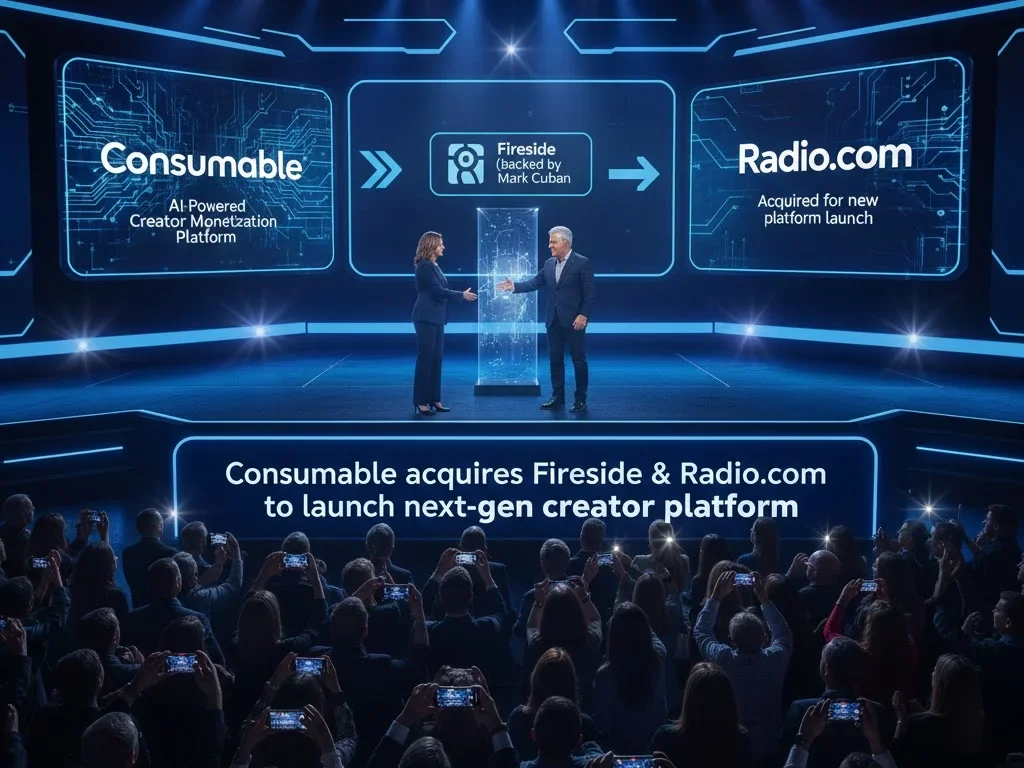
Ad tech company Consumable has officially acquired Fireside, the interactive content platform backed in part by billionaire entrepreneur Mark Cuban. Along with Fireside, Consumable has also secured ownership of the premium Radio.com domain, setting the stage for a bold transformation aimed at helping creators monetize their work more effectively.
While the financial terms of the deal have not been disclosed, the acquisition signals Consumable’s intention to build an advanced creator-first ecosystem powered by AI-driven monetization tools and Fireside’s existing content technology.
According to early reports, the new Radio.com platform will focus on giving creators the ability to own their audiences, earn across multiple formats, and build long-term enterprise value—an approach that aligns with the growing demand for ownership-based creator platforms in 2026.
Consumable’s Fireside Acquisition: What We Know So Far
Consumable’s purchase of Fireside is being viewed as a strategic move to establish a strong foundation in the rapidly growing creator monetization market. Fireside, once positioned as a disruptive force in podcasting, developed technology that supports interactive content and creator engagement.
As part of the acquisition package, Consumable has also acquired the Radio.com domain, one of the most recognizable names in the digital audio industry.
Key Details of the Deal
Here are the major highlights of the acquisition:
Consumable has acquired the content platform Fireside
Fireside had backing from billionaire investor Mark Cuban
The deal includes the high-value Radio.com domain
Financial terms remain undisclosed
Fireside’s technology will be integrated into Radio.com
Consumable plans to build a creator monetization platform powered by AI
The platform will reportedly cover podcasting, music, and multiple creator formats
This combination of technology, brand identity, and monetization ambition could make the acquisition one of the most important creator-economy deals of 2026.
Fireside Co-Founder Falon Fatemi: “Radio.com Will Be Built for Creators”
Fireside co-founder Falon Fatemi has described the acquisition as a major turning point for the Radio.com brand, emphasizing that the new chapter is being designed specifically with creators in mind.
“This next chapter for Radio.com is about laying the groundwork for a platform truly designed around creators,” Fatemi reportedly said.
Her comments suggest that the platform will not simply operate as another distribution channel, but rather as an infrastructure-level ecosystem designed to help creators generate sustainable revenue and long-term growth.
Radio.com Brand Set for a Major Revival in 2026
Radio.com is not just another domain name. It is a recognizable brand with massive potential in digital audio, podcasting, music, and entertainment streaming.
In recent years, the domain has changed hands. The investment firm Digital Indies acquired Radio.com from Audacy last year, positioning it for a reinvention.
Now, with Fireside technology and Consumable’s ad tech capabilities coming together, Radio.com is expected to become the foundation of a next-generation platform for creators.
Why Radio.com Has High Strategic Value
Radio.com is powerful because it instantly connects to high-intent search audiences looking for:
radio streaming
music content
podcasts
audio shows
entertainment creators
From an SEO and branding perspective, it is one of the strongest domains available in the media and audio industry.
This gives Consumable an advantage because it can build traffic and trust faster compared to launching a new platform under an unknown brand name.
Fireside’s Technology Will Power a Multi-Format Creator Platform
Reports suggest that Fireside’s technology will be integrated directly into the Radio.com ecosystem. Fireside was built with tools that allow creators to host and manage interactive content, particularly in live or community-based environments.
The long-term goal is reportedly to create a full-stack creator platform that supports monetization across multiple formats, including:
podcasts
music releases
creator communities
digital audio shows
interactive live content
The platform could potentially allow creators to build businesses without depending entirely on third-party streaming services or social media algorithms.
AI Will Be the Core Engine Behind Creator Monetization
Consumable’s plans for the future appear to revolve heavily around AI, not only for content creation but also for monetization and creator growth.
In today’s creator economy, AI has dramatically increased the amount of content being produced across platforms. However, that surge has also made it harder for creators to stand out and earn consistently.
Falon Fatemi addressed this shift directly by stating that AI is rapidly changing the value of content technology itself.
“AI is accelerating content creation while compressing the value of technology itself,” Fatemi said. “What matters now is ownership — of audiences, relationships, and monetization.”
Her statement reflects a growing reality in 2026: creators no longer want platforms that simply provide exposure. They want tools that help them build revenue systems and retain ownership.
Ownership Is Becoming the New Currency for Creators
The creator economy is evolving quickly. Many creators now view themselves not as influencers, but as full businesses.
Rather than relying on platform payouts and algorithm-based reach, creators want ownership of key assets such as:
fan data
subscriber lists
customer relationships
merchandise revenue
direct payments
sponsorship negotiations
This is the foundation of what many experts call “creator enterprise value,” meaning the creator’s brand becomes a real business with measurable long-term worth.
Consumable’s acquisition suggests that Radio.com may be positioned to offer exactly that kind of creator infrastructure.
Digital Indies Launches as a New Venture Studio Alongside the Deal
The acquisition also coincides with the launch of Digital Indies, described as a new micro private equity venture studio.
This venture studio is expected to focus on building and investing in creator-first platforms, tools, and business models that allow independent creators to grow without giving away ownership.
The timing of this launch is important, as the creator economy in 2026 is seeing increasing investment interest in platforms that can provide predictable revenue for artists.
Radio.com to Form Multi-Million-Dollar Artist Partnership Fund
One of the most notable developments is the reported formation of a multi-million-dollar artist partnership fund under the Radio.com brand.
This fund is expected to provide indie musicians with immediate financial liquidity while allowing them to retain ownership of major revenue streams, including touring and merchandise.
What the Partnership Fund Could Offer Indie Artists
If the fund is executed as reported, it may provide artists with:
upfront financial support
better funding opportunities than traditional label deals
cash flow assistance for tours, releases, and marketing
growth capital without surrendering touring and merchandise revenue
For independent musicians, this could be a game-changing alternative to standard music industry contracts.
Why Liquidity Is a Major Issue for Indie Creators in 2026
Independent artists and creators often face a major challenge: they may have talent and audience momentum, but they lack capital.
Touring, marketing, and production require upfront investment, and income often arrives much later.
This makes liquidity one of the biggest growth barriers for independent creators.
If Radio.com’s partnership model provides early funding while protecting ownership, it could attract a wave of creators seeking independence without financial instability.
Fireside’s Struggles in Podcasting: A Platform Ahead of Its Time?
Fireside became widely known in 2022 when it attempted to disrupt the podcast industry. Mark Cuban, a key backer, criticized the podcast distribution system and called it outdated.
At the time, Fireside also partnered with Libsyn to help distribute live shows that could later be converted into podcast episodes and monetized through advertising.
However, Fireside’s push into podcasting did not gain the traction it expected. Many podcasters were resistant to moving away from established platforms and distribution channels.
Over time, Fireside reportedly shifted away from the podcast market, focusing on other content formats.
Now, under Consumable, the platform’s technology could finally be repurposed in a way that better fits the market’s needs.
Why Fireside Didn’t Win the Podcast Market
Despite strong branding and high-profile backing, Fireside struggled for several reasons:
podcasters already had reliable distribution systems
creators were cautious about new platforms with unclear monetization
audience migration was difficult
Spotify and Apple remained dominant listening destinations
discovery on Fireside was limited compared to major platforms
While the platform may not have become a podcast leader, its technology and infrastructure still hold significant value.
Consumable’s Competitive Advantage: Combining Ad Tech With Creator Tools
Consumable is an ad tech company, which gives it a unique advantage over many creator platforms.
Most creator apps focus heavily on content and community, but fail to build strong monetization engines.
Consumable, however, already operates in the world of:
advertising systems
monetization analytics
revenue optimization
performance tracking
By combining this ad tech expertise with Fireside’s creator engagement tools, the company could build a platform that helps creators earn more effectively.
What Creators Could Expect From the New Radio.com Platform
While Consumable has not publicly detailed every planned feature, the direction suggests a comprehensive monetization ecosystem.
Based on the acquisition structure, creators may soon gain access to features such as:
Potential Features Likely to Launch
AI-powered revenue dashboards
sponsorship and brand deal matching
direct subscription tools
premium audio memberships
automated ad insertion
audience ownership tools
fan community engagement features
integrated merch selling options
multi-format publishing support
If executed successfully, Radio.com could become a serious competitor in the creator economy.
A Platform Designed for Podcasts, Music, and More
Unlike platforms that focus exclusively on podcasting or music, Radio.com is expected to support creators across multiple media formats.
This is critical because modern creators rarely rely on one content type. A creator may run:
a podcast
a YouTube channel
a music brand
an Instagram audience
live performances
digital products
merchandise
The creators who succeed in 2026 often monetize across many streams.
Consumable’s approach suggests that Radio.com could become an all-in-one platform designed to support this multi-format reality.
Industry Experts Say Creator Monetization Is Entering a New Era
The creator economy is growing rapidly, but creators are increasingly dissatisfied with platforms that:
take high revenue cuts
limit creator data ownership
restrict monetization options
control audience reach through algorithms
This is why platforms focused on creator ownership are becoming more appealing.
Consumable’s acquisition of Fireside may represent a strong attempt to build an ecosystem that prioritizes:
direct monetization
creator independence
long-term business value
How This Deal Could Impact Spotify, Patreon, and Other Platforms
Consumable’s strategy could place pressure on major creator monetization platforms such as:
Spotify (podcasts + subscriptions)
Apple Podcasts (premium content)
Patreon (creator memberships)
SoundCloud (indie music growth)
YouTube (creator monetization)
Substack (paid communities)
If Radio.com succeeds in offering creators an ownership-based monetization system, it could shift how creators choose platforms in the coming years.
Why Radio.com Could Become the “Shopify for Creators”
Some analysts are already drawing comparisons between Radio.com’s direction and Shopify’s rise in e-commerce.
Shopify became successful because it empowered businesses to operate independently rather than relying solely on Amazon.
Similarly, Radio.com could aim to become a platform where creators can:
build their own monetization model
own their audience relationship
earn from multiple streams
operate as independent media businesses
This could make Radio.com a preferred destination for serious creators who want to scale beyond traditional platform limitations.
Mark Cuban’s Fireside Bet May Still Pay Off Indirectly
Although Fireside did not become the podcasting revolution it once promised, the acquisition by Consumable suggests that the platform’s technology may still play a major role in the future of creator monetization.
Mark Cuban’s involvement helped bring attention to the monetization challenges creators face, and Fireside’s infrastructure may now be used in a larger and more scalable platform model.
This acquisition may be seen as a pivot rather than a failure—turning Fireside into a foundational technology provider instead of a standalone competitor.
What Happens Next After the Acquisition
As Radio.com prepares for its next chapter, the industry is watching closely for upcoming announcements.
Here are the likely next steps expected in the coming months:
Expected Developments in 2026
Radio.com product relaunch with Fireside integration
announcement of new creator monetization tools
rollout of AI-based creator growth systems
early artist partnerships through the new fund
major marketing push to attract podcasters and indie musicians
If Consumable moves quickly, Radio.com could become one of the most talked-about creator platforms of 2026.
Final Thoughts: A Bold Move That Could Redefine Creator Ownership
Consumable’s acquisition of Fireside and the Radio.com domain represents more than just a corporate purchase—it represents a shift in how the creator economy is being rebuilt.
As AI makes content easier to produce, creators are realizing that the true value lies in ownership and monetization infrastructure, not simply content distribution.
With Fireside’s technology, Consumable’s ad tech background, and Radio.com’s brand strength, the company may be building a platform that gives creators what they have been demanding for years:
more control
better monetization
stronger ownership
long-term business value
If Radio.com delivers on its promises, it could emerge as one of the most influential creator economy platforms of the decade.