City Cast Expands DC Newsroom After Washington Post Layoffs, Plans New Journalist Hiring
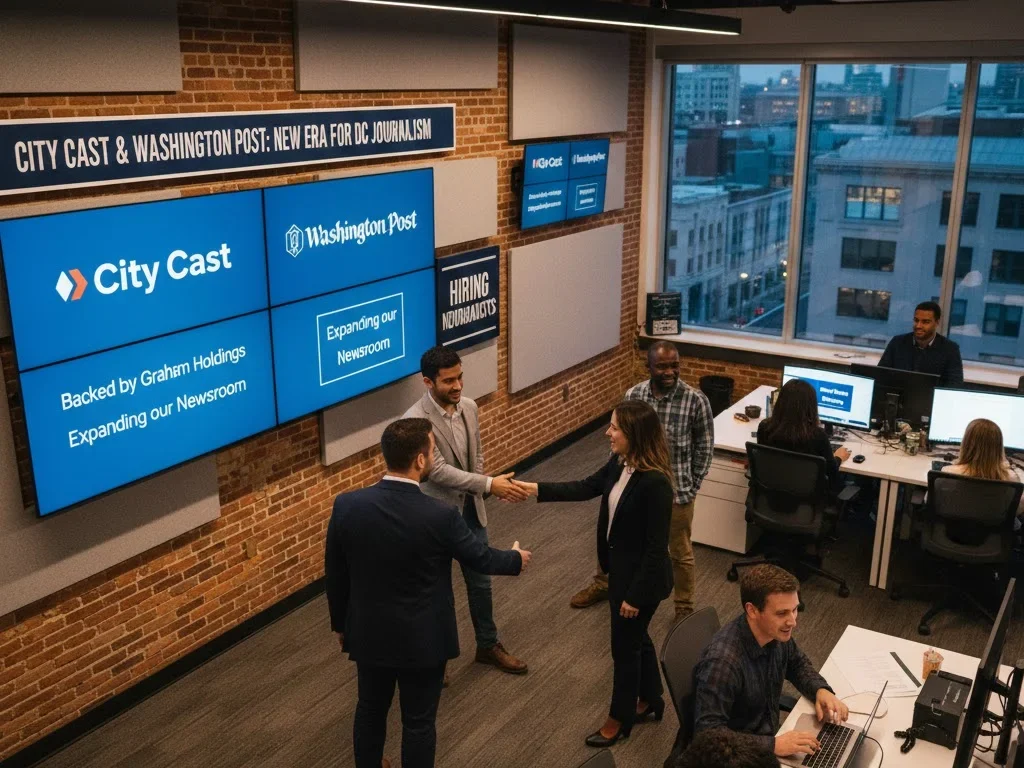
As newsroom layoffs continue reshaping American journalism, City Cast, a fast-growing network of local news podcasts and newsletters, has announced a major expansion in Washington, DC—stepping directly into the gap created by the Washington Post’s latest round of staff cuts.
Backed by Graham Holdings, the company that once owned The Washington Post, City Cast says it will significantly expand its DC newsroom immediately, positioning itself as a new frontline player in local accountability reporting in the nation’s capital.
The announcement comes just days after the Washington Post reportedly cut nearly one-third of its workforce, a move that has sent shockwaves through the media world and intensified fears about the weakening of local journalism—even in one of the most politically important cities on Earth.
The expansion was confirmed by David Plotz, CEO of City Cast, who said the company is ready to move quickly to strengthen local reporting coverage across Washington, DC and the wider DMV region.
“City Cast is going to immediately and significantly expand our local DC newsroom, to help fill the void the Post is leaving,” Plotz said.
Plotz emphasized that the company’s decision is rooted in a belief that local journalism is essential to civic health, especially at a time when institutions face increased scrutiny, elections are becoming more polarized, and misinformation continues spreading online.
Graham Holdings Returns to DC Journalism — But Through Podcasts This Time
The expansion has gained extra attention due to the involvement of Graham Holdings Company, which famously owned The Washington Post before selling it to Jeff Bezos in 2013.
Now, Graham is re-entering the DC journalism conversation—not through a traditional newspaper, but through a modern audio-first media model.
Plotz pointed out that Graham Holdings’ history with The Washington Post has shaped its ongoing commitment to local journalism.
“City Cast’s parent company, the Graham Holdings Company, knows from its own longtime stewardship of the Washington Post how important local media is to a city’s well-being,” Plotz said.
This marks a symbolic shift in the DC media ecosystem: traditional newspaper power is shrinking, while podcast-driven journalism is expanding.
City Cast Plans to Hire Four Journalists Immediately
According to Plotz, City Cast’s first step will be to hire four new journalists for the Washington market, with the hires expected to start right away.
In a social media post, Plotz noted that City Cast DC has already gained traction in the region, drawing tens of thousands of listeners and newsletter readers.
Initial Expansion Includes:
Hiring 4 journalists immediately
Increasing local accountability reporting
Boosting daily podcast coverage
Strengthening DC newsletter operations
The move suggests City Cast sees Washington as a market with strong demand for high-quality, locally focused reporting—particularly after the Washington Post layoffs.
“DC Needs It”: Plotz Says Local Journalism Must Hold Power Accountable
Plotz framed City Cast’s expansion as not just a business decision, but a civic mission.
He described the kind of journalism he believes DC residents deserve—coverage that investigates institutions, celebrates community wins, and exposes dysfunction.
“My neighbors and I deserve great local journalism that holds mayors, and sports team owners, and police chiefs to account,” Plotz said.
Plotz also stressed that City Cast believes local journalism can still be financially viable.
“I also believe it’s possible to have a local news product that does all that, and is a sustainable business,” he added.
This statement touches on the biggest question haunting journalism today: Can local news survive economically without large legacy newsroom structures?
City Cast appears determined to prove that it can.
Washington Post Cuts Spark Major Concern Across Media Industry
The City Cast expansion comes in response to major upheaval at the Washington Post.
Last week, the Post reportedly:
Laid off about one-third of its staff
Cancelled its flagship podcast “Post Reports”
Continued producing the daily morning show “The Seven” (for now)
The layoffs represent one of the most dramatic staff reductions in recent Washington Post history and have intensified public debate around the future of the Bezos-owned media outlet.
The End of “Post Reports” Marks a Major Shift in Post Strategy
The cancellation of “Post Reports”, one of the Post’s most recognized audio products, has been interpreted by many industry observers as a sign that the organization is retreating from some forms of daily journalism investment.
For years, “Post Reports” served as a key entry point for younger audiences who consume news primarily through podcasts rather than print or websites.
Its cancellation raises questions such as:
Is the Post moving away from audio?
Is the organization narrowing its focus to national coverage?
Will local DC reporting become an afterthought?
City Cast’s expansion announcement seems timed to capitalize on that uncertainty.
City Cast Executive Warns DC Is Now “Less Prepared” for Crisis Coverage
City Cast Chief Creative Officer Andi McDaniel also weighed in, emphasizing that the decline of a major newsroom like the Washington Post could have consequences far beyond day-to-day reporting.
In her LinkedIn message, McDaniel questioned whether Washington would even have enough journalists left to cover a major emergency.
“The nation’s capital is now less prepared to face a crisis, or for that matter — an ordinary local election,” McDaniel said.
This remark highlights a growing fear in the journalism world: that newsrooms are shrinking so quickly that communities may be left without enough reporters to cover breaking events.
Experts Say Shrinking Local Newsrooms Can Lead To:
Less government accountability
Lower voter turnout
Increased corruption risk
Weaker emergency reporting
Greater misinformation spread
Washington, DC—despite being the center of US political power—may not be immune to these consequences.
City Cast’s Business Model: Podcast-First Journalism With Newsletters and Subscriptions
Unlike traditional news outlets, City Cast operates with a digital-first structure built around:
Daily news podcasts
Local newsletters
Paid subscriptions
Sponsorship advertising
City Cast refers to its paid subscribers as “neighbors,” a branding strategy meant to build community loyalty.
City Cast Operates in 13 Cities Across the US
Founded four years ago, City Cast now operates in 13 cities, including:
Austin
Chicago
Denver
Las Vegas
Madison, Wisconsin
Nashville
Philadelphia
Pittsburgh
Portland, Oregon
Salt Lake City
Washington, DC
Boise, Idaho
Minneapolis–St. Paul (Twin Cities)
The network reports:
240,000 monthly podcast listeners
500,000 newsletter subscribers
These numbers position City Cast as one of the fastest-scaling local podcast news networks in the United States.
City Cast Previously Exited Houston and Boise Markets
Despite its growth, City Cast has faced challenges scaling across different city types.
Late last year, the company exited two markets:
Boise, which it considered too small for its model
Houston, which it considered too large and sprawling for a small newsroom team
The Houston exit in particular shows the complexity of local journalism economics. Even large metro areas can be difficult to cover efficiently without a large staff.
That’s why City Cast’s decision to double down on Washington is notable: the company appears confident that DC’s audience size, political relevance, and media consumption habits make it a strong long-term market.
City Cast DC Growth: Tens of Thousands of Readers and Listeners
Plotz stated that City Cast DC already has a significant local audience, even before this expansion.
According to his post:
City Cast DC has attracted tens of thousands of DC-area readers and listeners
Audience engagement has been strong enough to justify a newsroom expansion
This suggests that DC residents are actively searching for alternatives as legacy outlets reduce coverage.
Why Washington, DC Is a High-Stakes Market for Local Journalism
Washington is unique compared to other American cities.
It is:
The political heart of the US
A city with constant government activity
A region with complex local governance and federal overlap
A metro area with high civic engagement
But it also faces major local issues that require daily scrutiny, including:
Housing affordability
Public safety and crime policy debates
Metro transit funding challenges
Education reforms
Local elections and governance disputes
Sports stadium politics and ownership controversies
Plotz referenced these exact topics in his remarks, stressing the need for journalism that doesn’t just cover national politics but focuses on the lived realities of DC residents.
Graham Holdings: A Familiar Name Returns to Washington Media
Graham Holdings’ involvement adds deeper meaning to City Cast’s move.
The company once shaped Washington Post coverage for decades, before Bezos acquired the Post in 2013.
Now, while Bezos continues to steer the Post through major restructuring, Graham is supporting a different media approach—one built on:
leaner operations
audio storytelling
newsletters
direct subscriber revenue
In many ways, it reflects the broader industry transition from print-first to community-first digital journalism.
City Cast Still Unprofitable — But Revenue Growth Shows Promise
Despite expansion efforts, City Cast is still reportedly operating at a loss.
Graham Holdings has acknowledged that City Cast remains unprofitable, but noted that it achieved year-over-year growth in the third quarter.
That growth has encouraged optimism that City Cast’s model could become sustainable.
Revenue Forecast: City Cast Targets $4M to $6M in 2025
Plotz previously told Adweek that City Cast expects to generate $4 million to $6 million in revenue in 2025, potentially doubling its 2024 performance.
The company’s revenue sources include:
advertising
sponsorships
paid subscriptions
This forecast positions City Cast as one of the more promising new-generation local journalism startups.
City Cast Has About 5,000 Paid Subscribers
City Cast reports it has approximately:
5,000 paid subscribers
Subscribers pay:
$10 per month
or $100 per year
In return, they receive ad-free content and premium access to certain features.
The company’s decision to call subscribers “neighbors” is part of its community branding—an attempt to make paying for local journalism feel less like a transaction and more like civic participation.
The Bigger Story: Local Journalism Collapse Creates New Opportunities
City Cast’s DC expansion is not just about one company hiring four journalists.
It reflects a much bigger national trend.
Across the US:
newspapers are shrinking
layoffs are increasing
local reporting is disappearing
trust in information is declining
In that environment, new digital-first companies like City Cast see an opportunity to rebuild journalism in a different form.
Podcasts Are Becoming the New “Local Newspaper”
One of the most important shifts in modern media is that podcasts are replacing newspapers as a daily news habit.
Podcasts offer:
convenience for commuters
personality-driven storytelling
deeper local context
consistent daily listening routines
City Cast’s entire model is built around this reality.
Instead of expecting audiences to visit a website every day, City Cast aims to reach people in their earbuds during:
morning commutes
gym sessions
dog walks
lunch breaks
This lifestyle integration gives podcast journalism an edge that many traditional outlets struggle to replicate.
What Happens Next: City Cast DC May Become a Key News Voice in the Capital
With the Washington Post reducing staff and scaling back some of its major products, City Cast DC could quickly become one of the most influential local media players in the region.
If its expansion is successful, City Cast DC may:
break major local stories
provide more investigative reporting
attract former Post listeners and readers
expand into more formats like video or live events
It could also inspire other local journalism startups to enter the DC market.
Key Takeaways: Why This Story Matters
Here’s why City Cast’s DC expansion is a major development in US media:
Highlights:
City Cast will expand its Washington newsroom immediately.
The company plans to hire four journalists right away.
The move follows major layoffs at the Washington Post.
City Cast is backed by Graham Holdings, the Post’s former owner.
Washington Post also cancelled its flagship podcast “Post Reports.”
City Cast’s model is podcast- and newsletter-driven, not print-based.
The company forecasts up to $6 million revenue in 2025.
DC’s local journalism future is shifting toward smaller, digital-first operations.
Frequently Asked Questions (FAQs)
What is City Cast?
City Cast is a network of daily local news podcasts and newsletters operating in multiple US cities, including Washington, DC.
Why is City Cast expanding in Washington, DC?
The company says it wants to fill local news gaps created by layoffs at the Washington Post.
How many journalists is City Cast hiring in DC?
City Cast plans to hire four journalists initially.
Who owns City Cast?
City Cast is owned by Graham Holdings Company, which previously owned the Washington Post.
Is City Cast profitable?
No, City Cast is still unprofitable, but it has reported year-over-year growth and expects revenue growth in 2025.
What happened at the Washington Post?
The Washington Post recently cut about a third of its staff and cancelled its podcast “Post Reports,” though “The Seven” remains active.
Final Thoughts: DC’s News Future Is Being Rewritten in Real Time
City Cast’s announcement is more than a business expansion—it’s a clear signal that the future of local journalism is shifting away from traditional legacy newsrooms and toward leaner, audience-supported digital formats.
In a city as politically significant as Washington, the stakes are unusually high. When major institutions reduce reporting capacity, the ripple effects can influence elections, public trust, and accountability.
For City Cast, this moment represents an opportunity to become more than just a podcast network. It could become one of DC’s most important watchdogs—one journalist hire at a time.