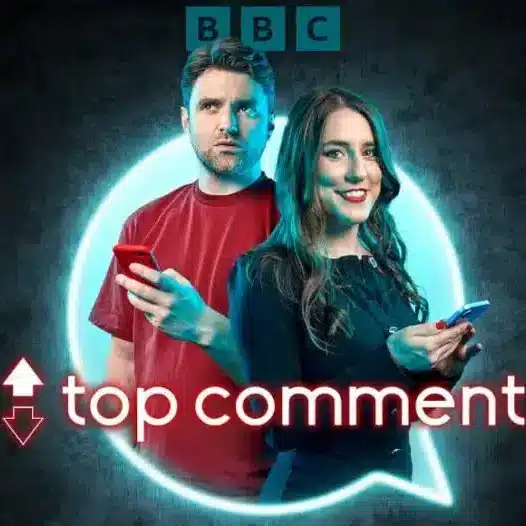
BBC Launches Top Comment Podcast to Expose Viral Narratives and Algorithm Influence
The BBC has announced the launch of a powerful new weekly podcast that dives deep into the digital forces reshaping public debate. Titled Top Comment, the series aims to unpack how viral online narratives travel from social media feeds into real-world consequences.
Launching on 20 February 2026, the podcast will be available on BBC Sounds, Apple Podcasts, Spotify, and YouTube — positioning it for global reach at a time when misinformation, algorithm-driven content, and online tribalism are dominating headlines.
In an era when what trends online often influences political discourse, public safety debates, and social cohesion, this new series promises to investigate the hidden mechanics behind what appears in your feed — and why.
Inside ‘Top Comment’: A Podcast Built for the Algorithm Age
The new show pairs Marianna Spring, the BBC’s Social Media Investigations Correspondent, with investigative journalist Matt Shea, forming a partnership that blends digital forensics with on-the-ground reporting.
Together, they will:
Examine viral trends spreading across TikTok, X, Instagram and YouTube
Investigate conspiracy theories gaining traction in online communities
Analyse how algorithms amplify specific narratives
Trace how digital debates translate into real-world events
Offer original reporting behind viral controversies
The central premise of the show is simple yet urgent: Behind every viral post lies a deeper system — and often, a deeper agenda.
Why Now? The Urgency Behind the Launch
The timing of this podcast is not coincidental. Across Europe, the US and beyond, online narratives are increasingly influencing:
Elections and political campaigns
Public perceptions of crime and safety
Immigration debates
Cultural tensions
Trust in media and institutions
According to Marianna Spring, social media platforms and the companies behind them are not passive channels — they actively shape modern reality.
“Social media algorithms – and the major companies – are shaping our reality, society and politics. This is the podcast where we get inside your feeds, analysing and investigating what’s popping up and why.”
Her statement underscores a growing concern among media analysts: the feed is now a battleground for influence.
Episode One Focus: The Rise of “Decline Porn”
The debut episode tackles a controversial and trending online theme described as “decline porn.”
This refers to content that portrays liberal cities as collapsing into moral and social decay. Videos, posts and threads often claim:
Major cities are overrun by crime
Urban life is unsafe
Immigration has destroyed communities
Liberal governance has failed
London is among the cities cited in viral posts suggesting it has become dangerous or dysfunctional.
But how much of this narrative reflects data — and how much is algorithmically amplified emotion?
That’s exactly what Top Comment aims to investigate.
The Algorithm Effect: How Feeds Shape Perception
One of the central themes of the series will be algorithmic influence.
Social media platforms prioritize:
Engagement (likes, shares, comments)
Emotional intensity
Outrage and shock value
Confirmation bias
As a result, polarizing content often travels further than balanced reporting.
Experts argue that this dynamic creates:
Echo chambers
Political polarization
Heightened mistrust
Rapid misinformation cycles
Matt Shea says the podcast will look beyond surface-level reactions.
“Behind every post in our feeds, there’s a deeper story about how it got there – and why.”
That deeper story may involve:
Coordinated online communities
Content monetization systems
Political strategy
Algorithm design flaws
Influencer-driven amplification
BBC’s Strategic Move Into Digital Narrative Journalism
The launch of Top Comment also signals a broader strategic shift within the BBC toward investigative audio storytelling focused on digital culture.
Podcasting continues to grow rapidly worldwide, with audiences increasingly turning to on-demand audio for deeper context behind headlines.
Rhian Roberts, the BBC’s Commissioner for Podcasts and Formats, says the show is tailored for listeners who feel confused by their feeds.
She describes the series as “fearless detective work” aimed at those who wonder:
Why did this story appear on my timeline?
Who benefits from this narrative?
Is this real, manipulated, or fabricated?
This positioning could resonate strongly with audiences fatigued by endless scrolling but hungry for clarity.
The Broader Media Landscape: Trust, Misinformation and Discovery
The launch comes at a pivotal moment in media history.
Key trends shaping today’s information ecosystem include:
1. Misinformation Fatigue
Audiences increasingly struggle to distinguish between authentic reporting and manufactured narratives.
2. AI-Generated Content
Synthetic media, deepfakes and automated propaganda are accelerating confusion.
3. Platform Fragmentation
Different demographics now consume news on entirely different platforms.
4. Discover-Driven Consumption
Google Discover and social feeds prioritize emotionally compelling headlines and fresh content.
By focusing on the mechanics of virality rather than just the content itself, Top Comment enters a niche space that merges tech analysis with investigative journalism.
What Makes ‘Top Comment’ Different?
Unlike standard news recap podcasts, this series promises:
Original investigative reporting
Platform-by-platform analysis
Deep dives into digital communities
Real-world case studies
Cross-platform narrative tracking
This hybrid format blends:
Digital journalism
Media criticism
Tech analysis
Cultural commentary
It’s a model that could redefine how traditional broadcasters engage with internet-native audiences.
The Hosts: Complementary Expertise
Marianna Spring
As the BBC’s specialist in social media investigations, she has built a reputation for exposing misinformation networks and examining online radicalization.
Matt Shea
Known for immersive reporting and deep investigations, Shea brings a field-reporting perspective that grounds digital analysis in real-world impact.
Together, they represent a fusion of:
Platform analysis
Human storytelling
Accountability journalism
Spring describes the collaboration as combining complementary areas of expertise at a time when such partnerships are essential.
The Bigger Question: Are We Living in Algorithmic Reality?
The podcast’s launch also feeds into a larger societal debate:
Are we consuming reality — or curated perception?
Consider this:
Two people in the same city can have entirely different digital realities
Feeds are personalized based on past engagement
Outrage is often rewarded with reach
This creates fragmented public understanding.
Top Comment aims to bridge that fragmentation by:
Comparing online narratives to verified data
Tracing origin points of viral claims
Interviewing experts and affected communities
Providing investigative context
Release Details and Where to Listen
Top Comment officially launches on Friday, 20 February 2026.
Listeners can stream the show on:
BBC Sounds
Apple Podcasts
Spotify
YouTube
The multi-platform rollout reflects the BBC’s intention to capture both traditional listeners and younger digital-native audiences.
Why This Matters for the Future of News
The introduction of this podcast highlights a crucial transformation in journalism.
Traditional news once focused primarily on:
Events
Official statements
Institutional reporting
Now, journalism must also investigate:
How narratives originate
Who amplifies them
Why certain stories trend
How digital communities mobilize
In this sense, Top Comment is not just a podcast — it’s a response to a shifting information ecosystem.
Final Thoughts: A Podcast for the Scroll Generation
As misinformation, viral outrage and digital echo chambers become everyday realities, the BBC’s new podcast arrives at a critical juncture.
For listeners confused by the swirl of trending topics, controversial threads, and emotionally charged viral videos, Top Comment promises clarity.
By stepping inside the feed rather than merely reporting from outside it, the show positions itself as a timely intervention in the algorithm age.
Whether it becomes the “go-to place” for digital narrative analysis — as Matt Shea hopes — will depend on how deeply it can cut through the noise.
But one thing is certain: The battle for truth increasingly begins in the comments section.