BBC Eye Exposes Billion-Dollar Illegal Glass Eel Trade from Europe to Asia
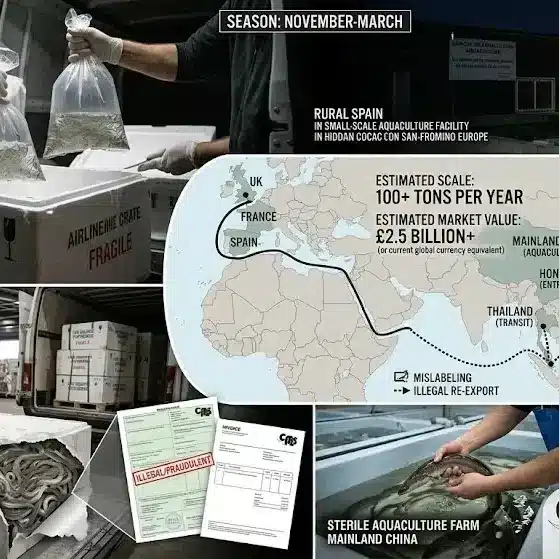
BBC’s investigative unit BBC Eye investigative series has unveiled a vast and highly organized illegal trade involving endangered European glass eels. The findings, presented in the gripping podcast Billion Dollar Babies BBC Eye podcast, highlight how these tiny, translucent creatures have become the center of a thriving black market worth billions.
Released on March 24, 2026, the investigation exposes how criminal syndicates are smuggling juvenile eels from rivers across Europe to Asia, where demand remains insatiable. The podcast paints a disturbing picture of environmental exploitation driven by profit, with networks operating at a scale comparable to narcotics trafficking.
Illegal glass eel trade smuggling from Europe to Asia exposed by BBC Eye investigation
Glass eels are the juvenile stage of the European eel, a species once abundant in rivers throughout Europe. These tiny, transparent fish are considered a delicacy in several Asian countries and are also essential for aquaculture industries.
Key Facts About Glass Eels:
They are the only viable source for eel farming since eels cannot be bred in captivity.
Each glass eel can fetch between $2 to $3, making them extremely lucrative.
A single smuggling operation can transport 200 to 500 kilograms at a time.
The species has seen a 95% population decline since the 1980s.
The dramatic drop in eel populations has led to strict international protections, yet the demand continues to fuel illegal activities.
Inside the Smuggling Network: From European Rivers to Asian Markets
The Billion Dollar Babies podcast reveals how sophisticated criminal organizations, including Hong Kong-based triads, orchestrate these smuggling operations with precision.
Smuggling Tactics Uncovered:
Use of speedboats and cargo ships to transport eels undetected
Avoidance of digital tracking by not using mobile phones
Coordinated teams operating across multiple European countries
Strategic routes designed to bypass customs and wildlife enforcement agencies
According to one insider interviewed in the podcast, the trade is considered “high profit and low risk,” especially when compared to drug trafficking.
The Role of Asian Demand in Fueling the Trade
The primary driver behind this illegal industry is the booming aquaculture sector in Asia. Countries such as China rely heavily on wild-caught glass eels to sustain eel farming operations.
Why Asia Depends on European Glass Eels:
Inability to breed eels in captivity
High consumer demand for eel-based dishes
Declining local eel populations
Profit margins that justify illegal sourcing
This demand creates a steady pipeline for smuggled eels, ensuring that the trade remains highly profitable despite legal risks.
Conservation vs. Commerce: A Growing Conflict
While illegal traders exploit the system, conservationists are racing against time to save the species. Most legally traded glass eels are used in projects aimed at restocking European rivers.
Conservation Efforts Include:
Strict quotas and export bans
River restocking programs
International monitoring under wildlife protection laws
Collaboration between governments and NGOs
However, the black market undermines these efforts, diverting critical resources away from conservation.
Voices from the Industry: Legal Trade Under Pressure
The podcast also features insights from Peter Wood British eel trader, a veteran British eel trader with over five decades of experience. Wood has been involved in exporting eels for conservation purposes, emphasizing that his operations comply with all legal frameworks.
Impact of Sanctions on Legal Trade:
Exports to Russia were halted in 2025 due to international sanctions
Business operations and employment were affected
Legal traders face increasing scrutiny and competition from illegal networks
Wood maintains that his work supports eel recovery, highlighting the challenges faced by legitimate players in a market overshadowed by crime.
A Multi-Billion Dollar Wildlife Crime
The scale of the illegal glass eel trade is staggering. According to the BBC Eye investigation, it rivals some of the most notorious black markets globally.
Key Highlights:
Estimated to be a multi-billion-dollar industry
Operates across continents with organized crime involvement
Exploits regulatory loopholes and enforcement gaps
Threatens the survival of a critically endangered species
The findings underscore the urgent need for stronger international cooperation and enforcement mechanisms.
Where to Watch and Listen
The full investigation is available across multiple platforms:
Stream on BBC iPlayer streaming service
Watch on the BBC World Service YouTube channel
Listen via BBC Sounds app and other major podcast platforms
Why This Story Matters Now
The illegal trade in glass eels is more than just a wildlife issue—it’s a global crisis involving environmental degradation, organized crime, and economic exploitation. As demand continues to rise and enforcement struggles to keep pace, the survival of the European eel hangs in the balance.
The Billion Dollar Babies podcast serves as a wake-up call, urging governments, consumers, and industries to take immediate action.