BBC Brings ‘Witness History’ Podcast to Life With AI Animation
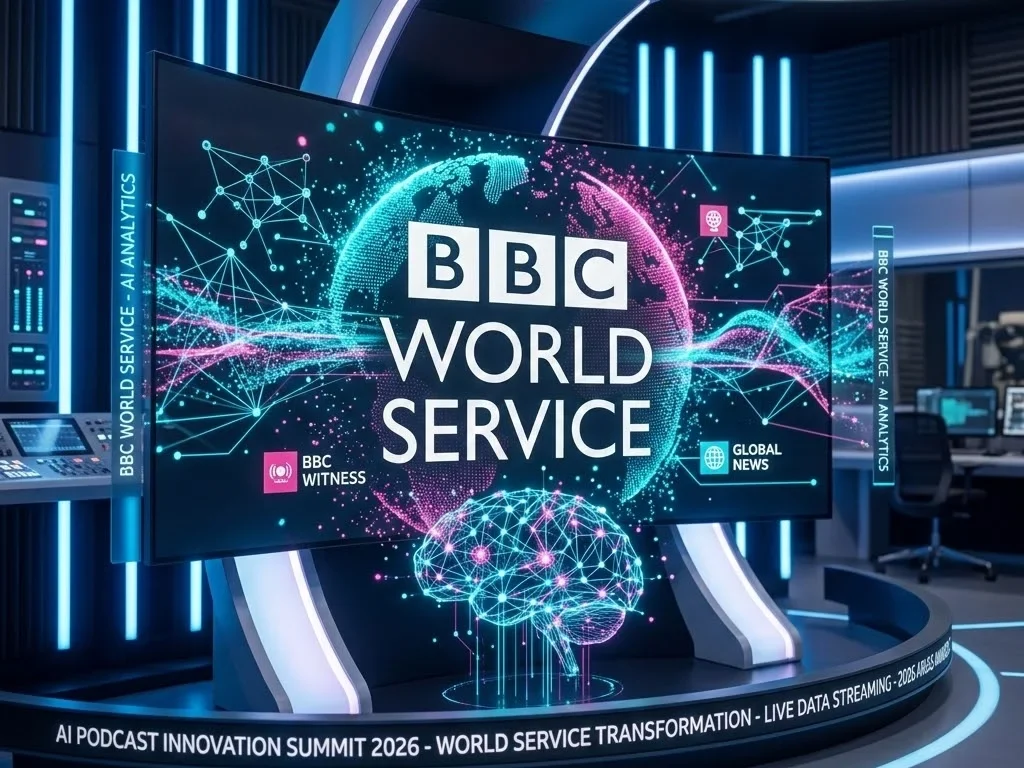
BBC World Service has announced an innovative experiment: bringing its long-running audio series Witness History to life through AI-powered animation.
The project aims to convert selected podcast episodes into animated videos using generative artificial intelligence — a step that could reshape how audio journalism connects with younger, visually driven audiences.
The first animated release, “The World’s First Labradoodle,” is already live on the BBC World Service’s YouTube channel, marking the beginning of what could become a major shift in digital storytelling strategy.
Why the BBC Is Turning Podcasts Into AI-Animated Videos
For years, podcasters have faced a practical challenge:
Video content dominates platforms like YouTube, Instagram, and TikTok
Producing high-quality video is expensive and time-consuming
Many audio-first productions lack the visual assets needed for adaptation
The BBC’s solution? Generative AI.
Instead of assembling traditional film crews or elaborate re-enactments, the broadcaster is leveraging AI-driven animation to reinterpret its rich archive of narrative audio.
Anna Doble, Digital Editor at the BBC World Service, explained the rationale behind the move:
“We’re exploring using AI technology to help bring these fascinating audio stories from ‘Witness History’ to life in visual form. We look forward to hearing how new audiences respond to this new approach.”
The strategy isn’t just about innovation — it’s about reach.
First Release: “The World’s First Labradoodle” Goes Visual
4
The debut animated adaptation, “The World’s First Labradoodle,” explores the unexpected origins of one of the world’s most recognizable designer dog breeds.
Originally an audio feature, the story recounts how crossbreeding experiments led to the creation of the Labradoodle — a breed that would go on to spark global trends in hybrid dogs.
Now, through AI-assisted animation:
Characters are visually recreated
Historical moments are illustrated
Emotional beats are enhanced with motion graphics
The narrative pacing is preserved from the original audio
The goal isn’t to replace journalism with spectacle — but to amplify the storytelling.
Upcoming AI-Animated Episodes
The BBC confirmed four additional episodes are being adapted:
“Brazil’s Biggest Bank Heist” – A gripping recount of one of the most audacious robberies in modern history.
“Ramesses II’s ‘Mummy Makeover’” – A fascinating look at the preservation and restoration of an ancient Egyptian pharaoh.
“The Discovery of Lord Sipan in Peru” – A dramatic archaeological breakthrough that stunned historians.
“Arrested for Playing Football in Brazil” – A human story highlighting unexpected consequences tied to sport and politics.
These topics were carefully selected for their strong narrative arcs and visual potential.
The Role of Generative AI in Production
The animated adaptations are produced in collaboration with 1UpMedia, with animator Guang Jin Yeo describing the process as a way to preserve journalistic integrity while expanding accessibility.
“By thoughtfully adapting these ‘Witness History’ stories into video, we have produced an animation to accompany the audio that doesn’t compromise the depth and care that defines the program. Using generative AI allows us to unlock the extraordinary BBC World Service archive of narrative audio for visual audiences who may never have encountered it before.”
Generative AI tools assist in:
Visual character design
Scene composition
Background generation
Stylized historical reconstructions
Motion animation elements
Importantly, the original reporting remains unchanged — the visuals are built around the verified narrative.
A Podcast With 4,000+ Episodes Gets a Second Life
Since its launch as a radio feature decades ago, Witness History has produced more than 4,000 episodes, documenting first-hand accounts of pivotal global events.
From political upheavals to cultural milestones, the program captures lived experiences that traditional history books often overlook.
Its evolution into a podcast expanded its reach, but the shift to AI-driven video could push it even further.
Fred Durman, Head of Business Development at the BBC World Service, described the project as transformative:
“This exciting project uses generative AI to give a second life to our original programming, enabling us to reach new audiences in a novel way.”
Why This Matters for the Future of Journalism
The BBC’s experiment lands at a crucial moment in media history.
Key Industry Trends Driving This Shift:
Video-first consumption habits
AI integration in media production
Archive monetization strategies
Younger audiences preferring visual storytelling
Platform algorithms favoring video engagement
Google Discover, YouTube recommendations, and social platforms increasingly prioritize visually engaging content. Audio-only storytelling, while powerful, can struggle to compete in algorithm-driven ecosystems.
By blending trusted journalism with AI-generated visuals, the BBC may have found a cost-effective bridge between traditional broadcasting and next-gen media formats.
Ethical and Creative Considerations
AI in journalism is not without controversy.
Critics often raise concerns about:
Authenticity
Potential misinformation
Over-automation of creative processes
Job displacement in media production
However, in this case, the BBC maintains that AI functions as a production tool — not a reporting replacement.
The editorial process, fact-checking, and narrative scripting remain human-led.
The animation enhances the storytelling but does not alter its substance.
Could This Spark a Podcast Industry Shift?
If the BBC’s AI animation pilot proves successful, other major publishers may follow.
Potential ripple effects include:
News podcasts launching parallel video adaptations
Archival radio programs finding renewed life online
Independent podcasters experimenting with AI visual layers
Media companies developing in-house AI production teams
This hybrid format — audio journalism enhanced by AI-driven animation — could become a mainstream model within the next few years.
Audience Reaction: The Real Test
Ultimately, the project’s success will depend on viewer response.
Questions that remain:
Will traditional podcast listeners embrace the visual format?
Can AI animation maintain emotional authenticity?
Will YouTube audiences discover the program organically?
Can this format drive higher engagement than audio alone?
With its first release already live, the experiment has officially begun.
The Bigger Picture: AI’s Expanding Role in Global Media
The BBC’s move reflects a broader transformation across global media organizations. AI is no longer just a backend tool for analytics — it is becoming part of the creative pipeline.
From automated news summaries to AI-assisted video editing, the boundaries between technology and storytelling are rapidly evolving.
Yet, the BBC’s approach stands out for one reason: it is applying AI not to generate new reporting, but to reimagine trusted journalism for new platforms.
That distinction could define how audiences perceive AI’s legitimacy in media.
What Comes Next?
If engagement metrics trend positively, the BBC may expand the initiative beyond five episodes.
Future possibilities include:
Entire AI-animated seasons
Interactive historical explainers
Short-form social media adaptations
Multi-language AI voice integrations
Educational partnerships
The experiment also positions the BBC World Service as a digital innovator at a time when traditional broadcasters face fierce competition from independent creators and tech platforms.
Final Thoughts
The transformation of Witness History into AI-animated video represents more than a format tweak — it signals how legacy institutions are adapting to survive and thrive in the algorithm-driven age.
By merging archival journalism with generative AI, the BBC World Service is testing a blueprint that could redefine how historical storytelling is consumed in the 21st century.
Whether it becomes a permanent feature or remains an experimental chapter will depend on audience engagement — but one thing is clear: