Audacy Creator Lab Adds Direct YouTube Distribution for Podcast Video Publishing
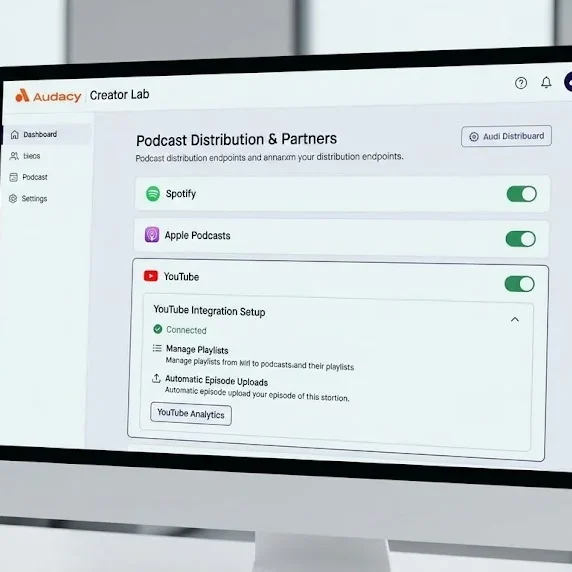
Audacy has announced that its podcast hosting platform, Creator Lab, now supports direct distribution to YouTube.
The integration allows podcast creators to publish video versions of their episodes to YouTube simultaneously with audio distribution across traditional listening platforms — a development that reflects the growing convergence of audio and video content consumption.
The feature arrives at a pivotal moment when podcast audiences are increasingly split between streaming apps and video-first platforms. For creators, this update is not just technical — it’s strategic.
The industry shift is clear: podcasting has expanded beyond RSS feeds and streaming apps. Today’s audiences expect content in multiple formats.
Leah Reis-Dennis, Head of Podcasts at Audacy, emphasized this transformation in an official statement:
“Podcasting today is no longer audio or video — it’s both. With Creator Lab’s YouTube integration, creators can now seamlessly expand their reach wherever audiences watch or listen while continuing to monetize through our audio advertising network.”
Her statement highlights two key realities shaping the creator economy:
Audiences consume podcasts on YouTube as much as on audio platforms
Monetization strategies must evolve alongside distribution
The addition of YouTube integration allows creators to tap into both ecosystems without duplicating manual work.
What the YouTube Integration Means for Creators
The new feature streamlines workflows and eliminates the need for podcasters to separately upload video episodes to YouTube.
Key Benefits Include:
Simultaneous publishing to audio platforms and YouTube
Automated distribution from a single dashboard
Expanded discoverability through YouTube’s algorithm
Continued monetization through Audacy’s ad network
Greater audience reach across platforms
For independent podcasters especially, this reduces friction in content distribution — a critical factor in scaling audience growth.
Why YouTube Is Now Essential for Podcast Growth
YouTube has quietly become one of the largest podcast consumption platforms globally. Many creators now film podcast sessions specifically for video publishing, recognizing that:
YouTube offers algorithmic discovery
Video thumbnails increase click-through rates
Clips and Shorts drive viral reach
Visual branding strengthens audience connection
By integrating directly with YouTube, Audacy is aligning Creator Lab with modern audience behavior rather than legacy podcast models.
A Look Back: Creator Lab’s Launch and Evolution
Audacy launched Creator Lab in April 2025 as a hosting and monetization solution tailored to independent podcast producers.
The platform was built on the foundation of Podcorn, a marketplace acquired by Audacy in 2021. The acquisition allowed Audacy to leverage Podcorn’s direct-to-creator sponsorship model while integrating it into its broader advertising ecosystem.
The Strategic Vision Behind Creator Lab
At its core, Creator Lab was designed to:
Empower independent creators
Provide scalable monetization tools
Simplify sponsorship acquisition
Integrate directly with advertisers
Offer hosting plus revenue support
The YouTube integration appears to be the next logical step in that roadmap.
Monetization Model: How Audacy Generates Revenue
Audacy’s Creator Lab operates on a structured revenue-sharing model that benefits both the platform and participating creators.
Here’s how it works:
Audacy takes a 10% service fee on podcast sponsorships sold through its marketplace
For creators using Creator Lab hosting, Audacy retains 50% of the show’s revenue
This dual-structure approach allows Audacy to:
Monetize advertising partnerships
Build long-term hosting relationships
Expand its revenue streams beyond traditional radio
For creators, the tradeoff lies in gaining access to Audacy’s advertising relationships in exchange for revenue sharing.
The Bigger Picture: Audacy’s Digital Transformation
This update is not just about podcasts. It reflects Audacy’s broader digital transformation strategy.
Historically known for radio broadcasting, Audacy has steadily pivoted toward digital audio and on-demand content. By investing in hosting infrastructure, advertising technology, and multi-platform distribution, the company is positioning itself as a modern media network rather than a legacy broadcaster.
Strategic Objectives Behind the Move:
Capture growing video podcast market
Increase advertiser inventory
Strengthen creator loyalty
Compete with standalone podcast hosts
Build cross-platform media presence
The YouTube integration strengthens Audacy’s position in an increasingly competitive hosting landscape.
Industry Context: The Rise of Video Podcasting
The integration arrives amid explosive growth in video podcasting.
Several industry trends support the move:
More top podcasts now film full episodes
YouTube creators are launching podcast-style shows
Advertisers are shifting budgets to multi-format campaigns
Short-form video clips are driving podcast discovery
For platforms like Audacy, offering video distribution is no longer optional — it’s expected.
Competitive Landscape: How Creator Lab Stands Out
Podcast hosting platforms compete on several fronts:
Distribution reach
Monetization tools
Revenue share
Analytics dashboards
Creator support
By adding YouTube integration, Creator Lab now competes more aggressively with other hosting platforms that already support video publishing workflows.
Its differentiator remains:
Built-in advertising marketplace
Legacy media advertiser relationships
Sponsorship facilitation
This hybrid approach blends creator economy tools with traditional media buying power.
What This Means for Advertisers
Advertisers benefit as well.
The integration enables:
Broader inventory across audio and video
Cross-platform campaign opportunities
Enhanced audience targeting
Higher engagement metrics
As brands seek omnichannel campaigns, podcast hosts that can distribute seamlessly to YouTube become more attractive partners.
Challenges Creators Should Consider
While the integration offers clear benefits, creators may weigh a few considerations:
Revenue sharing percentage
Platform dependency
Brand ownership implications
Monetization terms
Independent podcasters must evaluate whether Audacy’s monetization support outweighs potential revenue tradeoffs.
The Future of Podcast Hosting Platforms
The announcement suggests that hosting platforms are evolving from technical infrastructure providers into full-scale media ecosystems.
Future developments may include:
Native video editing tools
AI-powered content optimization
Automated clip generation
Enhanced analytics dashboards
Expanded advertiser matching
Creator Lab’s YouTube integration is likely just the beginning.
Expert Insight: Why This Matters Now
The timing is notable.
Podcasting growth has matured in audio-only apps, while video platforms continue gaining share. By bridging both, Audacy reduces fragmentation for creators and keeps them inside its ecosystem.
This move also signals that media companies are adapting to the creator economy rather than competing against it.
Key Takeaways
Audacy Creator Lab now supports direct YouTube distribution
Creators can publish video episodes simultaneously with audio
Monetization continues through Audacy’s advertising network
The platform takes 10% of sponsorships sold
Hosting users share 50% of generated revenue
The move strengthens Audacy’s digital and creator strategy
Final Thoughts
Audacy’s addition of direct YouTube distribution to Creator Lab reflects a broader transformation in how podcasts are created, distributed, and monetized.
The lines between audio and video are dissolving. Platforms that recognize this shift — and adapt quickly — will shape the next chapter of digital media.
For independent creators, the opportunity is clear: expand reach without expanding workload.
For Audacy, it’s a calculated step toward becoming a dominant player in the multi-platform podcast economy.