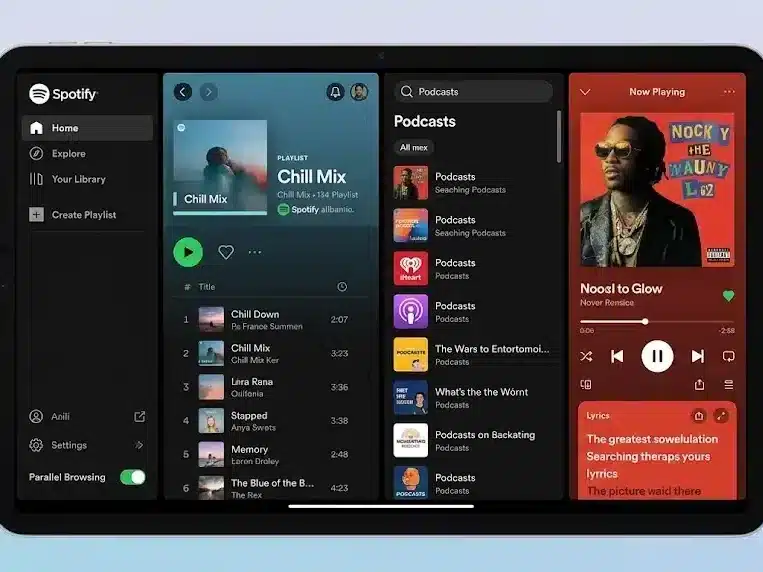
Spotify has rolled out a major redesign of its tablet interface. The update signals a deeper push into content discovery, personalized browsing, and seamless navigation—areas that have become central to how modern audiences consume digital media.
While tablets may not be the primary device for podcast consumption, Spotify’s latest overhaul suggests the company sees untapped potential in this format. Rather than treating tablets as oversized smartphones, the platform is reimagining the experience to take full advantage of larger screens, offering users a more dynamic and immersive way to explore music, podcasts, and audiobooks.
Spotify’s redesign is part of a broader effort to create a cohesive experience across all devices—from smartphones and desktops to TVs and even in-car systems. The goal is clear: no matter where users access Spotify, the interface should feel familiar yet optimized for the device in hand.
Nicole Burrow, Head of Design and Consumer Experience at Spotify, emphasized this philosophy, noting that tablets offer unique opportunities for exploration due to their larger display area. Instead of simply scaling up the mobile app, Spotify has taken a more thoughtful approach—restructuring how content is presented and discovered.
The redesign ensures that users can engage with content more intuitively, reducing friction while enhancing the overall browsing journey.
Why Tablets Matter in Spotify’s Strategy
Although smartphones dominate daily streaming habits, tablets occupy a unique niche. They are often used in more relaxed settings—at home, during travel, or for multitasking. This opens up opportunities for deeper engagement, particularly when it comes to discovering new content.
Spotify’s new tablet experience is built around this idea. It transforms passive listening into an active exploration process, allowing users to interact with recommendations, playlists, and multimedia content without interrupting playback.
Key motivations behind the redesign:
Increasing user engagement on underutilized devices
Enhancing discovery of new music, podcasts, and audiobooks
Creating a consistent yet device-specific interface
Leveraging larger screens for richer interaction
Adaptive Orientation: More Than Just Resizing
One of the standout features of the update is adaptive orientation. Unlike traditional apps that simply resize elements when switching between portrait and landscape modes, Spotify’s interface now dynamically reconfigures itself.
This means:
Layout elements shift intelligently based on orientation
Content remains balanced and visually appealing
Navigation stays intuitive regardless of how the device is held
The result is a more polished and intentional user experience that feels native to tablets rather than a stretched version of a mobile interface.
Collapsible Sidebar Brings Discovery to the Forefront
Another major addition is the collapsible sidebar—a feature designed to make browsing effortless without disrupting playback.
This sidebar allows users to:
Explore music, podcasts, and audiobooks in real time
Access recommendations while listening
Navigate their library without switching screens
The design encourages continuous interaction, making it easier for users to stumble upon new content organically.
Parallel Browsing: Multitasking Redefined
Spotify is also introducing parallel browsing, a feature that reflects how users naturally multitask on tablets.
With this functionality:
Audio or video continues playing on one side of the screen
Users can browse playlists, albums, or podcasts simultaneously
There’s no need to pause or exit current content
This split-view approach enhances usability, particularly for users who enjoy exploring while listening—a behavior that Spotify is actively encouraging through this redesign.
Interactive and Scrollable Content Experience
The updated interface includes interactive, scrollable panels that allow users to dive deeper into content without leaving the playback screen.
This feature supports:
Continuous scrolling through recommendations
Seamless transitions between content categories
Reduced interruptions during listening sessions
By minimizing friction, Spotify aims to keep users engaged for longer periods, increasing both session time and content consumption.
Video Integration Gets a Major Boost
As part of its ongoing push into video content, Spotify has made significant improvements to video playback on tablets.
The update prominently features a “Switch to Video” toggle, making it easier than ever for users to transition from audio to video content.
What this means for users:
Faster access to video podcasts and visual content
A more immersive viewing experience
Increased visibility for video creators on the platform
This move aligns with broader industry trends, where streaming platforms are increasingly blending audio and visual formats to capture audience attention.
Familiar Yet Refined Navigation
Despite the extensive changes, Spotify has maintained its core navigation structure. This ensures that existing users don’t face a steep learning curve when adapting to the new interface.
The redesign strikes a balance between innovation and familiarity:
Core navigation remains consistent with the mobile app
New features are integrated without overwhelming users
The overall experience feels like a natural evolution
This approach helps Spotify retain user loyalty while introducing meaningful improvements.
Faster Feature Rollouts Across Devices
From a technical standpoint, the redesign also streamlines Spotify’s development process. By aligning tablet and mobile frameworks more closely, the company can now roll out updates and new features more efficiently.
Benefits include:
Faster deployment of new features
Improved consistency across devices
Reduced fragmentation in user experience
This backend improvement may not be immediately visible to users, but it plays a crucial role in maintaining Spotify’s competitive edge.
The Bigger Picture: Spotify’s Evolving Ecosystem
The tablet redesign is more than just a UI update—it reflects Spotify’s broader strategy to evolve into a multi-format, multi-device content platform.
Over the years, Spotify has expanded beyond music to include:
Podcasts
Audiobooks
Video content
By enhancing discovery and engagement on tablets, the company is positioning itself to better compete in an increasingly crowded digital entertainment landscape.
Industry Context: Why Discovery Matters More Than Ever
In today’s streaming economy, discovery is a key driver of user retention. With millions of tracks, podcasts, and audiobooks available, helping users find relevant content quickly is essential.
Spotify’s redesign addresses this challenge by:
Integrating discovery into the listening experience
Encouraging exploration without disruption
Leveraging UI design to guide user behavior
This focus on discovery not only benefits users but also creators, who gain increased visibility for their work.
User Experience at the Core
At its heart, the update is about improving user experience. Every feature—from adaptive orientation to parallel browsing—has been designed with usability in mind.
The redesign acknowledges that:
Users want seamless transitions between tasks
Multitasking is a key behavior on tablets
Discovery should feel natural, not forced
By aligning its design with these insights, Spotify is creating a more intuitive and engaging platform.
What This Means for Content Creators
For artists, podcasters, and audiobook creators, the new tablet experience could open up new opportunities.
Potential impacts:
Increased exposure through enhanced discovery tools
Greater engagement with video content
More opportunities for users to explore diverse formats
As Spotify continues to refine its platform, creators stand to benefit from improved visibility and audience reach.
Early Reactions and Expectations
While it’s still early days, the redesign is expected to be well-received by users who rely on tablets for media consumption.
The emphasis on:
Seamless navigation
Enhanced discovery
Multitasking capabilities
positions the update as a meaningful upgrade rather than a cosmetic change.
Looking Ahead: The Future of Spotify Design
Spotify’s tablet redesign offers a glimpse into the company’s future direction. As technology evolves, the platform is likely to continue experimenting with new ways to enhance user engagement.
Potential areas of focus may include:
Deeper personalization through AI
Expanded video and interactive content
Further integration across devices
The current update lays the groundwork for these innovations, reinforcing Spotify’s commitment to staying ahead in the streaming space.
Conclusion
Spotify’s redesigned tablet experience marks a significant step forward in the company’s mission to create a unified, discovery-driven platform. By leveraging the unique capabilities of tablets, Spotify is transforming how users interact with content—making exploration more intuitive, engaging, and seamless.
The update not only enhances usability but also strengthens Spotify’s position in the competitive streaming market. As users increasingly seek personalized and immersive experiences, this redesign could play a key role in shaping the future of digital entertainment.