Video Podcast Ads Surge to 79% of Campaigns but Audio Still Outperforms, Podscribe Report Finds
According to the latest findings from the Podscribe Performance Benchmark Report, video is now included in nearly 79% of podcast advertising campaigns, signaling a major shift in how brands approach podcast audiences.
However, despite the explosive growth of video podcasting—particularly on platforms like YouTube—the report highlights a surprising reality: traditional audio podcast ads continue to outperform video ads when it comes to direct-response results.
The new insights reveal both opportunities and measurement challenges for advertisers as podcasting increasingly merges with video content ecosystems.
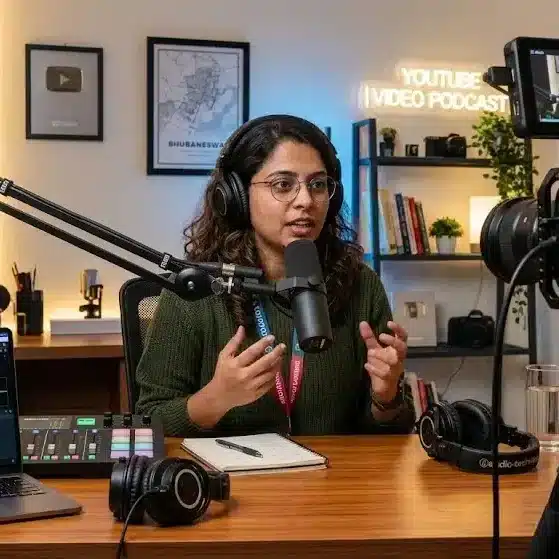
Over the past few years, podcasting has expanded beyond audio-only formats. With the rapid growth of video-first platforms, podcasters are now recording and distributing their episodes with video simulcasts—essentially recording the podcast in a video format while keeping the audio feed.
According to the Podscribe benchmark report:
79% of episodic podcast ad campaigns now include video simulcasts
Video podcast ads are increasingly sold alongside traditional audio ads
YouTube generates nearly two-thirds of total video impressions within podcast campaigns
This shift suggests that advertisers now view podcasts as multichannel content properties rather than just audio shows.
Podscribe CEO Pete Birsinger explained during a recent webinar presenting the findings that the industry is still grappling with how to measure performance accurately.
“Podcasters are putting ads on YouTube, and advertisers are buying them—even though measurement is still evolving,” Birsinger said.
Why YouTube Has Become the Center of Video Podcast Advertising
The dominance of YouTube in video podcast distribution is no surprise. As the world’s largest video platform, it offers podcasters a massive global audience and built-in discoverability.
YouTube currently accounts for:
Nearly two-thirds of podcast video ad impressions
The majority of podcast video audience reach
A growing number of creators recording podcasts primarily for YouTube distribution
Many popular podcasts now release full video episodes simultaneously with audio versions, allowing them to tap into both audiences.
Key Reasons Brands Are Buying YouTube Podcast Ads
Advertisers are increasingly investing in YouTube podcast placements due to several advantages:
Massive global reach
Built-in recommendation algorithm
Strong engagement metrics
Longer viewing sessions compared to traditional videos
Yet the report reveals that reach does not always translate into better conversions.
Audio Ads Still Deliver Better Direct-Response Results
Despite the rapid growth of video podcasting, Podscribe’s data shows audio ads continue to outperform video ads in conversion performance.
According to the report:
YouTube video podcast ads generate around 30% fewer promo code redemptions
Post-purchase survey responses are also lower compared to audio ads
Audio listeners appear more likely to take action after hearing an advertisement
Camden Weber, Senior Director of Partnerships at Podscribe, explained that the results initially surprised researchers.
“As a consumer, you might expect someone watching a podcast to convert during the video experience,” Weber said. “But the data shows YouTube generates roughly 30% fewer promo code redemptions compared with the same ads in audio.”
This suggests that the context of listening versus watching may influence consumer behavior.
Why Audio Podcast Ads Are More Effective
Several factors may explain why audio still delivers stronger direct-response performance.
1. Higher Listener Attention
Podcast listeners often consume content during activities such as:
Commuting
Exercising
Doing household chores
In these moments, listeners may be more focused on the audio host’s voice, making host-read ads particularly persuasive.
2. Stronger Host Trust
Podcast hosts build deep trust with their audiences over time. When ads are host-read endorsements, listeners may view them more like recommendations rather than traditional advertisements.
3. Less Distraction
Video content introduces visual distractions:
Comments
Suggested videos
On-screen graphics
These distractions may dilute the advertising message impact compared to the focused nature of audio listening.
Audience Geography Plays a Major Role in Conversions
Another key insight from the Podscribe report relates to audience location.
Podscribe found that podcasts with predominantly U.S.-based YouTube subscribers perform significantly better in conversions.
The report notes:
Podcasts with mostly U.S. subscribers show more than double the conversion rate
International-heavy audiences produce lower promo code redemption rates
Advertisers targeting U.S. consumers may struggle to convert global YouTube audiences
Weber explained that audience geography plays a critical role in performance.
“We see more than two times the conversion rate for shows with primarily U.S. subscribers compared to those with large international audiences,” Weber said.
This is particularly important because many large YouTube podcast channels attract global audiences, which may not align with the goals of U.S.-focused advertisers.
Global Audiences Create Challenges for Advertisers
Many of the most popular podcasts on YouTube reach viewers from dozens of countries. While this global reach is valuable for branding campaigns, it may not always translate into sales.
For advertisers targeting a specific region—such as the United States—international viewers may not be able to:
Purchase certain products
Use region-specific promo codes
Access localized services
As a result, advertisers may see lower conversion rates despite high view counts.
To address this challenge, Podscribe has begun adjusting its measurement model to better account for:
U.S. vs international audience distribution
Ad placement inside podcast episodes
Ad length and format
Creative type and presentation
Podscribe Updates Its Measurement Model
To improve accuracy in evaluating podcast campaigns, Podscribe has introduced several updates to its simulcast measurement model.
The updated system now factors in:
Audience geography
Ad position within the episode
Ad duration
Creative style
Host-read vs pre-recorded ads
Visual product placement in video
These adjustments aim to better reflect how video podcast ads actually perform in real-world conditions, rather than assuming they behave identically to audio ads.
Weber explained that the goal is to create a more realistic view of video advertising value.
The Industry Still Faces Measurement Confusion
One of the biggest challenges facing podcast advertising today is measurement consistency across platforms.
Podscribe CEO Pete Birsinger highlighted widespread confusion across the industry regarding what can actually be tracked.
According to him, advertisers often struggle to determine:
Which podcast shows are included in measurement systems
Which creators have opted into tracking
What metrics accurately represent performance
Birsinger said:
“There’s a lot of confusion across the industry about what can be measured and what data is actually available.”
This uncertainty makes it harder for brands to compare performance between platforms like YouTube, Spotify, and traditional podcast apps.
Spotify Video Adds a New Attribution Challenge
Video podcasting is also expanding on platforms like Spotify, though adoption remains relatively limited compared to YouTube.
Podscribe reports that:
13% of the top 100 podcasts are now using Spotify Video
16% of the top 500 podcasts have adopted the feature
However, Spotify video introduces a new challenge for advertisers: limited measurement capabilities.
In particular, baked-in ads—ads embedded directly into podcast recordings—can be difficult to track on Spotify Video.
The “Measurement Black Hole” Problem
According to Birsinger, Spotify video currently creates a situation where certain ads become nearly impossible to measure.
If a podcast distributes content through Spotify Video:
Baked-in ads cannot always be tracked
Measurement tools may not capture listener behavior
Advertisers may lose visibility into campaign performance
Birsinger described this issue as a “measurement black hole.”
“If a show distributes through Spotify Video, baked-in ad content can’t always be measured whether the user watches the video or listens to audio,” he explained.
This means advertisers may need to estimate campaign results using modeling rather than direct data.
Workarounds Still Exist for Spotify Podcast Measurement
Despite these challenges, not all Spotify podcast advertising data is lost.
Podscribe says advertisers can still measure some campaign performance through alternative methods.
For example:
Podcast listens on other platforms such as Apple Podcasts can still be tracked using traditional pixel tracking.
Podcast publishers can integrate directly with Podscribe to share Spotify play counts.
Some dynamically inserted ads may still be measurable depending on hosting infrastructure.
Publishers using the Megaphone hosting platform may also be able to track certain dynamically inserted Spotify video ads.
Apple Podcasts May Solve the Measurement Problem
While Spotify video introduces measurement complications, upcoming changes to Apple Podcasts could provide a solution.
Apple Podcasts is expected to introduce video support through HLS streaming technology in the near future.
According to Podscribe, this implementation should allow:
Pixel tracking
Standard attribution methods
More transparent ad measurement
If implemented successfully, Apple’s system could avoid the measurement limitations currently seen with Spotify video.
Why Advertisers Still Believe in Video Podcasts
Even though audio ads continue to outperform video in direct conversions, Podscribe is not suggesting that video podcasts are ineffective.
Instead, the company argues that video is becoming too important to ignore.
Key reasons advertisers continue investing in video podcast ads include:
Rapid growth of YouTube podcast audiences
Increased brand exposure through visual storytelling
Opportunities for product demonstrations
Multi-platform distribution
In many cases, video podcast advertising serves both branding and performance objectives.
The Future of Podcast Advertising
The podcast industry is undergoing a transformation as video becomes a core component of content distribution.
Experts believe the future of podcast advertising will likely include:
Hybrid Audio-Video Strategies
Most podcast campaigns may combine:
Audio ads for conversions
Video ads for brand awareness
Better Cross-Platform Measurement
Industry players are pushing for improved tracking systems across:
YouTube
Spotify
Apple Podcasts
Podcast hosting platforms
Creative Innovation
Advertisers may experiment with new formats such as:
On-screen product placements
Interactive video integrations
Hybrid host-read visual demonstrations
Key Takeaways from the Podscribe Benchmark Report
The latest research highlights several important trends shaping the podcast advertising ecosystem:
Video podcasts are now included in 79% of ad campaigns
YouTube dominates podcast video distribution
Audio ads still outperform video in direct conversions
Apple Podcasts video may offer better tracking capabilities
These insights suggest that advertisers must rethink how they evaluate podcast performance across different formats and platforms.
Conclusion: Video Podcasts Are Growing Fast, But Audio Still Leads in Performance
The rise of video podcasting marks a significant shift in the media landscape. Platforms like YouTube have transformed podcasts from audio experiences into multimedia content ecosystems.
Yet the Podscribe report makes one thing clear: audio advertising still delivers stronger direct-response results.
For marketers, the challenge moving forward will be balancing reach and performance—using video to expand audience exposure while relying on audio to drive measurable actions.
As measurement technology improves and platforms refine their analytics systems, podcast advertisers may soon gain a clearer understanding of how to optimize campaigns across both formats.
Until then, the podcast industry remains in a transitional phase, where video growth is undeniable—but audio still holds the performance edge.