BBC World Service Launches AI-Animated Witness History Podcast on YouTube
BBC World Service has announced that its long-running audio programme Witness History will be transformed into AI-animated video episodes for the first time. The move signals a major shift in how legacy broadcasters are adapting to the rapidly evolving digital content ecosystem — and how artificial intelligence is reshaping storytelling in global journalism.
The first AI-enhanced episode will premiere on 1 March 2026 on the BBC World Service YouTube channel, marking a new chapter for one of the broadcaster’s most respected history-based audio series.
The decision reflects a broader media industry trend: reimagining audio archives for visual-first audiences who increasingly consume news and educational content on platforms like YouTube, Instagram, and short-form video channels.
For decades, Witness History has been known for its powerful first-person narratives recounting defining global moments. Broadcast every weekday on BBC World Service English and distributed via podcast platforms including BBC Sounds, the show has built a reputation for in-depth archival storytelling.
Now, five recent episodes will be reimagined using generative AI technology — blending narration with animation to create a visual storytelling experience.
Confirmed AI-Animated Episodes Include:
The World’s First Labradoodle
Brazil’s Biggest Bank Heist
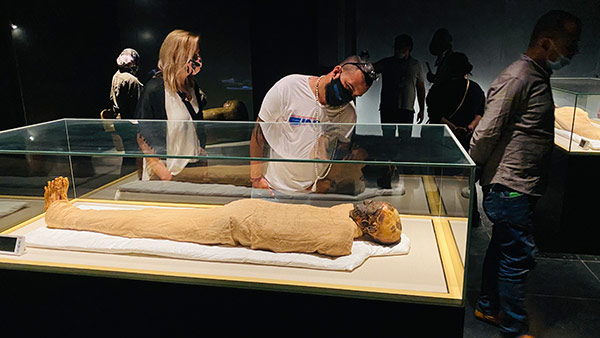
Ramesses II’s ‘Mummy Makeover’
The Discovery of Lord Sipan in Peru
Arrested for Playing Football in Brazil
The first episode to debut will be The World’s First Labradoodle, launching 1 March.
Why the BBC Is Embracing Generative AI Now
The move comes at a time when global broadcasters are experimenting with AI-driven workflows to:
Expand audience reach
Repurpose legacy archives
Increase discoverability on video platforms
Engage younger demographics
Reduce production costs while maintaining editorial integrity
Fred Durman, Head of Business Development at BBC World Service, described the initiative as a way to “give a second life to original programming” while unlocking new audience segments.
Anna Doble, Digital Editor at BBC World Service, emphasized that the organisation is carefully exploring AI as a tool — not a replacement for editorial standards — to visually bring compelling audio stories to life.
Inside the AI Animation Process
The animations have been developed in partnership with 1UpMedia, a creative studio specializing in digital storytelling formats.
According to animator Guang Jin Yeo, the goal was to preserve the depth and nuance that define Witness History while making it accessible to visually oriented audiences.
What Makes This Different?
Unlike traditional documentary recreations:
Generative AI assists in visual rendering
Archival audio remains central to storytelling
Visual layers enhance — rather than replace — narration
Historical integrity is maintained
This hybrid approach ensures that the storytelling DNA of BBC World Service remains intact.
The Strategic Importance of YouTube Distribution
Launching on YouTube is a strategic decision.
Video platforms have become primary discovery engines for:
Educational content
Documentary storytelling
Historical explainers
Long-form journalism
By placing Witness History on YouTube, BBC World Service taps into:
Global search traffic
Algorithmic recommendations
Younger viewers unfamiliar with traditional radio
Mobile-first consumption trends
This also aligns with Google Discover’s preference for visually engaging, authoritative content from trusted publishers.
Episode Spotlight: The World’s First Labradoodle
4
The premiere episode tells the story behind the creation of the Labradoodle — a crossbreed that became one of the most recognisable designer dogs in the world.
Originally bred in Australia in the late 1980s as a hypoallergenic guide dog, the Labradoodle’s origin story is both innovative and controversial. The episode revisits interviews, archival audio, and firsthand accounts that shaped the breed’s global journey.
The AI animation will visually interpret:
Early breeding experiments
Public reaction
Ethical debates around designer dogs
The breed’s unexpected commercial explosion
A Closer Look at the Other Episodes
Brazil’s Biggest Bank Heist
This episode revisits one of Brazil’s most audacious robberies, where criminals tunneled into a bank vault in a meticulously planned operation that stunned the nation.
The AI animation aims to recreate:
The underground tunnel engineering
Investigative breakthroughs
Political fallout
Ramesses II’s ‘Mummy Makeover’
4
This fascinating historical episode explores the surprising moment when the mummy of Pharaoh Ramesses II was flown to Paris for restoration — complete with an official passport.
The animated adaptation promises to visualize:
The diplomatic logistics
Scientific preservation techniques
Global media attention
The Discovery of Lord Sipan in Peru
4
This story chronicles one of Latin America’s most significant archaeological discoveries — the unearthing of the Lord of Sipan’s richly adorned tomb.
Visual elements will likely highlight:
Excavation scenes
Ancient Moche artifacts
Cultural impact in Peru
Arrested for Playing Football in Brazil
4
This episode revisits a lesser-known chapter in Brazilian history when women were banned from playing football.
The animation is expected to capture:
Social resistance
Cultural norms
The eventual lifting of the ban
AI in Journalism: Opportunity or Ethical Debate?
The BBC’s move comes amid broader global debate around AI in media.
Potential Benefits:
Revitalising archival journalism
Expanding accessibility
Cost-effective visual production
Enhanced audience engagement
Ongoing Concerns:
Authenticity of AI-generated visuals
Editorial oversight
Transparency with viewers
Risk of historical misinterpretation
The BBC has emphasized that generative AI is being used as a creative enhancement tool rather than a replacement for human editorial judgement.
How This Could Reshape Audio Journalism Globally
Industry analysts suggest this experiment could influence:
Public broadcasters worldwide
Podcast-to-video adaptation trends
Educational content formats
Documentary production models
If successful, AI-animated storytelling could become a standard approach for repurposing long-form audio archives.
What This Means for Global Audiences
For audiences who primarily consume video content:
Historical narratives become more accessible
Visual context enhances retention
Complex events are easier to grasp
Younger viewers discover legacy journalism
For traditional listeners, the core audio programme remains unchanged — continuing its weekday broadcast schedule.
The Bigger Picture: BBC’s Digital Transformation Strategy
The initiative fits within the BBC’s wider push to:
Strengthen digital-first distribution
Expand international reach
Leverage technology responsibly
Compete in an increasingly visual media landscape
As streaming platforms and short-form video reshape consumption habits, legacy institutions are under pressure to innovate without compromising credibility.
This AI experiment may represent a blueprint for balancing heritage and innovation.
When and Where to Watch
First Release: 1 March 2026
Platform: BBC World Service YouTube Channel
Frequency: Five special AI-animated adaptations (initial batch)
The traditional Witness History audio format will continue on radio and podcast platforms.
Why This Story Matters Today
In 2026, media organisations are no longer asking whether to use AI — but how to use it responsibly.
The BBC’s approach signals:
Cautious experimentation
Archive monetisation strategy
Audience expansion beyond traditional radio
Embrace of platform-native storytelling
For media observers, this rollout could become a case study in AI-assisted journalism.