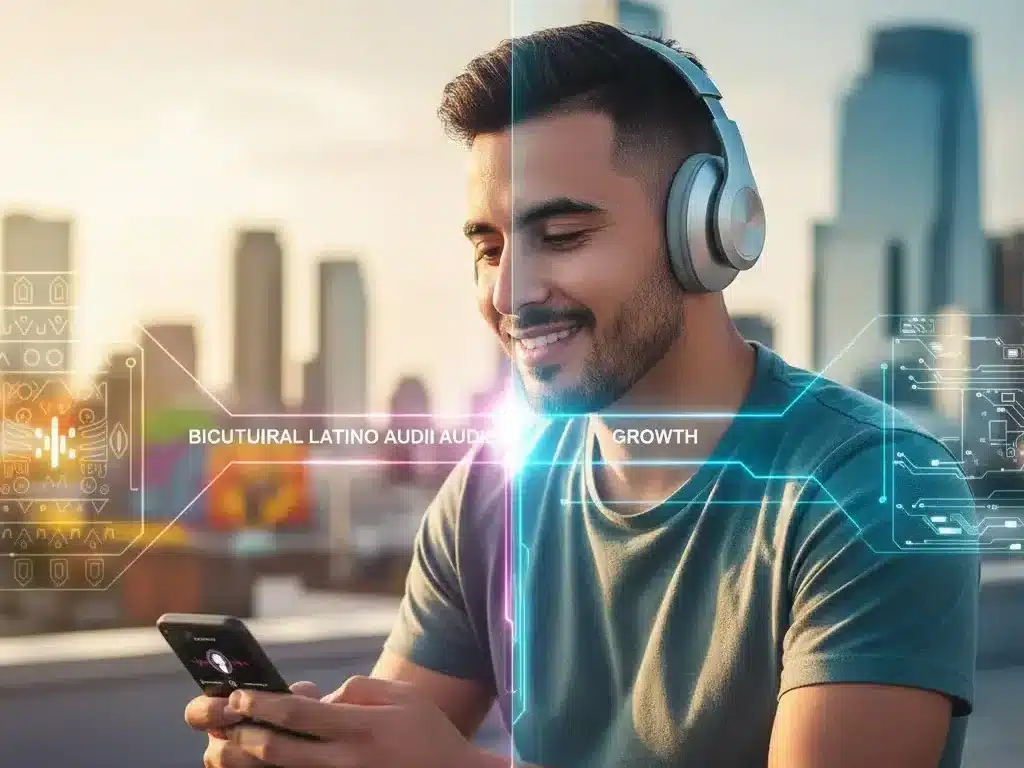
Bicultural Latinos Power $4.1T Economy and Dominate Audio in 2026, iHeartMedia Study Reveals
Five years after launching the My Cultura Podcast Network, iHeartMedia has unveiled findings that reshape how brands, publishers, and audio platforms must think about Latino consumers in 2026.
The report, developed in partnership with Collage Group, positions bicultural Latinos not as a niche demographic—but as a cultural vanguard driving trends, economic growth, and brand loyalty across the United States.
And for podcasters, radio networks, and advertisers? The message is unmistakable: Audio is where culture connects—and bicultural Latinos are listening.
A $4.1 Trillion Economic Force Is Reshaping America
The study, titled New American Consumer: Bicultural Latinos, underscores a dramatic economic reality:
The U.S. Latino population now stands at approximately 70 million people
Combined purchasing power has reached $4.1 trillion
Latino buying power is growing more than twice as fast as non-Latino consumers
This is not incremental growth. It is structural transformation.
Bicultural Latinos—those who navigate both Anglo-American and Latino cultural spaces—represent one of the fastest-expanding and most dynamic consumer segments in the country.
Identify deeply with both American and Hispanic identities
Influence mainstream trends
Drive cross-cultural conversations
Expect authenticity from brands
Two-thirds of survey respondents say they feel equally Hispanic and American, while 78% report feeling more connected to their heritage than they did just one year ago.
This growing sense of cultural pride is not happening in isolation—it’s happening in media, music, politics, and consumer behavior.
Audio Is the Heartbeat of Bicultural Latino Identity
While video and social platforms dominate headlines, the report reveals something striking: Audio remains central to how bicultural Latinos connect with culture and community.
Key Audio Consumption Insights
63% listen to podcasts weekly
9 in 10 listen to radio
92% consume radio content in English
78% consume radio content in Spanish
65% prefer audio content equally in Spanish and English
This balanced bilingual engagement reflects a generation that doesn’t see language as a limitation—but as a bridge.
According to Nielsen-backed findings referenced in the study, radio continues to maintain near-universal reach among bicultural Latino consumers, while podcast consumption continues to climb.
For media companies, this represents both opportunity and responsibility.
Language Is a Connector—Not a Constraint
One of the study’s most important revelations challenges outdated industry assumptions.
Nearly 90% of bicultural Latinos typically consume audio content in English. Yet one in three prefer Spanish when it comes to music or radio.
This duality signals a powerful truth:
Language does not define identity—it expresses it.
In advertising preferences:
Nearly one-third prefer ads that match the language of the content they are consuming
Another third prefer English regardless
The remaining segment is flexible
The takeaway for brands? Translation is not enough.
Cultural intelligence matters more than linguistic strategy alone.
Enrique Santos: “Culture Is the Strategy”
Enrique Santos, President of iHeartLatino and co-founder of My Cultura, described bicultural Latinos as more than an audience—they are a transformative force.
Enrique Santos emphasized that brands must understand the distinction between language and culture.
He noted that bicultural Latinos are:
Driving tastes and trends across platforms
Powering one of the fastest-growing economic segments
Redefining modern American identity
For marketers, the core message is simple yet profound: Lead with culture. Use language strategically.
Brands that treat culture as an afterthought risk irrelevance. Those that embrace it build lasting loyalty.
Why Brands Can’t Afford to Ignore This Audience
The purchasing behavior insights are perhaps the most compelling part of the report.
Bicultural Latino Consumer Trends
73% are open to trying new brands
60% more likely to purchase from brands that reflect them
61% willing to pay more for culturally aligned brands
69% appreciate brand presence during cultural moments
22% more likely than the general population to purchase after hearing a radio ad
This is not passive engagement. It is active brand responsiveness.
When brands show up authentically—especially during meaningful cultural moments—bicultural Latino consumers respond with loyalty and spending power.
The Trust Factor: Why Audio Drives Action
According to Lainie Fertick, President of iHeartMedia Insight, marketers must move beyond transactional messaging.
Lainie Fertick stressed that culturally aligned creators and trusted voices are essential to building credibility.
Audio, she argues, provides:
Intimacy
Emotional resonance
Community connection
Identity affirmation
Unlike visual media cluttered with distractions, audio fosters personal connection. It lives in headphones during commutes, workouts, and daily routines.
For bicultural Latinos, that intimacy strengthens cultural ties.
My Cultura Podcast Network: A Five-Year Experiment Paying Off
Five years ago, iHeartMedia launched the My Cultura Podcast Network with programming in English, Spanish, and Spanglish.
My Cultura Podcast Network was designed to amplify Latino voices across genres.
The new research validates that strategy.
By investing early in bicultural storytelling, the network positioned itself at the center of a demographic surge now reshaping the industry.
Cultural Pride Is Rising—And So Is Influence
Beyond spending power and listening habits, the study reveals a broader cultural shift:
Bicultural Latinos feel more empowered in their identity
Heritage pride is intensifying year over year
Community representation matters deeply
This rise in cultural confidence has implications beyond advertising.
It affects:
Political engagement
Entertainment consumption
Brand advocacy
Media representation
Brands that align authentically become partners in identity affirmation.
Brands that misstep risk backlash amplified by social media.
The Methodology Behind the Numbers
The findings are based on:
A survey of 2,000 weekly audio listeners
1,200 Hispanic adults included
Participants aged 18+
Conducted online in English and Spanish
By partnering with Collage Group, iHeartMedia sought to ensure cultural nuance and accuracy in data collection.
The scale and bilingual design strengthen the report’s credibility.
The Bigger Picture: What This Means for the Media Industry
The implications stretch far beyond one study.
For Podcasters
Invest in bicultural storytelling
Collaborate with Latino creators
Blend English and Spanish organically
Prioritize authenticity over trend-chasing
For Radio Broadcasters
Maintain bilingual programming balance
Highlight culturally relevant topics
Leverage trusted local voices
For Advertisers
Lead with cultural understanding
Avoid tokenism
Partner with credible Latino influencers
Show up during cultural moments
For Brands Entering the Market
Understand generational nuance
Recognize bilingual fluidity
Build long-term trust
Why This Story Matters in 2026
As America’s demographic landscape continues to evolve, bicultural Latinos represent not the future—but the present.
They are:
Cultural translators
Trend accelerators
Economic multipliers
Loyal brand advocates
Audio platforms that understand this will thrive.
Those that don’t may find themselves disconnected from one of the most influential audiences in the country.
The Cultural Vanguard Driving Tomorrow’s Media
The study ultimately reframes bicultural Latinos as the “New American Consumer.”
Not defined by assimilation. Not confined by language. Not segmented by outdated stereotypes.
Instead, defined by:
Cultural duality
Economic strength
Media influence
Brand discernment
As 2026 unfolds, the numbers send a clear signal: Bicultural Latinos are not an emerging market—they are the market.
Final Takeaway for Marketers and Media Leaders
If there is one central lesson from this landmark research, it is this:
Culture is not a campaign. It is a commitment.
Audio remains one of the most powerful spaces where identity, emotion, and commerce intersect.
For bicultural Latinos, it is where connection lives.
And for brands willing to listen—literally and figuratively—the opportunity is immense.