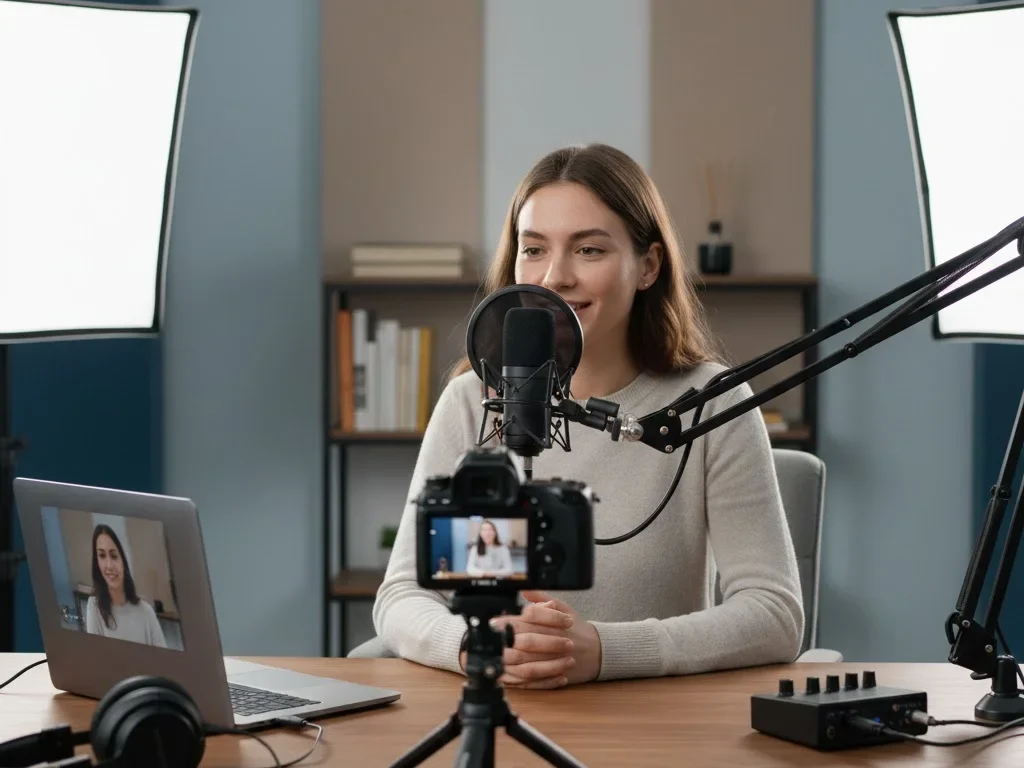
Podcast guesting is no longer just an audio-only opportunity. According to a newly released 2026 State of Podcast Guesting Report by guest placement platform Interview Valet, the industry has officially shifted into a video-first era.
The report reveals that 96% of podcasts now record interviews with video, even if the final episode is distributed as audio-only. This signals a major transformation in how podcast interviews are conducted, produced, and repurposed across digital platforms.
Podcasting, once seen as a casual medium dominated by hobby creators, is now becoming increasingly professional—and guests who want visibility must adapt quickly.
Video Podcast Interviews Are Now the Industry Standard
The biggest takeaway from Interview Valet’s report is clear: video recording has become the default method for podcast guesting.
Even shows that do not publish video versions are still choosing to record with video because it improves the interview experience and creates additional content opportunities.
Interview Valet notes that video-based podcasting is “here to stay,” emphasizing that the trend is not temporary but a long-term evolution of the medium.
Why Podcasts Are Choosing Video Even for Audio-Only Episodes
While many podcasts still publish episodes in traditional audio format, the report highlights several reasons why creators prefer video recording:
Video creates a more natural conversation flow
Eye contact improves guest-host engagement
Visual cues help with pacing and follow-up questions
Video content can later be repurposed into short clips
Shows can create promotional snippets for social media
The report describes this shift as beneficial for podcast guests as well, since video encourages richer and more engaging discussions.
Podcast Guesting Is Becoming More Professional in 2026
Another major insight from the report is that podcast guesting is becoming increasingly structured and business-driven.
Interview Valet suggests the podcast industry is “moving away from hobbyists,” meaning many casual podcasters have dropped out, while those who remain are producing more consistent and audience-focused shows.
This professionalization has resulted in:
Higher-quality audio and video production
More consistent publishing schedules
Better guest screening processes
Increased focus on audience value and relevance
As a result, podcast guesting is no longer a casual marketing tactic—it has become a serious media strategy.
Podcast Guesting Is Now Extremely Competitive
The report also outlines a major imbalance between podcast guests and available opportunities.
According to Interview Valet:
Around 100,700 podcasts are actively seeking guests
Nearly 4.8 million guests are trying to get booked
This gap has created a highly competitive marketplace where podcast hosts can be selective, often prioritizing guests who are well-prepared, credible, and able to bring value to listeners.
Hosts Are Prioritizing Prepared Guests Who Add Real Value
The report emphasizes that podcast hosts are increasingly focused on guests who:
deliver strong insights and expertise
understand the show’s audience
communicate clearly and professionally
are willing to promote the episode after publishing
contribute to meaningful conversations
Interview Valet stresses that podcast guesting is not about appearing everywhere—it’s about appearing on the right shows.
The report states that “being on the right shows, with the right audience” generates stronger results than doing dozens of irrelevant appearances.
Zoom Still Leads Podcast Recording, But Riverside Is Growing Fast
Interview Valet also tracked the tools podcasts are using to record interviews.
The report found that:
Zoom remains the most widely used platform, accounting for more than half of all interviews
However, Zoom’s market share declined compared to the previous year
Riverside recorded the biggest growth, increasing by more than 12% from 2025
This suggests podcast creators are increasingly shifting toward recording platforms built specifically for high-quality audio and video capture.
Legacy Recording Tools Like Skype and Phone Calls Have Disappeared
The report indicates that several older recording options have dropped to zero usage in the dataset, including:
Skype-based recording
phone recording setups
This shows the podcasting world has largely moved beyond low-quality recording methods, with most creators now expecting professional-grade production.
Podcast Workflows Are Becoming More Standardized
Interview Valet’s report also highlights changes in scheduling patterns, showing that podcasting is now operating more like a business workflow.
Most interviews are recorded during the workweek, especially on:
Tuesday
Wednesday
Thursday
Meanwhile:
Monday and Friday continue to lose share
weekend interviews remain rare
The report suggests that weekend recordings usually happen only because of time-zone challenges or limited availability.
Virtual Podcast Interviews Have Become the Default Format
The report confirms that nearly all podcast interviews are now conducted remotely.
According to the findings:
99.6% of interviews are recorded virtually
Only 0.4% of interviews are recorded in-person
This distribution remains almost unchanged compared to previous years, reinforcing that virtual recording has become the permanent industry standard for podcast guesting.
Podcast Guesting Timelines: What Guests Should Expect in 2026
The report provides useful insight into the typical timeline from guest introduction to episode release.
Most Hosts Respond Within One Week
The data suggests that more than two-thirds of podcast hosts respond to guest introductions within seven days.
However, recording does not happen immediately.
Recording Often Happens 1–3 Months After Booking
The report finds that once a guest is invited, the recording usually takes place:
one to three months later
This delay is typically due to scheduling backlogs and production planning.
Episodes Go Live 2–8 Weeks After Recording
After the interview is recorded, episodes typically publish within:
two to eight weeks
Interview Valet notes that these timelines are mostly outside the guest’s control, making early planning critical—especially for guests aligning podcast appearances with product launches, book releases, or upcoming events.
What the 2026 Podcast Guesting Report Is Based On
Interview Valet stated that the 2026 report is based on over a decade of proprietary and licensed data, focusing largely on English-language podcasts in industries such as:
professional services
coaching
wellness
alternative investments
faith-based content
The report reflects a business-oriented segment of podcasting, where guesting is commonly used as a marketing and authority-building tool.
Interview Valet Founder Shares Key Insight on Podcast Guesting Strategy
Tom Schwab, Founder and Chief Evangelist Officer of Interview Valet, said the goal of the report is to provide guidance in a rapidly evolving podcast landscape.
“Our goal with the State of Podcast Guesting report has always been to provide clarity and confidence to those navigating an increasingly crowded podcast marketplace,” Schwab said.
He added that the 2026 findings reinforce the importance of strategy over volume.
The report emphasizes that quality placements, long-term planning, and thoughtful guesting outperform a mass-appearance approach.
Key Highlights from the 2026 State of Podcast Guesting Report
Here are the most important insights from the report:
96% of podcasts record guest interviews with video
99.6% of podcast interviews are conducted virtually
Zoom is still the top recording platform, but its share declined
Riverside saw the fastest growth, rising by over 12%
Skype and phone recording dropped to zero
Tuesday, Wednesday, and Thursday are the most common recording days
Podcast guesting is becoming more competitive due to guest oversupply
Guests must focus on relevance, preparation, and promotion
Most interviews happen 1–3 months after an invitation
Episodes typically publish 2–8 weeks after recording
Why Video-First Podcast Guesting Matters for Brands and Entrepreneurs
The report makes it clear that podcast guesting has evolved into a high-value marketing channel.
For entrepreneurs, business leaders, coaches, and authors, podcast guesting can still deliver strong results—but only if approached with professionalism.
Video-first podcasting also creates new benefits, including:
easier creation of promotional clips
higher engagement on social media platforms
better opportunities for YouTube distribution
stronger personal branding for guests
In today’s content economy, a single podcast appearance can generate multiple pieces of reusable video content.
Final Thoughts: Podcast Guesting Is Still Powerful, But It Requires Planning
The 2026 State of Podcast Guesting report paints a clear picture of where the industry is headed.
Podcast guesting is now:
video-driven
highly competitive
almost entirely virtual
built around quality and strategy
For guests hoping to build authority, reach targeted audiences, and generate business outcomes, the message is simple: show up prepared, focus on the right podcasts, and plan months ahead.
Podcasting may be more competitive than ever, but for those who adapt to the video-first era, the opportunity remains massive.