Podscribe Adds Broadcast Radio Measurement to Its Cross-Channel Attribution Platform
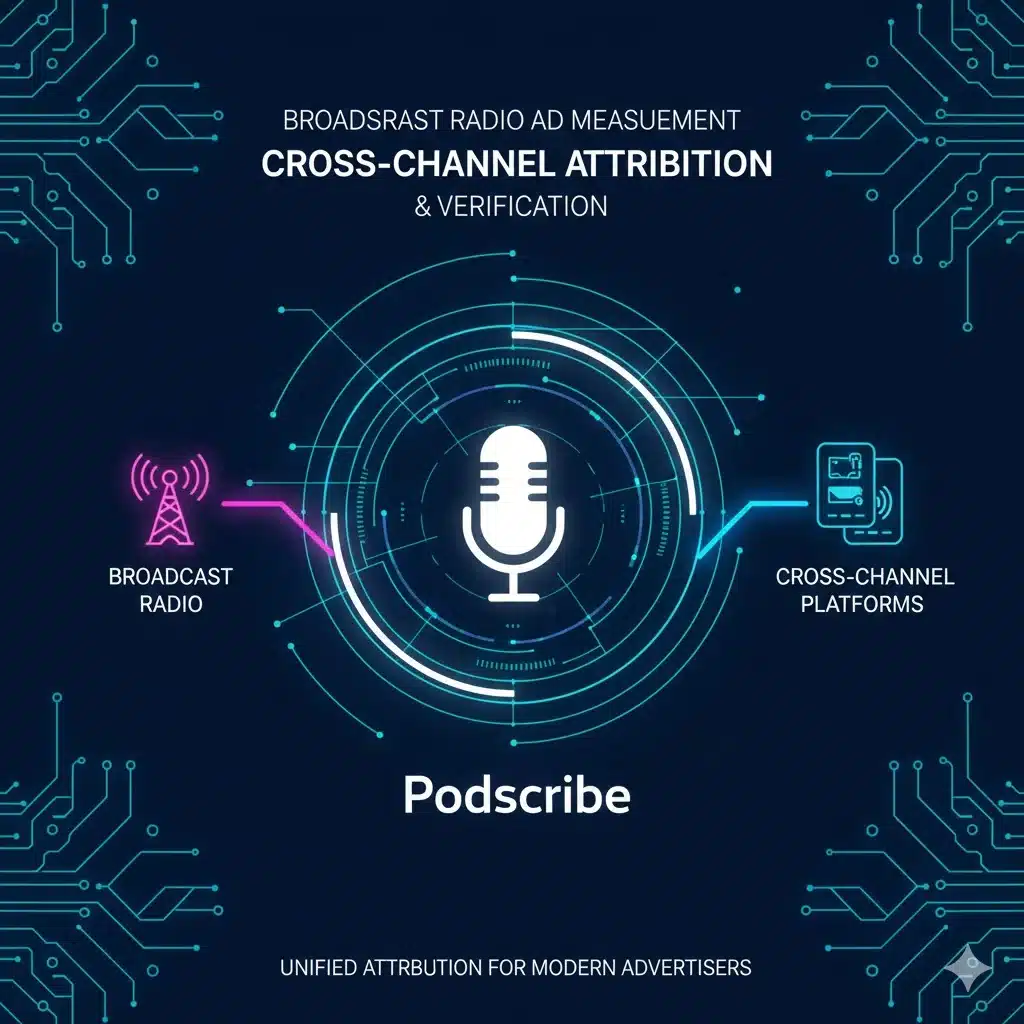
Podscribe, a leading attribution and analytics company best known for its podcast advertising measurement tools, has announced a major expansion of its platform: broadcast radio is officially joining its cross-channel measurement ecosystem.
The move marks the first time Podscribe has extended its core podcast verification and attribution capabilities to over-the-air radio, addressing one of the most persistent blind spots in traditional media measurement. With the launch of Radio Airchecks, advertisers and agencies can now verify radio ad placements and performance alongside podcasts, social media, and other digital channels — all from a single dashboard.
Industry experts say the development signals a broader shift in how advertisers are rethinking radio’s role in omnichannel media planning, especially as brands demand greater transparency, accountability, and performance insight across every channel they invest in.
For decades, broadcast radio has remained a powerful but imperfectly measured medium. While digital channels offer impression-level data, attribution modeling, and real-time reporting, radio advertisers have often relied on:
Station affidavits
Manual airchecks
Modeled reach estimates
Delayed or incomplete campaign reporting
This gap has made it difficult for marketers to confidently evaluate the true impact of radio advertising — especially when comparing it to podcast, streaming audio, or paid social campaigns.
According to Podscribe CEO Pete Birsinger, the lack of verification has been one of radio’s biggest structural disadvantages in the modern media mix.
“Radio is an essential part of many media strategies, but verification has lagged behind,” Birsinger said. “With Radio Airchecks, advertisers finally get the transparency radio deserves.”
What Is Radio Airchecks? A Breakdown of Podscribe’s New Capability
Podscribe’s Radio Airchecks extends the company’s existing live-read ad verification technology — previously used for podcasts — into broadcast radio.
Key Capabilities of Radio Airchecks
Automatic detection of radio ad placements
Live-read ad verification for host-read spots
Centralized reporting within the Podscribe dashboard
Side-by-side comparison with podcast and digital data
The system automatically logs when and where ads run on broadcast radio, removing the need for manual verification processes that have long slowed down radio reporting.
For marketers, this means radio can finally be measured with a level of rigor comparable to digital audio channels.
One Dashboard, Multiple Channels: Why This Matters for Advertisers
One of the most significant aspects of the launch is consolidation. Rather than treating radio as a separate silo, Podscribe is positioning it as a fully integrated channel within its broader attribution platform.
Advertisers can now:
View radio, podcast, and social verification data in one place
Compare performance metrics across channels
Identify overlaps and incremental lift
Make faster, data-driven media planning decisions
This unified view is increasingly important as brands adopt cross-channel audio strategies that blend traditional and digital formats.
Current Limitations — And What’s Coming Next
At launch, Radio Airchecks focuses primarily on host-read ads, which are typically easier to identify through audio fingerprinting and contextual analysis.
However, Podscribe says this is only the beginning.
Planned Enhancements Include:
Producer-read ad detection
Partnerships with radio monitoring companies
Expanded coverage across more stations and markets
Podscribe confirmed it is actively working with a radio monitoring partner to identify producer-read spots in the future, though the feature is not yet live.
Radio Attribution Meets Podcast-Level Transparency
The launch of Radio Airchecks builds on work Podscribe began publicly outlining late last year.
In October, the company announced Enhanced Radio Attribution, a joint initiative with Austin-based marketing agency Right Side Up. That project integrated radio posting data — essentially radio’s version of impression logs — directly into Podscribe’s attribution modeling engine.
What Enhanced Radio Attribution Enables
Weekly, market-level attribution reporting
Measurement of incremental impact from radio campaigns
Optimization tools for radio media buys
Cross-analysis with podcast, streaming, and digital campaigns
Together, Enhanced Radio Attribution and Radio Airchecks bring both verification and performance modeling to broadcast radio — a combination rarely available in one platform.
A Strategic Bet on Cross-Channel Audio and Video Measurement
The addition of radio is part of a much larger expansion strategy for Podscribe as the media landscape grows more fragmented.
According to company leadership, advertisers are no longer satisfied with channel-specific metrics. Instead, they want to understand:
How audio and video interact
How traditional and digital media reinforce each other
Where incremental value is actually being created
Podscribe believes radio still plays a crucial role — especially at scale — but only if it can be measured with modern tools.
Connected TV (CTV) Is Next on Podscribe’s Roadmap
In addition to broadcast radio, Podscribe has confirmed plans to bring Connected TV (CTV) data into its platform.
The goal is to help advertisers track the interplay between:
Podcasts
Broadcast radio
Streaming audio
Video podcasts
CTV and other emerging formats
By expanding into CTV, Podscribe aims to give marketers a clearer picture of how audio and video exposures work together to drive outcomes.
Inside Podscribe’s Ambitious 2026 Product Vision
Podscribe has outlined an aggressive roadmap for 2026, building on what it describes as a year of rapid innovation and execution.
Highlights From Podscribe’s 2026 Roadmap
More than 65 product updates shipped in the past year
Expanded international device graphs
Improved attribution accuracy outside the U.S.
Smarter handling of cellular IP data
Reduced reliance on modeled assumptions
More advanced YouTube and video podcast modeling
These updates reflect the growing importance of video-led audio formats, especially creator-driven content distributed on platforms like YouTube.
Why YouTube Modeling Is Becoming Critical
As video podcasts and creator-hosted shows gain traction, advertisers are demanding better insight into how ads perform across different video environments.
Podscribe says its upcoming YouTube modeling enhancements will account for:
Ad placement within videos
Ad format variations
Geographic audience composition
Channel-level viewing behavior
This approach acknowledges that not all video inventory performs the same, even within a single platform.
Making Media Measurement Easier at Scale
At the core of Podscribe’s strategy is a simple goal: reduce complexity as media buying becomes more fragmented.
The company says all upcoming launches are guided by a mission to make:
Media planning easier
Activation faster
Measurement more transparent
Optimization more actionable
As advertisers spread budgets across audio, video, and emerging formats, centralized measurement tools are becoming less of a luxury and more of a necessity.
Team Signup: A New Feature for Enterprise Clients
Alongside its radio expansion, Podscribe is rolling out a practical update aimed at large organizations.
Team Signup Feature Overview
Allows companies to onboard multiple users at once
Uses approved email domains for verification
Designed for agencies and enterprise advertisers
Reduces friction in account setup and user management
The feature is available immediately and reflects Podscribe’s growing focus on enterprise-level scalability.
What This Means for the Future of Radio Advertising
Industry analysts say Podscribe’s move could help reposition radio as a data-driven, performance-measurable channel, rather than a legacy medium competing with digital on uneven terms.
By offering podcast-level verification and attribution for radio, Podscribe is effectively challenging long-held assumptions about what can — and cannot — be measured in broadcast media.
If widely adopted, tools like Radio Airchecks could influence how:
Media budgets are allocated
Campaign performance is evaluated
Radio inventory is priced and sold
Final Thoughts: A Turning Point for Cross-Channel Measurement
Podscribe’s expansion into broadcast radio represents more than a feature launch — it signals a broader evolution in media measurement philosophy.
As audio and video converge, and as advertisers demand unified insights across every touchpoint, platforms that can bridge traditional and digital channels will have a significant advantage.
With Radio Airchecks, Enhanced Radio Attribution, and a roadmap that includes CTV and advanced video modeling, Podscribe is positioning itself at the center of that transformation.