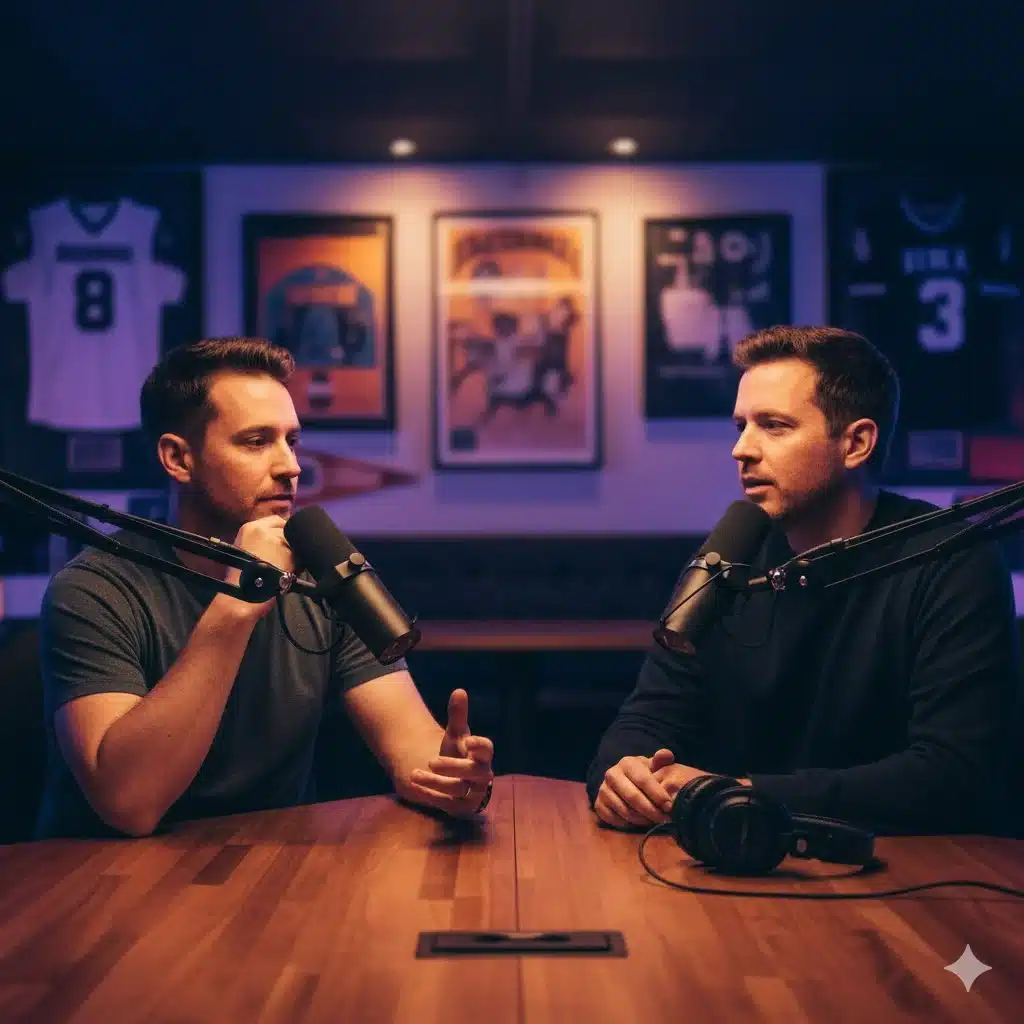
Barstool Sports Ends Longtime Podcast ‘KFC Radio’ as Hosts Announce New Direction for 2025
For more than a decade, KFC Radio wasn’t just another podcast — it was one of the pillars of Barstool Sports’ modern media empire. It was the show that bridged the company’s early blogging culture with the explosive rise of digital audio, helping define an entire era of internet humor, sports banter, and unfiltered cultural commentary.
Now, after 13 years on the air, the long-standing podcast hosted by Kevin “KFC” Clancy and John Feitelberg is officially coming to an end. The hosts announced that they will be wrapping the show at the end of the month, closing the door on a Barstool original that began in 2012 and quickly evolved into a fan-favorite known for its blend of comedic rants, listener voicemails, and free-wheeling discussions that often stretched into hours.
The news lands during a season of significant change for Barstool Sports, as KFC Radio becomes the third major show to shut down in recent weeks, signaling a potential shift in strategy for the brand — and raising questions about the future of its podcast slate.
A Nostalgic Goodbye: Why ‘KFC Radio’ Is Ending After 13 Years
The announcement came during a recent episode, where Clancy and Feitelberg reflected openly on the decision to sunset the series.
“We’ll spend our time reminiscing and a little bit of nostalgia, and kind of wrap things up nicely with a bow. Then on January 1, we’ll start the new year fresh with new projects and new content and a whole new page,” Clancy told listeners.
Though the pair did not disclose any concrete details about their upcoming ventures, the message was clear: this ending is not a retirement — it’s a pivot.
Both hosts acknowledged that the conversations had been ongoing behind the scenes for some time, and ultimately, they agreed the show had reached a natural conclusion.
“It’s something we’ve been talking about for a while and I think it’s just the right time,” Clancy added. “It’s pretty clear from a business point of view that the show plateaued.”
The Rise of ‘KFC Radio’: How an Experiment Became a Barstool Staple
When KFC Radio premiered in 2012, podcasting was still in its adolescence. Few creators had mastered the medium, and even fewer had built communities large enough to sustain regular engagement. Barstool Sports — then a much smaller operation than today — saw potential in audio long before the industry exploded.
The show quickly carved out its identity, describing itself as:
“The quintessential bar conversation brought to podcast form.”
Its defining feature: A phone number that listeners could call to leave voicemails, giving the show an interactive personality unlike anything else in Barstool’s lineup at the time. These voicemails became iconic, spawning everything from viral debates to recurring jokes that shaped the culture of the show.
Across more than a decade, KFC Radio evolved into a three-times-a-week audio destination, generating millions of downloads and becoming an entry point for countless listeners who would later explore Barstool’s wider content ecosystem.
Why the Format No Longer Fits Today’s Podcast Landscape
While Clancy cited “plateauing” numbers as a factor, Feitelberg offered a deeper explanation rooted in the evolving nature of podcasting.
“People like to say podcasting is over. I don’t think that’s true,” he said. “I think the way we did it probably is on its way out — which is three hours of rudderless conversation.”
He explained that audience habits have shifted dramatically:
Shorter episodes dominate modern charts
Tighter thematic focus is in higher demand
Clipped segments and highlights fuel discovery on social media
The hosts admitted they had resisted the industry’s movement toward short-form content, mostly because they preferred the sprawling, unpredictable conversations their fans loved.
“We ignored the shift because we don’t like it,” Feitelberg admitted.
Their format was once ahead of the curve — but in a crowded podcasting landscape where listener attention is increasingly fragmented, the approach no longer aligned with broader consumption trends.
A Wave of Barstool Podcast Closures Raises Questions
The end of KFC Radio comes just weeks after two other long-running Barstool titles announced their departures:
1. The Kirk Minihane Show
Kirk Minihane, former Boston sports radio personality, released his final episode last week following a five-year run with the company.
2. BFFs
In October, internet personalities Brianna “Chickenfry” LaPaglia and Josh Richards confirmed that their show BFFs will wrap at the end of December, also concluding after five years.
The near-simultaneous closures of multiple established titles have led observers to speculate:
Is Barstool restructuring its podcasting strategy?
Are creators choosing to move away from long-form audio?
Is the company preparing to invest more heavily in video-based formats like TikTok and YouTube?
Barstool Sports has not released any official statement on the shift, but the pattern is undeniable: the podcast division is entering a period of significant change.
The Legacy of ‘KFC Radio’: A Cultural Touchpoint for Barstool Fans
It’s impossible to discuss Barstool’s rise without acknowledging KFC Radio’s impact. Over the years, the show:
Helped define Barstool’s early tone — irreverent, conversational, unfiltered
Cultivated a fiercely loyal fanbase
Introduced new on-air talent through recurring appearances
Built a massive library of viral moments
Pioneered the listener voicemail format that many shows later adopted
Entire communities formed around the show’s inside jokes, episodic themes, and off-the-wall discussions.
For many longtime fans, this wasn’t just a podcast — it was part of their weekly routine, a nostalgic bridge between different eras of Barstool Sports.
The Podcasting Industry in 2025: Why Long-Form Shows Are Facing Pressure
The closure of multiple Barstool shows coincides with a broader shift happening across the podcasting ecosystem. Data from 2024–2025 indicates:
Listener habits are changing
Shorter episodes under 45 minutes are now outperforming long-form shows.
Daily quick-hit formats are becoming more profitable for advertisers.
Younger listeners prefer video-based content over pure audio.
Production economics have tightened
Ad revenue is stabilizing after years of explosive growth, forcing companies to reassess costs.
Older shows with declining growth face harder questions about sustainability.
Competition is higher than ever
New creators flood the market daily.
Traditional media companies have entered the space aggressively.
Podcast discovery is driven by platforms that reward short-form, algorithm-friendly content.
In this environment, a sprawling, three-hour conversational show — even one with loyal fans — faces challenges that didn’t exist a decade ago.
What’s Next for Kevin Clancy and John Feitelberg?
While the hosts have kept their upcoming projects quiet, a few possibilities seem likely:
• New Podcast Format
They may launch a more modernized audio series with:
shorter episodes
more defined segments
a stronger social media integration
• Video-First Content
Given Barstool’s heavy pivot toward YouTube, TikTok, and live streaming, the duo may transition into regular video series or mixed-media shows.
• Expanded Roles in Barstool Programming
Both are established personalities within the brand. Their next chapter will likely involve high-visibility projects as the company continues evolving.
• Branded Collaborations or Tour Events
Live shows, branded appearances, or special event series may also be part of their plan.
Regardless of the direction, Clancy emphasized that their departure from the KFC Radio format is not a departure from their audience.
A Transitional Moment for Barstool Sports
The end of KFC Radio marks the end of an era — and the beginning of something new. As Barstool Sports moves into its next chapter, the company’s content strategy is clearly shifting:
Legacy shows are ending
New creative energy is emerging
Hosts are embracing modern formats
The company is adapting to industry trends that favor shorter, more shareable content
For longtime fans, though, the closing of multiple major podcasts in such a short window feels like a symbolic passing of the torch. The Barstool of 2025 is not the Barstool of 2012 — and perhaps that is the point.
Final Thoughts: A Farewell to a Foundational Podcast
KFC Radio was never just a show — it was a cornerstone of Barstool Sports’ identity during its formative years. Its ending reflects:
the natural lifespan of a long-running project,
the evolution of digital media,
and the need for creators to adapt as audience habits change.
Clancy and Feitelberg’s chemistry and comedic timing will no doubt resurface in whatever comes next. But the nostalgic significance of KFC Radio will endure as part of Barstool lore — a reminder of where the company started and how far it has come.